 Doris Yu · · 2 min read
Indian startup Agnikul banks $3.2m to make satellite launches cheaper
Agnikul, an Indian spacetech startup that creates 3D-printed rocket engines, announced that it has raised US$3.2 million in a pre-series A funding round led by Pi Ventures, an early-stage fund focused on deep-tech opportunities.
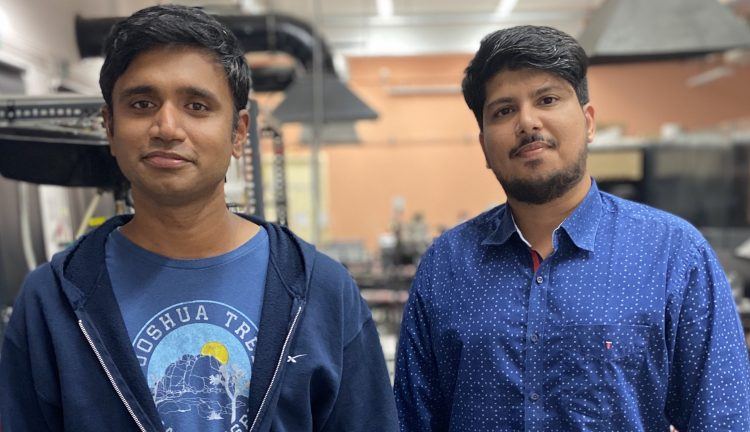
Agnikul CEO Srinath Ravichandran (left) and chief operating officer Moin SPM / Photo credit: Agnikul
LionRock Capital’s Hari Kumar, Artha Ventures, LetsVenture, Globevestor, CIIE.CO, as well as existing investor Speciale Invest also participated in the round. The startup received US$423,000 in seed funding from Speciale last year.
Founded in 2017, Agnikul is developing a configurable satellite launch vehicle that can support a payload capacity of 30 to 100 kilograms. The engine is fully 3D-printed, allowing for an easier and cheaper fabrication process so launch vehicles can be delivered within a few weeks.
The company is trying to reduce the waiting time to put satellites in orbit, from about 12 to 18 months to 2 weeks or lesser, Srinath Ravichandran, co-founder and CEO at Agnikul, told Tech in Asia. He added that the next plan for the company is to get from testing to assembly of its first product.
The startup will use the fresh capital for ground testing, fabrication, and team expansion, according to a statement.
Citing reports, Agnikul said the space industry across the globe has grown to be a US$350 billion market as many private players have entered the sector. It is predicted that over 2,500 small satellites will be launched by 2022, compared to less than 500 today.
“I have always believed that India has the potential and the talent to create world-beating IPs and products, not just in the digital domain but also beyond,” said Manish Singhal, founding partner at Pi Ventures.
There are about 120 spacetech startups in India, which raised a total of US$6.2 million in funding last year, according to a report. A reduction in launch costs and the Indian Space Research Organization’s effort to lower the manufacturing and production cost of satellites have attracted a growing number of startups in the sector.
Editing by Charmaine de Lazo
(And yes, we’re serious about ethics and transparency. More information here.)





Stay updated on the go with our mobile app.
Get latest insights with smoother, more personalized experience through TIA mobile app.








📅 Upcoming Events
22 October 2026
Payoneer x CSPN Summit 2026