By Daylon Soh, founder of online creative goods store CuriousCatch and managing editor of Open Brief, a web publication on creativity and culture.
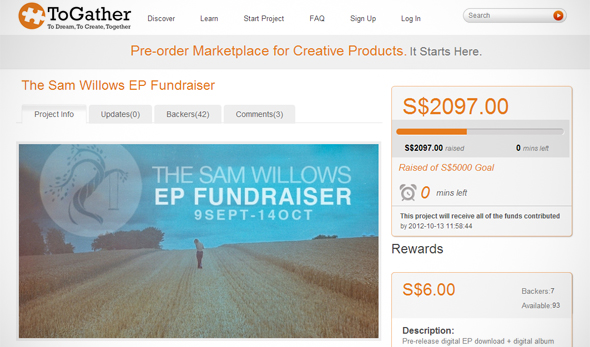
When Melbourne-based crowdfunding site Pozible launched in 2010, they were already already chasing the tail of the largest crowdfunding site, Kickstarter, based in New York City, USA. Yet in Australia, founders Rick Chen and Alan Crabbe were the first to introduce the idea of having the masses pledge sums of money towards creative projects via their website.
Other than working around heavy regulations set by the Australian Securities and Investment (ASIC), Chen and Crabbe had to gain the trust of project creators and build confidence amongst the general public to increase pledge support.
Events like “Let’s Talk Crowdfunding”, hosted at HUB Melbourne, become one way of building trust. “Crowdfunding was still a very new concept back then to Australians. We felt it was necessary to fund these events in order to introduce the general public to projects that were successfully backed and allay any concerns by backers and project owners alike.”
As of February 2013, the platform has helped funnel a total of AUD$8 million (SGD$10.2 million) across 1,300 successful projects since it was established in May 2010. It’s widely considered one of Australia’s most popular crowdfunding platforms working in partnership with prominent festivals within the Australian arts industry such as the Melbourne and Sydney Fringe Festivals.
Kickstarter’s tipping point
“The internet loves to save things,” said Yancey Strickler, co-founder of Kickstarter, in a talk he gave at CreativeMornings / New York on a film project, Blue Like Jazz, who nearly didn’t make it to theatres when Hollywood producers pulled out on funding the film. But the project raised close to USD 346k (SGDD 431k) from nearly 4500 backers, almost three times the goal amount set by its creator Steve Taylor.
Crowdfunding itself has never been a lucrative business model by nature. Crowdfunding sites like Pozible and Kickstarter, take a 5 percent fee to the funds collected on top of the 3-5 percent charges from payment processors like PayPal and Amazon Payments.
In short, in order for a crowdfunding site to be sustainable, it requires projects to be funded collectively at USD 100k upwards on a monthly basis. Even then, a SGD 5k monthly revenue is hardly enough to support a team with employees. Not unless they can hit a million dollar worth of pledges consistently.
Author Malcolm Gladwell defines the tipping point as that “magic moment when an idea, trend, or social behavior crosses a threshold, tips, and spreads like wildfire.”
On 11 February 2011, Strickler wrote in their company’s blog, “After not having a single million dollar project in Kickstarter’s first two-plus years, there are suddenly two within four hours of each other.”
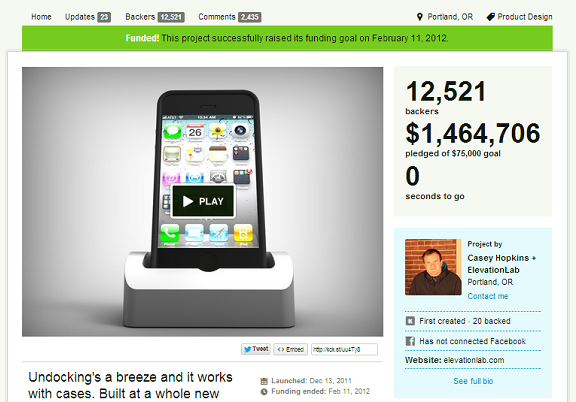 Elevation Dock, a fuss-free vertical charging dock for the iPhone, became the first project in crowdfunding history to see USD1 milion (~SGD 1.25M) in pledges. Shortly after, Double Fine Adventure, a video game project, passed the USD 1million mark. Both projects then went on to collectively raised more than SGD 5.8M.





Stay updated on the go with our mobile app.
Get latest insights with smoother, more personalized experience through TIA mobile app.