- Insights This article was written by a TIA community member. Insights pieces undergo the same rigorous editorial process that newsroom-produced articles have.
 Amit Verma · · 6 min read
Access, not prowess, is the agentic economy’s biggest hurdle
A year ago, I argued that AI agents would shift the internet from an attention economy to an intent economy. The web was designed to make people look, click, and browse, but agents would be built to understand what people want and complete tasks on their behalf.
At the time, I cited a hypothetical field-service example: A technician wearing AI glasses could look at a malfunctioning machine, ask for help, and receive guidance without stopping to navigate multiple systems.

Image credit: Ulla
That example is no longer hypothetical.
Neuron7, the enterprise AI platform where I’m the founding head of engineering, recently released a prototype that lets a technician use AI glasses while performing a repair. The device allows the AI system to understand what the technician is seeing and doing, then turn their work into a repeatable fix that other technicians can follow.
The important part is not the glasses themselves but the multimodal AI, which can understand multiple data types including text, images, audio, video, and code. This system can then turn physical work into structured knowledge, and later bring that knowledge into the workflow of another technician.
Building the glasses changed my view of where the harder problems are. AI models are becoming more capable, but the world around them is not always ready for what they can do.
Physical AI is becoming practical
A successful prototype that can be used in the field does not automatically translate into adoption. Even in environments where physical AI could be valuable, there are practical constraints such as personal protective equipment, unreliable connectivity, restricted facilities, and employee concerns about being continuously monitored.
None of these limits invalidate wearable AI. Instead, they define the distance between a prototype and an enterprise deployment.
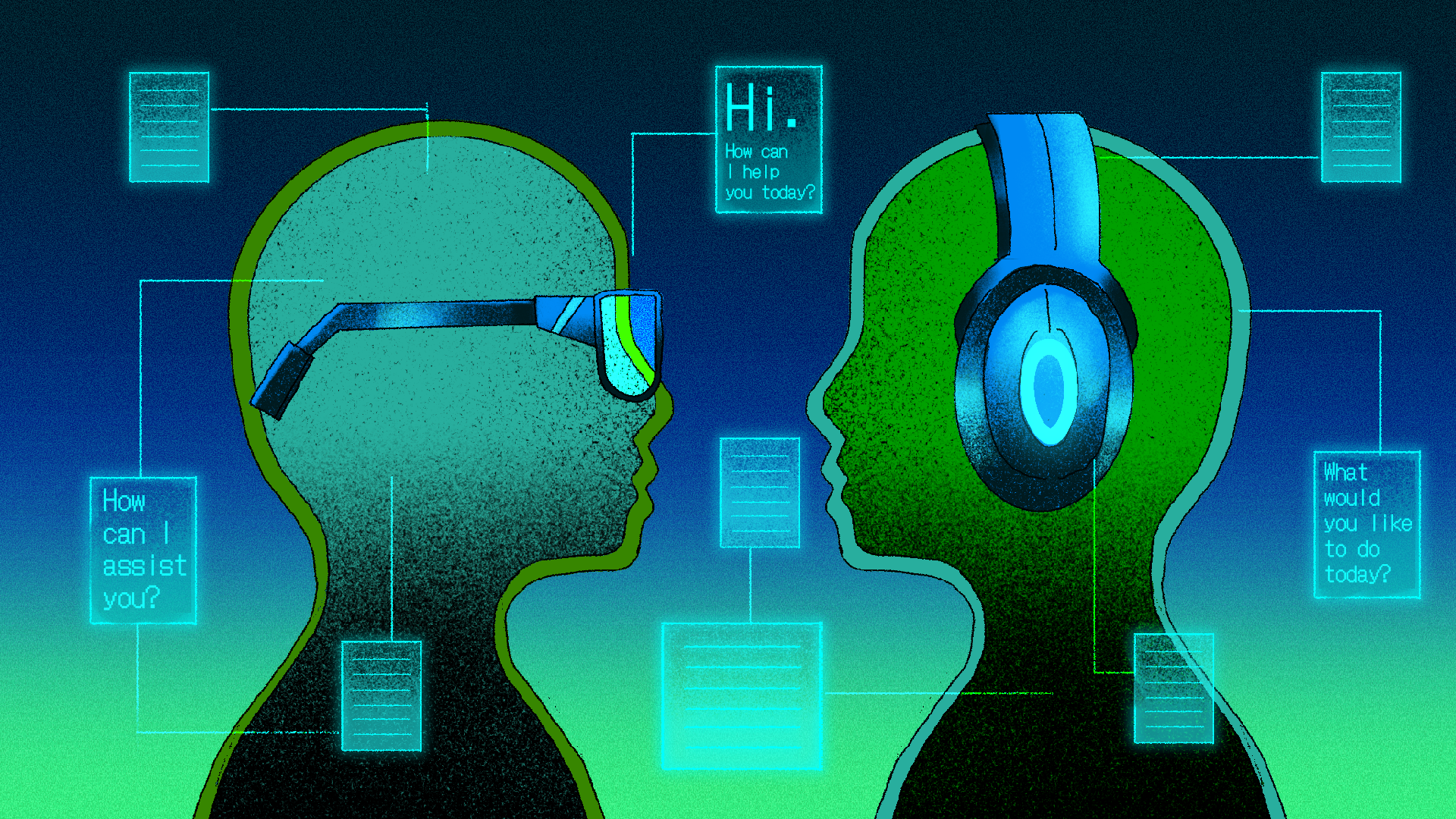
Image credit: Ulla
The same transition is happening in consumer technology. Meta recently said Muse will come to its AI glasses, allowing the personal agent to act on what the wearer is looking at. Muse runs in a dedicated virtual machine with a browser and can perform tasks such as shopping and booking travel, subject to user permissions and confirmation.
This is close to what I described last year: people expressing intent and delegating execution to AI. But the economics surrounding that execution are now becoming as interesting as the technology.
The Google example
Alphabet provided a useful glimpse of that tension recently.
The internet has to become executable
Then comes the bouncer
The cusp we’re entering
Stay ahead in Asia’s tech landscape
This is premium content. Subscribe to read the full story.
AI agents can now see, reason, and act. But Amazon blocking Meta’s Muse shows capability isn’t permission, and access is the next fight.
We know this is not ideal. ⌛ Sign up in 20 seconds. Cancel anytime.
Our subscriber community includes professionals from these companies:









📅 Upcoming Events
30-31 March 2027
Upskill Fest