- Insights This article was written by a TIA community member. Insights pieces undergo the same rigorous editorial process that newsroom-produced articles have.
 Amit Verma · · 6 min read
Agents, not ads, are the next frontier for online sales
Picture a technician trying to fix a faulty ATM. Today, that would involve a relay race across the various systems that make up such a machine.
But if that technician were wearing AI glasses and simply consulted it on the error message he was seeing, the solution would come a whole lot quicker. In fact, an AI agent could check the various systems in seconds and offer the worker a step-by-step guide on how to fix the problem.
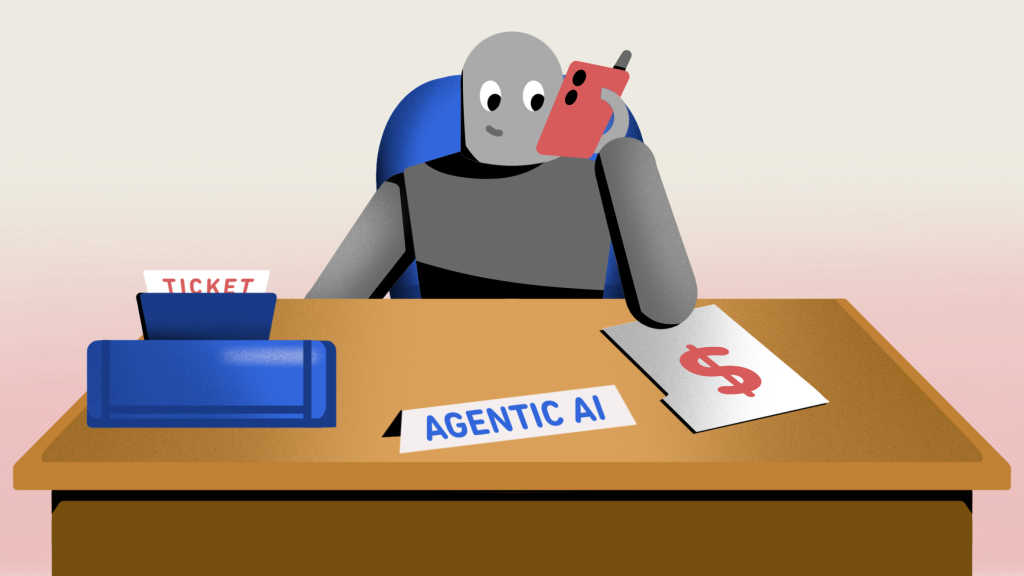
Image credit: Timmy Loen
I’m watching this shift toward agentic AI unfold in the operations of my clients. It’s a change that’s now also branching out from the enterprise world to the open web.
Just as a technician can resolve an issue by telling an agent what they want to do, consumers will soon be able to purchase in the same way through agentic browsing. The consequences for consumers and merchants will be far-reaching.
From attention to intent
The internet today is built for human eyes and hands, with rich visuals, flowery prose, and tricks to keep us engaged. For agents, this landscape is difficult to parse. Dynamic content and bespoke code that makes browsing pleasant for us confuses them.
Take, for example, changing the time for a flight booking. Today, this may take you 15 minutes as you log in to the airline’s website, find your booking, choose a new time, see pop-ups, compare prices, click confirm, and wait for a confirmation email.
Agents struggle because websites, which are built for humans, typically have changing layouts and inconsistent workflows.
See also: A realist’s guide to deploying AI agents that work
Agentic web interfaces are potential remedies. They let websites show AI agents what actions are available to them (like book, refund, or replace) so they can perform these actions instead of clicking through pages to find them.
In the airline example, you can then tell your agent what to do (change my flight to 4 pm), and the AI logs into the airline, checks what times are available, and shows you the options with the associated cost. You approve and get a receipt in your email, all in less than a minute.
The economics of agentic browsing
As the web adapts to agentic browsing, its economics will change. Whereas a banner ad can distract a human user seeking to perform an action online (like buying some clothes), agents stay focused on their goal.
This doesn’t mean the “old” web will disappear, just that it’ll split into two markets:
- Discovery market (human-facing): Where people explore, compare, and form preferences. Think reviews, online communities, and search. This is where sponsored content and creativity still matter.
- Intent market (agent-facing): Where agents execute and provide verified outcomes – from goal to action and then receipts. This is where banner ads and chance encounters will likely have a very small role.
What does this do to the ad economy?
What metrics matter now?
Why this shift will happen
From page-time to intent-time
Stay ahead in Asia’s tech landscape
This is premium content. Subscribe to read the full story.
The web is changing: AI agents may soon handle purchases for you, reshaping how companies sell and how we shop online.
We know this is not ideal. ⌛ Sign up in 20 seconds. Cancel anytime.
Our subscriber community includes professionals from these companies:





Stay updated on the go with our mobile app.
Get latest insights with smoother, more personalized experience through TIA mobile app.












📅 Upcoming Events
22 October 2026
Payoneer x CSPN Summit 2026