Apoorva Dutt · · 9 min read
SE Asia will have 10 new companies valued at over $1bn each by 2024: Bain report
The following report was republished from a Bain Insights report written by Suvir Varma and Alex Boulton. You can read it here.
Venture capital and private equity investment in Southeast Asia have soared to record levels as scores of new investors pour into the region. In 2017, the number of recorded venture capital deals rose to 524, four times the level of 2012, and private equity deal value rose 75% to $15 billion, breaking out of a decade-long phase of flat growth (see Figures 1 and 2).
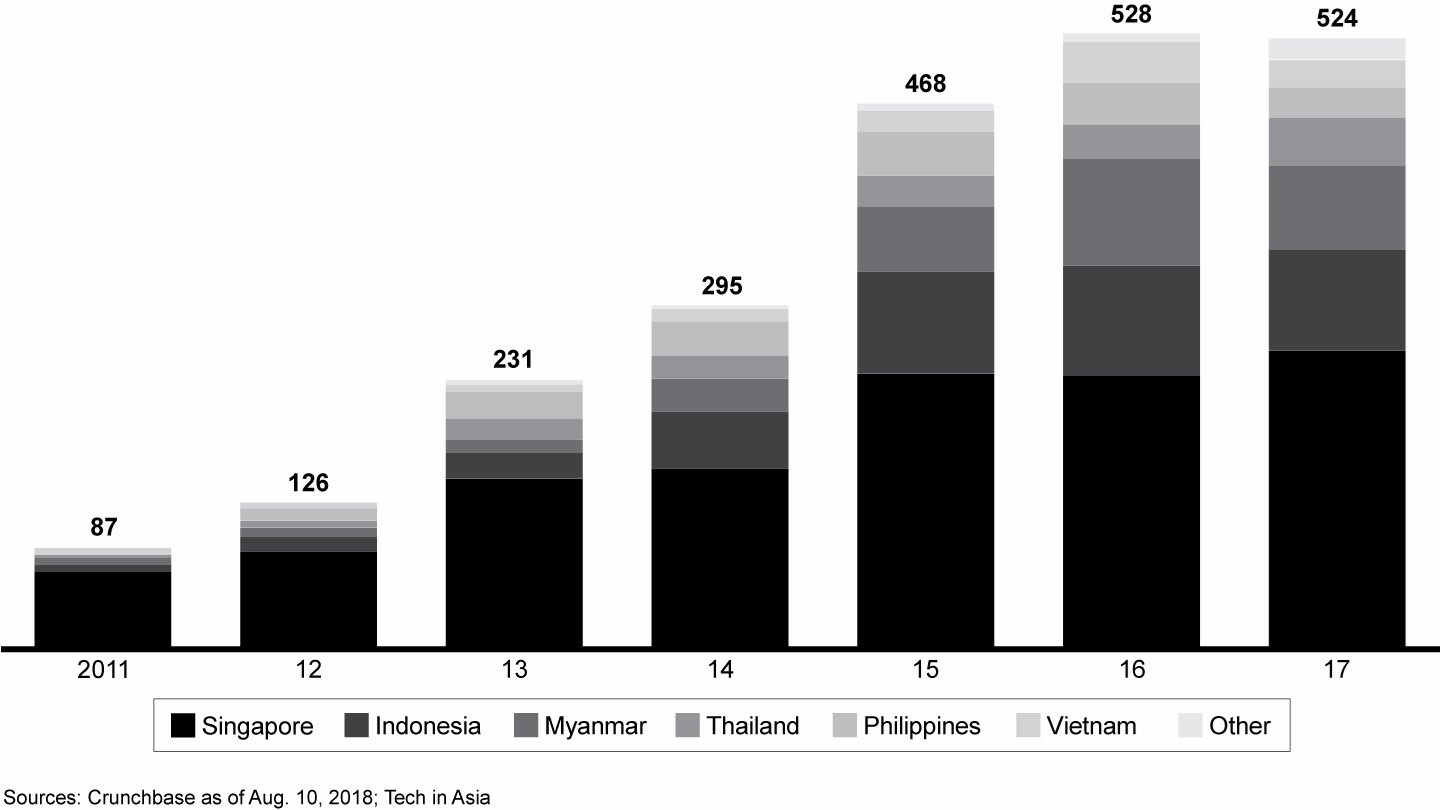
Figure 1. The number of Southeast Asian venture capital deals quadrupled from 2012 to 2017.
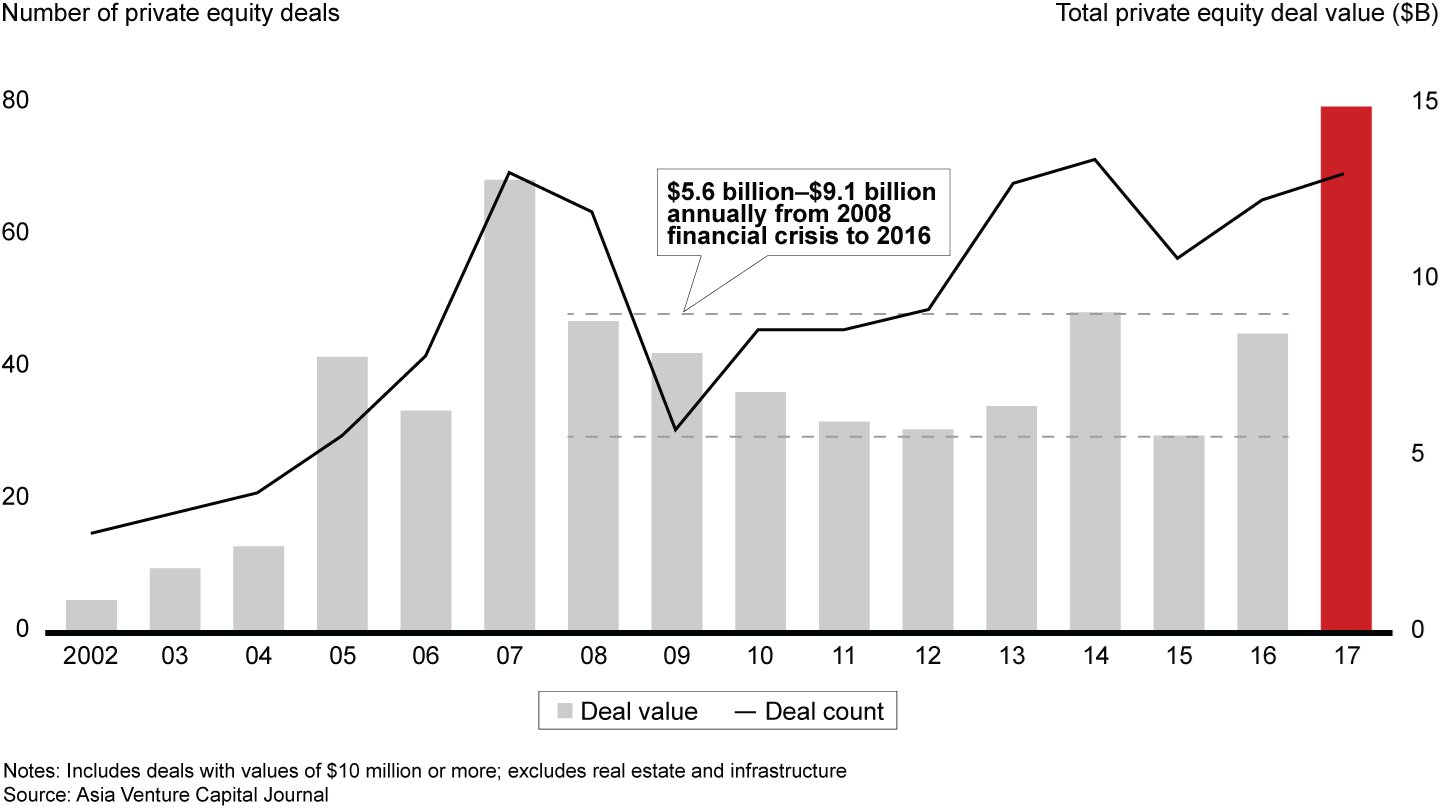 Figure 2. Southeast Asian private equity deal value in 2017 grew 75 percent from the prior year to $15 billion.
For once, all signposts point up. Technology companies attracted the bulk of new capital, rising to 40 percent of deal count in 2017 from 20 percent in 2014. Southeast Asia-dedicated funds’ dry powder – committed but unspent capital – has more than doubled since 2012. The region also has produced its first set of unicorns – new companies that rapidly achieve market valuations of $1 billion or more. Since 2012, 10 unicorns including Grab, Go-Jek and Traveloka have created a combined market value of $34 billion, ranking Southeast Asia No. 3 in the Asia-Pacific region, behind only China and India (see Figure 3).
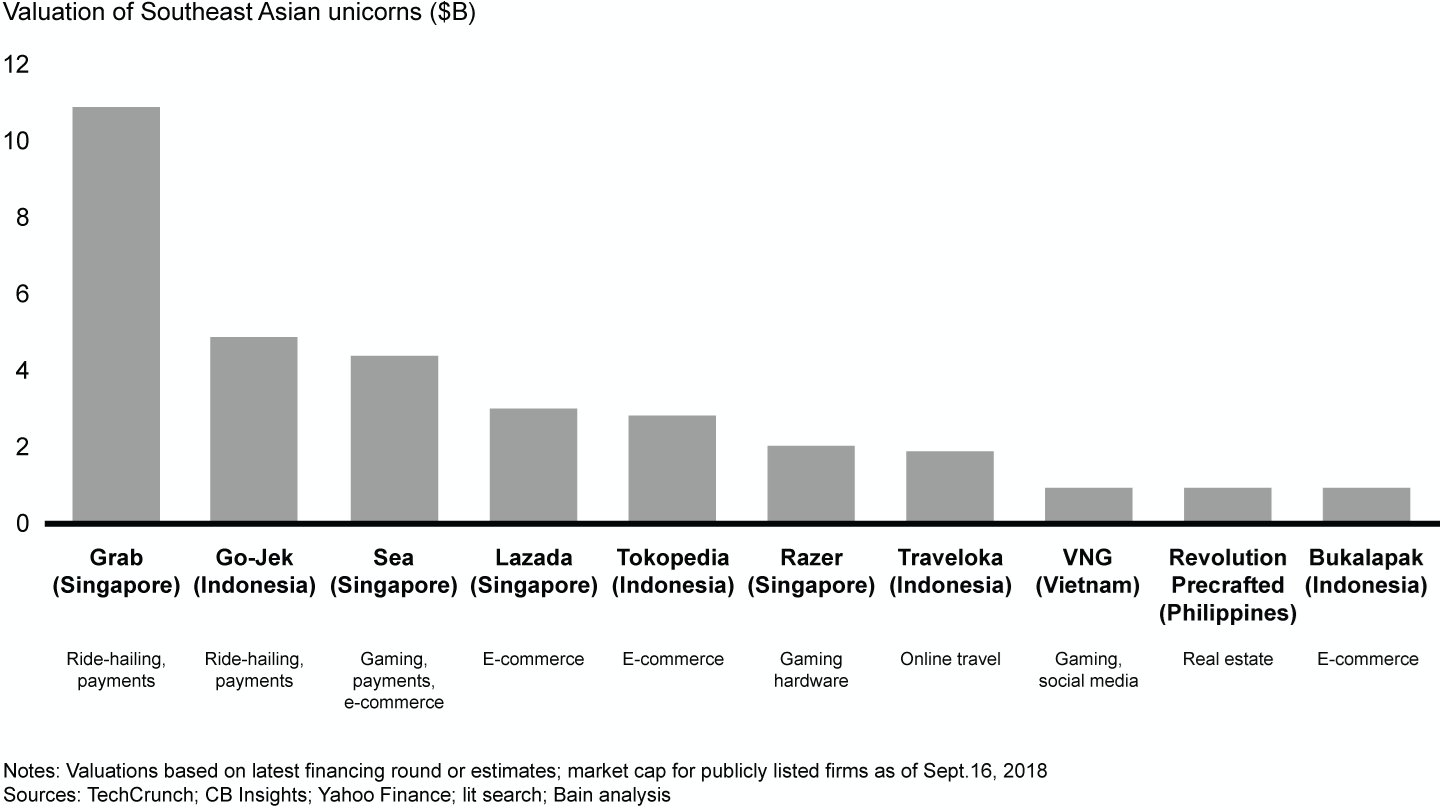
Figure 4. Since 2012, Southeast Asia has given rise to 10 unicorns with a combined market value of $34 billion.
Can Southeast Asia sustain the new momentum? Bain & Company research shows the region’s investment ecosystem has developed critical mass and is entering a new phase of growth. We expect deal value over the next five years will total $70 billion – double the level of the previous five years – and that the region will produce at least 10 new unicorns by 2024.
It’s a jarring acceleration. Investment in Southeast Asia over the past decade has been surprisingly low, given the region’s average economic growth of 7 percent a year, a burgeoning middle class and a rapidly growing pool of digital natives – conditions that ignited a powerful investment dynamic in China and India. By contrast, private equity investment in Southeast Asia hovered for years between roughly $6 billion and $9 billion, leaving many private equity funds with regional offices in Southeast Asia wondering in 2016 when investment would take off. The tipping point took longer to reach, but years of solid economic growth, government support for startups, and perseverance by private equity funds created the conditions for a rapid transition to the next phase of growth.
Sustaining growth
Several factors are likely to contribute to higher investment activity across the region, including a steady influx of new venture capital and private equity participants. The number of active investors completing private equity transactions with deal values of $10 million or higher rose to 124 in 2017, a 45 percent increase from the previous five-year average. The pool of institutional investors, in particular, has expanded significantly. New investors are attracted by the region’s strong macroeconomic fundamentals, the chance to invest in emerging regional champions and a deepening secondary market for deals of all sizes. The mix includes a combination of local venture capital funds and private equity funds, sovereign wealth funds and global funds. One example is Navis Capital, which recently launched a $1.75 billion fund focused on Southeast Asia and Australia.
Another important catalyst for investment activity is the maturing bench of start-ups. More than 1,300 companies in Southeast Asia received a first round of seed, or Series A, financing since 2011, including 261 in 2017 – five times the level of 2011. Overall, the region’s growing demand for capital has dovetailed with rising supply – a signal that company owners across the region are growing more receptive to venture capital and private equity investment.
Strong exit momentum and healthy returns are also contributing to a faster pace of investment by accelerating a healthy recycling of capital. In 2017, exit deal value rose to $16 billion, up 86 percent from the previous five-year average (see Figure 4). That virtuous investment cycle helps private equity fund managers feel more confident about raising new funds and putting capital to work. And as private equity funds expand their portfolios, they broaden the potential market for secondary transactions.





Stay updated on the go with our mobile app.
Get latest insights with smoother, more personalized experience through TIA mobile app.