I recently got my hands on a second-hand copy of Atelier Annie for the Nintendo DS. Prior to that I had never tried an Atelier game), having found the similar Recettear: An Item Shop’s Tale to be more stressful than my job and more painful than fun. I had just assumed Atelier games would be the same.
Of course, Atelier Annie completely disproved my suspicions. It’s a well-paced little game that combines slice-of-life game mechanics with alchemy and city management. Having reviewed with the dismal Hometown Story and the pretty-decent Rune Factory 4 as well as being a rabid Animal Crossing and Harvest Moon fan, it just made me wonder: what makes a life sim game a good one?
1. Your end-game objective

What is life but a day-to-day grind if you don’t have anything to live for? The same applies to slice-of-life sims. If there’s no compelling end game objective, no context for you to grit your teeth and pump your fist and decide to make things happen, then there’s no reason to play. Harvest Moon has it down pat: who wouldn’t want to dust off your grandfather’s farm and make it blossom once more? Animal Crossing made you the town’s mayor, albeit in a less than believable way (can you really step off a train and become mayor of a small town?). Hometown Story, however, got it wrong.
It had the objective — revive your grandmother’s shop — and a thin story — you forgot about your grandma until she died and left you the shop — but it was missing one thing.
2. Characters you care for…
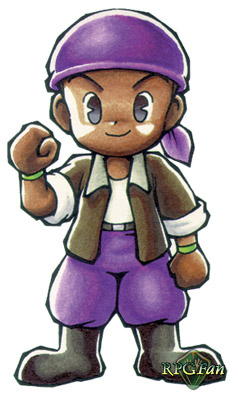
What makes a town worth living in? Just like in real life, the folks you live with matter a whole lot. It’s more fun to play with characters who are so well-crafted they come to life, rather than occasionally meeting some surly stereotype you couldn’t care less for in a clunky cutscene. My rule of thumb when it comes to judging characters? If I want to marry them, they are gold. Kai from Harvest Moon, I will never forget you.
3. …and who care for you
In Atelier Annie and many other slice-of-life sims, your townsfolk drop in every so often to request your help, to give you items, or to simply activate a cutscene that tells you more about them. Through these little actions, your relationship with the NPC develops, allowing you deeper access into the game.
Hometown Story had that; the game had neighbours drop in and stuff, but here’s the catch: those damn characters just bought their shit (since the game’s premise has you running a shop) and left. Now what was the point of that again?
4. Stuff to do beyond tilling your field / manning your shop / shaking your fruit trees





Stay updated on the go with our mobile app.
Get latest insights with smoother, more personalized experience through TIA mobile app.