 Rodolfo Yiu · · 5 min read
With our huge gaming community, why hasn’t Twitch taken off in Asia?

Photo credit: Fortune
If you’re a competitive gamer, you would probably have heard of Twitch. But as a mobile game enthusiast, I didn’t know about it until the start of this year.
Since then, I’ve been drawn to the social gaming video platform and I’ve been really interested in every aspect of it — viewership and broadcasters, ads, Amazon’s acquisition, international competition and engineering stacks. It’s no doubt that Twitch (and similar video platforms) will change the way we consume entertainment in the next couple of years. But I stumbled on the question of why Twitch hasn’t taken off in Asia, even though Asia has a much bigger gaming community?
What is Twitch?
Twitch is in the social content business, and is a video platform and community for gamers. Like any other social platform (Facebook, Twitter, Youtube, etc), it wants users to stay in the platform as long as possible to consume their favourite content, so the platform has more advertising inventory to sell. It’s important to have a solid product, as it will, in itself, influence how long users will stay on the site. A better product allows better content search and discovery, improving the overall user experience.
What’s interesting about Twitch is that it allows broadcasters to interact with their audience directly and encourages transactions in the form of donations and subscriptions. This is a deal breaker if you compare it to YouTube videos, that is, until the recent launch of YouTube Gaming. I also believe that Twitch has generated significant sponsorship dollars in its events presence, particularly in eSport tournaments.
What’s happening in Asia for video streaming?
If we compare Europe and Asia, both continents have very different cultures and languages. However, I feel that the Asian market may be even more fragmented than its European counterpart, because of its lower exposure to English and the fact that most Asians tend to stick to content their native languages. Take Korea and Japan for example. Both are civilised nations with massive gaming populations, but the locals there are less likely to engage and broadcast in an English-dominated site, compared to locals from Germany or Nordic countries.
There are however strong local players in these fragmented markets. There is afreeca.com in Korea, these 3 in Japan, and much bigger audience sites in China such as Huya and Douyu. All of these sites are only in their local languages, and you can imagine how the design and UX would better fit local tastes.

Huya’s front page.
Localisation is king
On a higher level, it is a matter of supply and demand economics for Twitch and other video platforms. The more quality content producers you have, the more viewers you’re going to attract. In this case, attracting talented broadcasters may be the key to solve the problem.
To attract broadcasters (and viewers), every single page has to be fully localised. Twitch hasn’t done a very good job yet, but I can imagine it’s something it’s working hard to improve. It launched Broadcaster Language Mode last year, and is slowly adding more language and localisation features. However, there is still tons to be done before it can come close to the likes of YouTube, such as site translation and payment (in particular adapting local currencies and showing local popular payment methods), or even just allowing foreign languages in usernames.
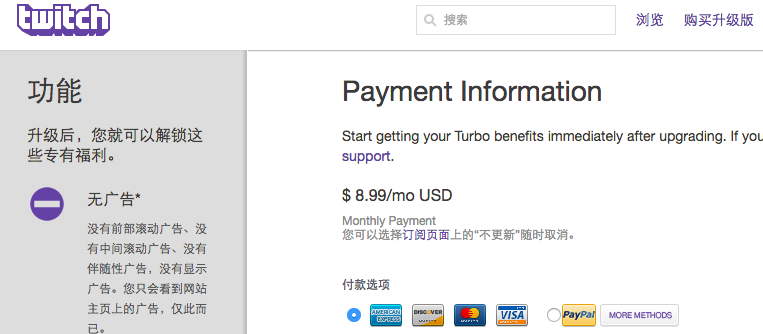
Twitch’s Chinese payment page — shouldn’t UnionPay and Alipay be in front?
How can Twitch convert broadcasters?
When listening to StartUp Podcast Season 3, the reason Twitch became so successful in its early days was because it was a first-mover in the market, and had built a loyal community. Although the dynamics have changed in Asia, I still believe the big drivers come from eSports. (Look at how big this industry is here).
Is mobile next?





Stay updated on the go with our mobile app.
Get latest insights with smoother, more personalized experience through TIA mobile app.








📅 Upcoming Events
22 October 2026
Payoneer x CSPN Summit 2026