Peter Rothenberg · · 3 min read
Japan’s answer to Zenefits raises $5m to automate HR
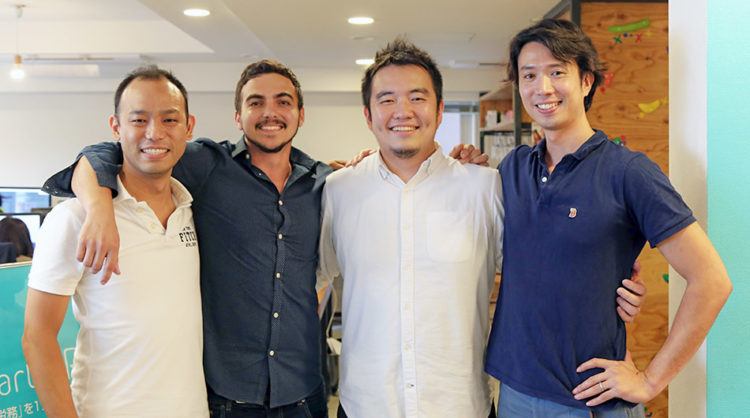
From left to right: Yohei Sawayama and James Riney of 500 Startups Japan. Founder and CEO of Kufu Shoji Miyata. Toshimichi Namba of WiL.
Japanese HR automation service SmartHR by Kufu announced a second round of funding today totaling US$4.89 million led by World Innovation Lab (WiL) with Beenext and 500 Startups Japan participating. Kufu previously raised an estimated few hundred-thousand dollars in January of this year.
SmartHR helps automate employee benefit and insurance programs. Four years ago the founder and CEO Shoji Miyata was wheelchair bound with a rare disease. Thanks to national health insurance he was able to make a full recovery, but he realized that filing the appropriate paperwork is a nightmare.
Shoji often describes the process for filing insurance claims on stage at pitch events.
“Here you have to choose your sex. One, that’s for a man. Two, that’s for a woman. Oh but look, here are several more options. Can you guess what three is? That’s right! It’s a man who works in a coal mine!”
The process is paper heavy and outdated. But by using the government API e-Gov, SmartHR is able to connect directly with local city offices. Shoji claims SmartHR has reduced a process that used to take weeks to a number of minutes.
Growing, growing, growing
Since launching last November with 200 trial members, SmartHR has bloomed to over 1,700 companies. It won the TechCrunch Tokyo pitch the month of its release and opened an API to other cloud services in May. The API also is available for internal HR systems.
“SmartHR is just good ol’ unsexy, high retention, recurring revenue,” says James Riney of 500 Startups Japan. James points out that while Zenefits might have the highest name recognition in the HR software space due to its rapid growth and publicized scandal, SmartHR’s business model is inherently different.
Zenefits is free and then monetizes from insurance companies, but SmartHR relies on a subscription model which makes it closer to Namely or Gusto. Plans start from around US$10 per month for small companies with up to five employees, to around US$200 per month for 31 to 50 employees. Larger company pricing is determined on a case-by-case basis.
SmartHR is just good ol’ unsexy, high retention, recurring revenue.
Shoji explained that most sales are still inbound. Companies can sign up for a free trial online, and SmartHR follows up with appointments at companies with over 50 employees. While their main target is small and medium businesses with less than 300 workers, Shoji says there has been more interest from larger companies lately which they may target in the future. He sees creating a network with HR professionals and accountants as a key to expansion.
The company plans to use the funds to better automate personnel and labor management tasks. According to a statement, retention is over 98 percent and Shoji confirmed that the revenue churn rate is below one percent.
“Retention has been great, which is what we look for when it comes to SaaS companies. They seem to have the product down, so this fundraise will give them the fuel for (sustainable!) growth,” writes James.
The team is aiming to hit 4,000 companies, up from a January estimate of 3,000, by the end of the year.





Stay updated on the go with our mobile app.
Get latest insights with smoother, more personalized experience through TIA mobile app.