Samantha Cheh · · 6 min read
Up, up, and away: 5 reasons why SaaS adoption in Indonesia is accelerating

Businesses and organizations across the world are increasingly adopting cloud computing software-as-a-service solutions.
According to Gartner, corporate IT spend on software globally is expected to be 11% higher in 2023 than the previous year, while the worldwide cloud market is expected to hit US$1.6 trillion in value by 2030.
These trends are reflected in Indonesia, home to Southeast Asia’s biggest digital economy and a fast-growing market for cloud services that is projected to be worth US$400 million by this year.

Photo credit: Shutterstock
To better understand how Indonesian companies are implementing cloud-based software, Tech in Asia and SaaS firm Mekari surveyed over 100 chief experience officers (CXOs) and published the findings in a report called “Dynamics and Future of the Cloud-Based Software Industry in Indonesia.”
(Note: Within the context of the report and this article, SaaS refers specifically to the business and delivery model. Cloud-based software refers to the actual product being sold.)
Here are five major findings:
1. A majority already use cloud-based software
Around 64% of survey respondents said they have adopted cloud-based software in their operations. Also, roughly 25% shared that their core business processes use cloud-based software.
“More and more companies are recognizing the value of SaaS, and those with fast-paced operations are leading the adoption of this technology,” noted Mekari CEO Suwandi Soh in the report.
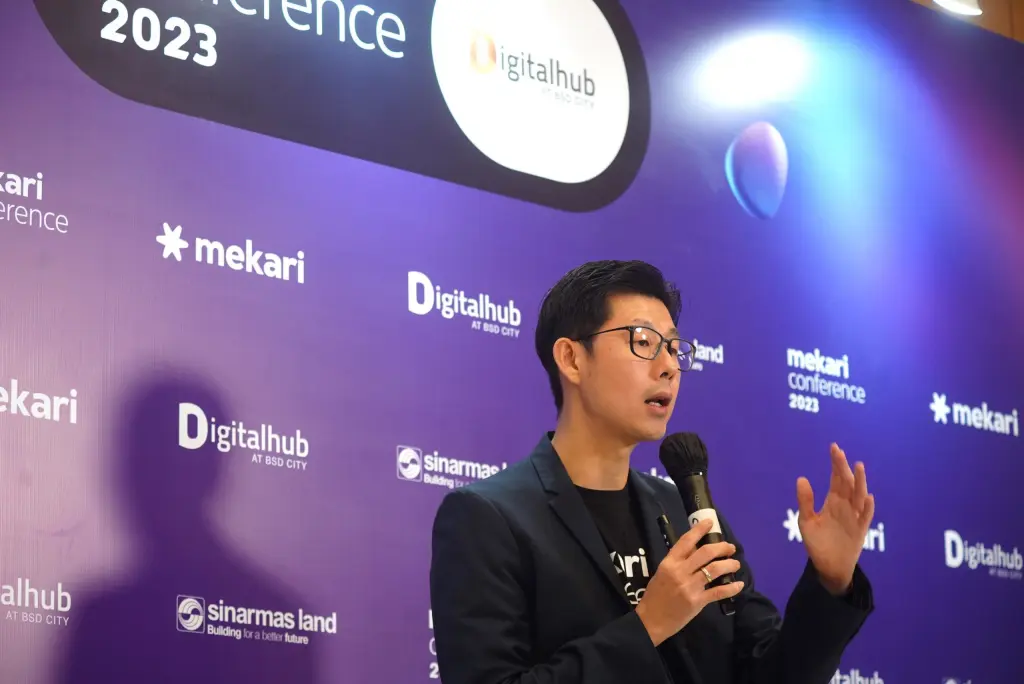
Suwandi Soh, CEO of Mekari / Photo credit: Mekari
While this progress illustrates the strides that Indonesian businesses have made towards digitalization, more than a third of companies are still lagging behind. Survey findings show that 19% of respondents are still in the planning and implementation stages, while 17% have not started on adoption at all.
2. Three key reasons for adoption
The central promise of SaaS solutions is that they can help businesses overcome challenges specific to Indonesia, such as geographic fragmentation, while simultaneously boosting efficiency, lowering costs and expanding market reach.
Survey respondents cited three main drivers of SaaS adoption among Indonesian companies.
First, cloud-based software can reduce tech-related business risks such as hardware damage and downtime. Unlike on-premise solutions, cloud-based software is easily maintained and repaired remotely, making them less vulnerable to breakdowns or discontinued vendor support.
Cloud-based solutions also have significantly stronger security features. This is particularly important in Indonesia, which has one of the highest rates of cyberattacks in Southeast Asia.

Photo credit: Matylda
Second, implementing an asset-light solution like cloud-based software can generate cost savings by cutting down the time, labor, and resources spent on tasks or running basic operations.
Generally speaking, licensing fees for on-premise systems take up 23% of a company’s total expenses. However, additional expenses such as rental fees for space, dedicated staffing, and regular maintenance could be three times higher than the software itself. In comparison, licensing fees for cloud-based software account for 85% of total expenses, making it a considerably cheaper investment.
Third, cloud-based software allows businesses to automate tasks and outsource portions of infrastructure management, freeing them up to invest more in product development.
Cloud-based software also enables stronger collaboration and speedier deployment of tech, which are crucial to fostering innovation and competitive advantage.
“Once integrated, these digital solutions promote automation, efficiency, and operational productivity,” said Soh. “This, in turn, allows businesses to make headway into the next phase of their development – essential in the face of profound market obstacles.”
3. Misconceptions around costs
Among respondents who have not adopted cloud-based software, 52% stated that high costs are the top barrier to implementation, especially in the early years of their business. These firms are often small, with fewer than 50 employees and an annual revenue of less than US$20,000 (300 million rupiah).
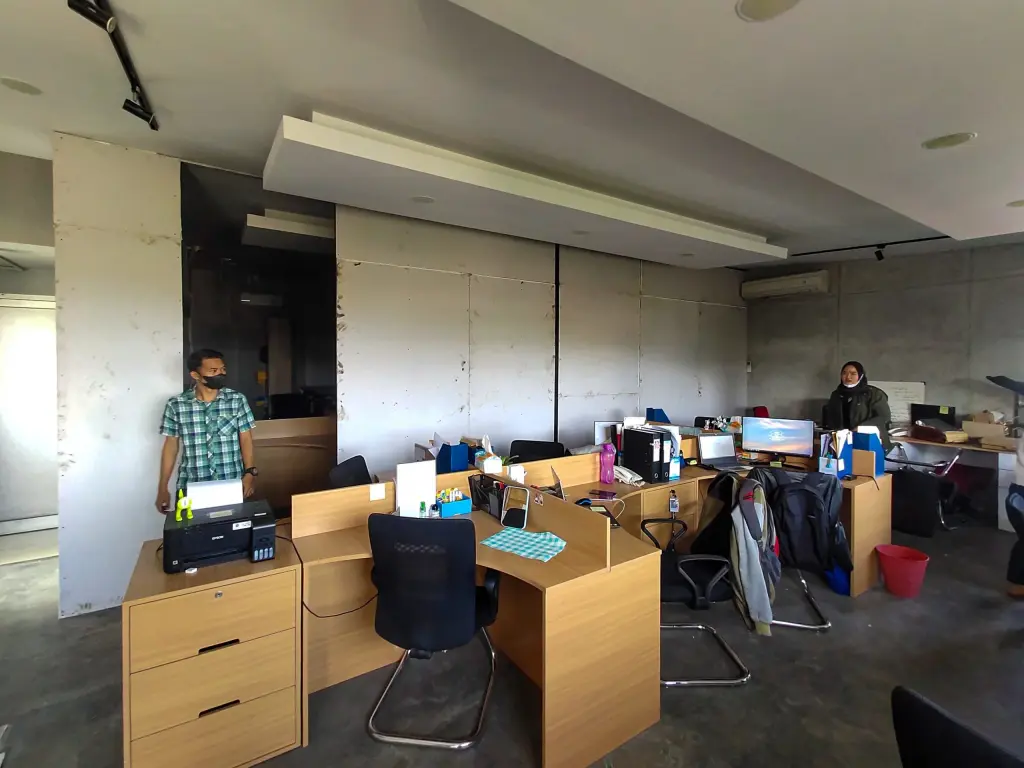
Photo credit: Shutterstock
These perceptions might also stem from companies’ lack of understanding around the financial benefits of SaaS, according to the report. In fact, most surveyed companies have not calculated the return on investment of using these solutions:
- 44% stated a lack of knowledge on how to go about it
- 38% stated that doing so was not an immediate priority
Despite their misgivings, research has shown that cloud-based software can actually be more affordable and cost-effective than running on-premise software.
4. Maturing adoption
More Indonesian businesses are expected to adopt cloud-based software and implement it across their operations. Within the next three years:
- 42% of respondents have plans to apply it to more than 75% of their business processes, enabling them to move from the awareness to transformation stage
- 33% intend to apply it to 50% to 70% of their core businesses
Looking deeper, respondents stated that cloud-based software has been mostly used for human resources management and financial and bookkeeping processes. In three years, there will be slightly more emphasis on applying such software for business analytics and customer relationship management.
5. SaaS can help Indonesian companies attract the right talent
Talent shortage is a chronic problem not just in Indonesia but also across Southeast Asia. By 2030, Indonesia could face a shortfall 9 million semi-skilled and skilled digital workers, making it more difficult for businesses to hire and retain the people they need to operate and maintain their tech infrastructure.

Photo credit: Shutterstock
The survey found that for 42% of respondents who have yet to adopt cloud-based software, the lack of talent was one of the main obstacles. At the same time, 56% of respondents agreed that SaaS solutions can help their organizations retain and attract the right talent.
Given its nature, cloud-based software makes it easier for businesses to hire talent remotely. Consequently, this expands the pool of potential employees and enables hybrid work models that are increasingly popular with Indonesian employees. Adopting these solutions could help businesses attract talent, especially those from Generation Z who prefer better work-life balance and freedom from repetitive tasks.
SaaS is the future of Indonesian business
Indonesia is at a pivotal point in its digitalization journey. Cloud adoption is primarily focused on making existing business processes more efficient and productive, but this will change over time as SaaS solutions become vital to building new business and innovations.
Cloud-based solutions will also be essential to leveraging technologies like AI, which is widely seen as a major driver of future economic growth. Generative AI alone, for instance, is projected to bring US$4.4 trillion in value to the global economy. AI could also have a “revolutionary” impact on cloud-based software, said Mekari’s Soh.
With its rapid data processing and intelligent language capabilities, AI could streamline processing workflows to “elevate user experiences” and generate more competitive advantages for Indonesian businesses, he explained.
“We anticipate that all significant developments in the Indonesian business landscape will be built on a foundation of SaaS solutions,” Soh predicted.
Mekari is a SaaS provider that empowers businesses to grow through secure, scalable and extensive solutions.
To learn more about Indonesia’s cloud-based SaaS scene, download the report published by Mekari and Tech in Asia
This content was produced by Tech in Asia Studios, which connects brands with Asia’s tech community. Learn more about partnering with Tech in Asia Studios.
Stay updated on the go with our mobile app.
Get latest insights with smoother, more personalized experience through TIA mobile app.
Recommended reads
 The truth about AI language models: No one wants to pay for them
 Tracking AI hiring in Singapore: OpenAI, Anthropic, and more
 Korea’s physical AI ambitions meet the factory’s bottom line
 SEA financials tracker: Moladin’s revenue rises 6% in 2025
 On‑demand services lift Line Man Wongnai’s 2025 revenue to $544m
 Flipkart’s costly late push into quick commerce and food delivery
 Inside Singapore’s government team that kills its own products
 Once an IPO hopeful, SCI Ecommerce nears collapse
 Who’s betting big on ChatGPT ads? Not Asian brands
 VC tracker: Granite Asia launches US$50 million fund





Editing by Stefanie Yeo, Winston Zhang, and Eileen C. Ang
(And yes, we’re serious about ethics and transparency. More information here.)