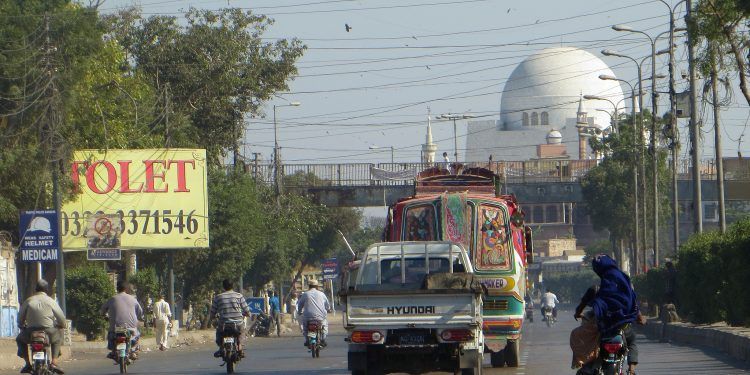
Karachi, pictured here, is one of the largest cities in the world with an estimated population of over 20 million. Photo credit: Wasif Malik.
There’s a slow, yet unmistakable rise of business sentiment in Pakistan.
Incidents of terrorism dropped sharply last year, prompting the Institute for Economics and Peace, a US-based independent think tank, to declare that it’s the lowest they’ve been since 2006.
It helps that China has vowed to invest approximately US$60 billion in building a trade corridor across the South Asian country, part of its “One Belt, One Road” project.
A large part of that cash is earmarked for infrastructure projects in energy and transportation, but the Chinese are also constructing schools, hospitals, and sport facilities.
The Wall Street Journal notes that Pakistan’s burgeoning middle class is helping fuel this economic turnaround – two million motorcycles were sold in the country last year, compared to just 95,000 in 2000. There’s a similar increase in appetite for durables such as home appliances, smartphones, and branded clothing – as well as western-style fast food.
An ever-increasing slice of these transactions are via ecommerce – helped by the fact that more than 1 million people are coming online every month on their phones.
The number of 3G and 4G subscribers sits just shy of 40 million. It is expected to grow to 90 million by 2020. Pakistan’s population is 182 million, just shy of Brazil’s 200 million, making it the sixth-most populous country in the world.
Pakistan’s entrepreneurs are aware of these trends. Islamabad-based Invest2Innovate (i2i) says 23 percent of youth want to start their own businesses.
The challenge is that many are still “clueless on the procedures and requirements”, a UNDP study quoted in i2i’s tech ecosystem report found.
Nonetheless, there’s a spurt of growth in corporate accelerators, incubators, co-working spaces, and government projects that’s helping allay such concerns – including i2i itself, which serves as an accelerator for civic-minded startups.
Aspiring founders in the country can choose between 25 such initiatives to help take their business from idea to fruition. That’s one of the key highlights of a crowdsourced map of Pakistan’s startup ecosystem released by i2i today.
The map is dynamic and evolving – people can claim data points, but they’ll be subjected to moderation by i2i’s team. The idea is to make it a reference as the industry evolves.





Stay updated on the go with our mobile app.
Get latest insights with smoother, more personalized experience through TIA mobile app.









📅 Upcoming Events
22 October 2026
Payoneer x CSPN Summit 2026