- Insights This article was written by a TIA community member. Insights pieces undergo the same rigorous editorial process that newsroom-produced articles have.
 Kai Yong Kang · · 4 min read
This ecommerce startup uses direct-to-consumer model to sell healthy products in Malaysia
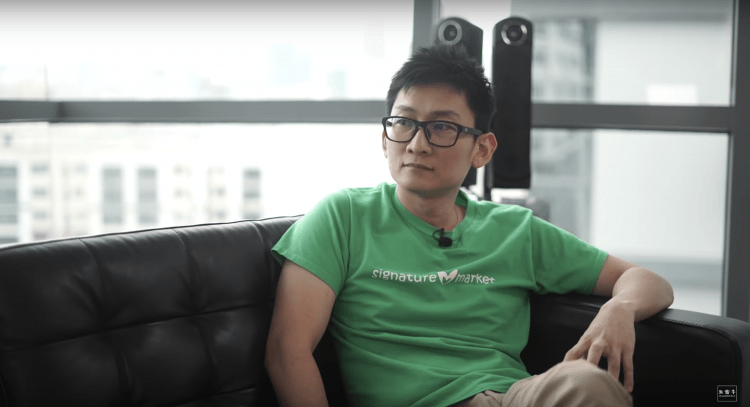
Edwin Wang, co-founder of Signature Market
This article is part of Tech in Asia’s partnership with 米雷牛 Millennials where we publish the revised transcripts from their interviews with millennial entrepreneurs. This is heavily revised from the original transcript of the interview. For the full interview, go here.
Edwin Wang is the co-founder of Signature Market, a Malaysia-based direct-to-consumer ecommerce brand for healthy and organic products. Wang is a second-time startup founder and has been in the ecommerce industry for more than 20 years. He scaled his first company, Everyday.com.my, to an annual revenue of RM50 million (or ~US$12.3 million) before it was acquired by LivingSocial.
Wang and I talk about the problem Signature Market is trying to address, the state of the FMCG industry in Malaysia, and the potential of the direct-to-consumer model.
What is the problem that FMCG consumers are facing now?
When people became aware that a lot of mainstream products were not actually healthy, they began to ask, “What options do I have now?”
Previously, a lot of consumers actually did not know that many of the packaged food products that they had been buying were actually fake food (i.e. with preservatives and minimal natural ingredients). For example, an orange juice product’s label says that it’s made from fresh oranges, but it doesn’t say that it also has a lot of chemicals in it. So, consumers are misinformed.
But a lot of people are choosing real food now vs what the FMCG giants are offering.
What are the changes in the FMCG industry?
The industry is huge, but the big ones are losing market share. A lot of smaller brands, which are more flexible and innovative, are giving consumers what they want. They usually start from bazaars, are ethical, and don’t put preservatives in their food.
They also use the direct-to-consumer model, which allows them to closely interact with and understand the consumers more. It also enables them to adapt to change much faster because the communication is very direct.
What is the difference between the direct-to-consumer model and the traditional one?
Let’s take my company as an example. Our method is very different from traditional companies in that we are more lean and startup-like. So, it only takes us three to six weeks to launch a new product. When we test products, we can also know in just three months whether they’re going to be bestsellers.
The giants, on the other hand, have to produce a lot of products, put them in all the distribution channels, and engage in a lot of marketing campaigns just to launch a product. For them, every single launch is important, and every single product is a business model in itself.
What kind of data do you look at?
We look at two metrics. The first one is: How do we get consumers to impulsively buy from us for the first time? How fast is that decision?
The second one is the return. How many customers will like their first experience with us and return to purchase again? This will make us a sustainable business.
But in the packaged consumer goods industry, there are a lot of factors (e.g. price, product weight, etc.) that affect a consumer’s purchase decision. It’s a guessing game, and we can play around this more.
What is the biggest challenge of using the direct-to-consumer model?
Do you hope to see more players using this model?





Stay updated on the go with our mobile app.
Get latest insights with smoother, more personalized experience through TIA mobile app.