Stefanie Yeo · · 6 min read
4 unicorn founders weigh in on what it takes to build a billion-dollar business

For any startup, becoming a unicorn – and hitting that US$1 billion valuation – is a significant feat. After all, achieving unicorn status is a sign that a company is on the trajectory to greatness, leading a wave of disruptive innovation and changing the way people do things.
The truth is that unicorns are made, not born. And there’s no perfect playbook that tells a startup how it can become a member of this coveted club. However, with the Asian tech and startup ecosystem maturing, new founders can look to those who have come before them for some guidance.
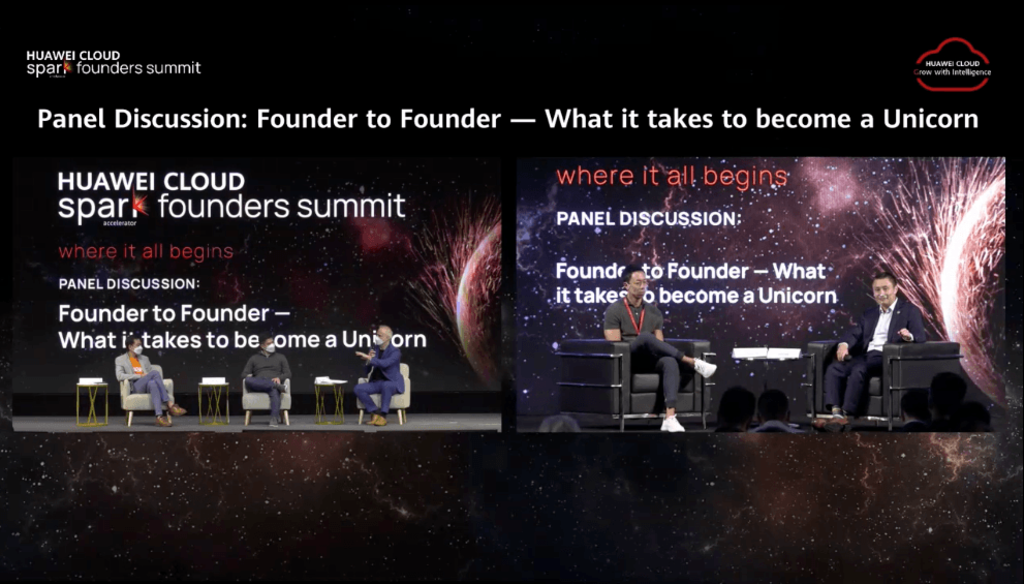
Photo credit: Huawei
As part of the inaugural Huawei Spark Founders Summit, which was held on August 3 in Singapore and Hong Kong, the founders of four unicorns – Aaron Tan, CEO of online car marketplace Carro, Eric Gnock Fah, chief operating officer at travel-booking platform Klook, Simon Loong, CEO of fintech firm WeLab, and Shawn Low, co-founder of US-based home mortgage startup Better – came together to discuss what it takes to become a startup unicorn.
Carving your own niche
For these founders, a key element behind their success was the ability to spot an opportunity. They launched their companies after seeing a gap in the market and then offering a solution aimed at addressing this problem in an innovative way.
Once that opportunity has been identified, they developed a scalable business model that really tackled the problem at hand and made a difference to their customers.
“What is it that you truly believe about the market that your competitors do not?” asked Low. In his experience, Better benefited from its founding team’s firm belief in streamlining the mortgage process in the US, which enabled it to really double down on its value proposition and build its platform.
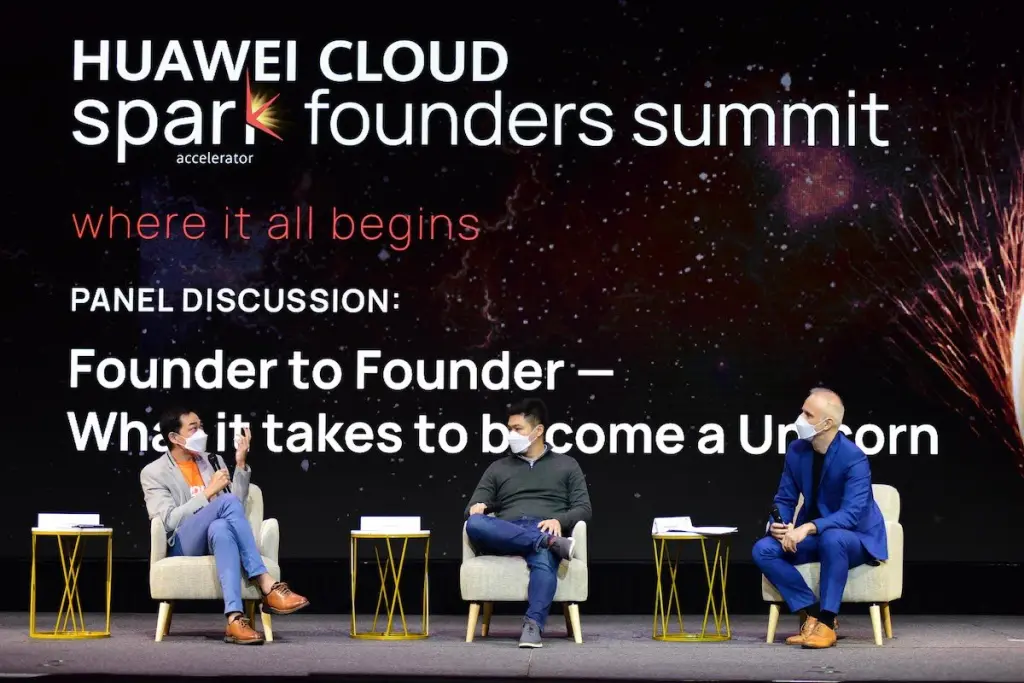
Photo credit: Huawei
“We just have to carve our own niche,” explained Tan. “Each of these markets are trillion-dollar verticals, and what we’re doing is the tip of the iceberg. What’s really important is, how are we going to differentiate ourselves in the market? Are you really delivering value to the people?”
This is a sentiment that was shared by Gnock Fah, who shared that a crucial element behind Klook’s success was the notion of “doing better,” and providing a solution that met customers’ needs perfectly.
“There are those that go for super innovation, and those that are just really good execution,” he said. “At Klook, it’s not in our DNA to invent the next iPhone, it’s about doing it better than the other guys.”
All the right people
Aside from having a strong, scalable solution to address real problems, another key element of startup success is the people behind the company. All four founders felt that having the right team in place – especially from the start – has a huge impact on the growth of a business.
“There is no ‘I’ in ‘team,’” said Tan. “If someone comes up to me and says that they want to start a company, I would ask, ‘Do you have a team of people with you?’ It’s very hard to solve the problem as an individual, but if you’re in a team it is just a lot better.”
What is it that you truly believe about the market that your competitors do not?
And while having the right team is important, ensuring that the right investors are on board is crucial as well. All four panelists agreed that founders need to consider how their investors can help them grow their businesses in the right way. As the Asian startup scene matures, businesses should consider looking to other sources of funding to support this growth.
“In our recent rounds, most of the investments came from strategic investors,” shared Loong. “For example, our last round was led by Allianz, and we’re working with them to develop a new wealthtech product. Strategic investors don’t tend to give you the highest price, but you’re not optimizing for price – you’re optimizing for growth of opportunity.”
It’s about the environment, too
While a lot of a startup’s success comes from within, the founders agreed that the larger startup ecosystem and landscape also has a vital role to play in setting startups on the right trajectory.
For starters, government support is instrumental to startup success. All four firms benefited from the resources that were available from the governments of the respective cities or countries they operate in, be it through access to funding, regulatory guidelines, or other opportunities.
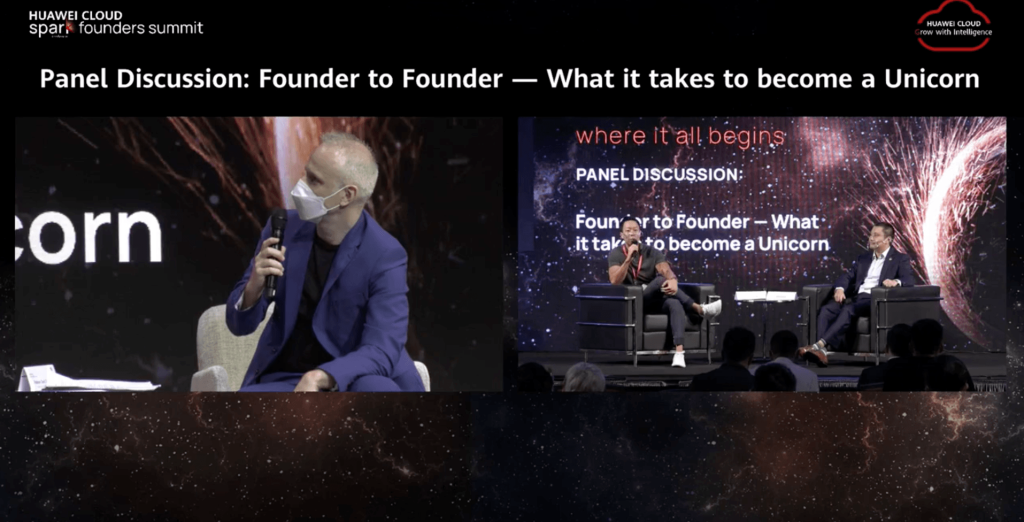
Photo credit: Huawei
Loong, for one, felt that the Hong Kong government’s early support for fintech firms played an important part in WeLab’s story.
“The regulatory environment plays a very big part in a lot of what we do,” he explained. “Hong Kong issued virtual banking licenses much earlier than many markets in Asia, and that gave us a head start.”
This was echoed by Low, who found that as Better was developing and fine-tuning its platform, it was able to benefit from sandbox environments in the US.
Such government support can also make a huge difference to investors, who may be more likely to invest in firms located in places that have clear regulatory guidelines and protections. This, in turn, helps fuel a startup’s growth, which is vital in its pursuit of a billion-dollar valuation.
In Tan’s view, being a venture-backed startup also goes a long way in propelling a company towards a higher valuation.
By definition, being venture-backed “means that growth is almost an essential ingredient for us to raise our next round,” he explained. “That drives that need to grow as well.”
On the road to the unicorn club
There’s no secret formula to creating a unicorn. It’s a convergence of factors, both from within the company, and from outside it.
However, founders can certainly lay the groundwork for success. They can connect with other founders – those who have succeeded and those who have failed – to learn from their experiences. And as Asia’s startup ecosystem continues to grow, they can also tap into the expanding pool of resources that are available, such as Huawei’s Spark program.
Aside from organizing the Spark Founders Summit, which aims to bring together founders, venture capitalists, and business and government leaders to share their insights on startups and innovation, the program also helps drive startup growth via its hybrid accelerator for startups, which serves as a platform to support the scaleups of tomorrow.
Huawei intends to invest US$100 million in startups in the Asia Pacific over the next three years through the program. It will also be working to support startups by enhancing the region’s developer ecosystem and boosting product development, among other ways.
“Huawei is willing to put [in the] effort and resources to better the tech ecosystem,” said Tan. “It shows that apart from Amazon Web Services and Google, there is another tech giant to supercharge Southeast Asian tech companies.”
Ultimately, achieving a billion-dollar valuation is about putting your best foot forward, using the resources at your disposal, and making sure that you have a solution that makes a difference to the lives of people. And with the right growth, your startup may one day become a unicorn, too.
Huawei Spark is a hybrid accelerator program launched in 2020 for startups in the Asia Pacific. It aims to incubate and accelerate startup growth for a fully connected, intelligent world.
Learn more about Huawei Spark on its website here.
This content was produced by Tech in Asia Studios, which connects brands with Asia’s tech community. Learn more about partnering with Tech in Asia Studios.
Stay updated on the go with our mobile app.
Get latest insights with smoother, more personalized experience through TIA mobile app.
Recommended reads
 Life’s a game, and AI agents are Animoca’s new play
 Indonesian AI startup goes global
 Forrest Li on scaling Sea, building smarter bots, and founder grit
 An AI assistant that joins sales calls and scores team skills
 Beyond the check: Why VCs need more than capital
 SGX’s CEO says it doesn’t need a unicorn to win
 SMEs want AI too, but not the kind Big Tech is selling
 Oatside’s alt-milk rise hits a profitable gear
 Alibaba’s financial health in 12 charts
 Asia’s telcos bundle AI into mobile plans. Will it pay off?





Editing by Nathaniel Fetalvero and Eileen C. Ang
(And yes, we’re serious about ethics and transparency. More information here.)