 Xairylle · · 7 min read
4 reasons behind China's poor performance at the DOTA 2 TI3 championship
In a previous post, we looked at the general performance of the Asian teams in The International 2013. We pondered how the Chinese were expected to dominate this year’s international like they did in the previous years. However, as the biggest DOTA 2 tournament drew to a close, it became quite clear that China wasn’t going to take the championship. Team Orange, however, was able to get third place, which makes Malaysia the only Asian team in the top three.
A year ago, in the previous International, they were a formidable force to be feared with their flawless execution, amazing team fights, awesome farming-skills, and great decision-making. So what happened to Chinese DOTA?
Chinese DOTA in the previous Internationals
In this in-depth interview (A Lifetime of DOTA) with Evil Geniuses’ Jacob “Maelk” Andersen and Fnatic’s Kai “H4nn1” Hanbueckers, they talked about several things about Chinese DOTA as well as whether or not they thought the Asian scene was superior. In the video, Maelk mentions that at one point, during the WC3 DotA days, the European (EU) scene was regarded as the juggernauts of DotA. That is until Singapore’s Team Zenith won ESWC 2008, and Chinese teams For The Dream and EHome won SMM 2009 and SMM 2010 respectively. EHome dominated 2010 and as Maelk put it, “completely demolished the European scene.”
During The International 2011 (TI1), the Ukranian team Natus Vincere (Na’Vi) dominated and won. In the same video, Maelk says:
When Na’Vi won TI1, the Chinese teams haven’t really prepared for DOTA 2 yet. It was a big accomplishment, no doubt. They won a million dollars, but I don’t think the Chinese were prepared.
A year later, The International 2012 (TI2) arrived, but this time the Chinese team Invictus Gaming (iG) won. LGD.cn was undefeated in the group stages. Asia dominated so hard that seven out of the top eight teams were from Asia, five of them coming from China. The teams had unique strategies involving heroes such as Morphling and Naga Siren. EHome also made significant use of the hero Io, who would later be an important hero to use or watch out for in the next International.
1. No scrims outside of China
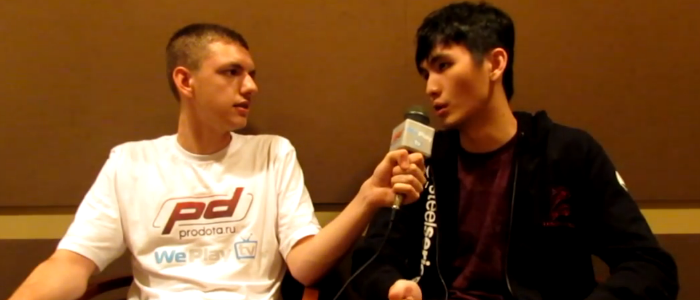
In this interview with Team Zenith’s Daryl “iceiceice” Koh, he mentions how the Chinese teams scrimmed mostly among themselves and not with teams from South East Asia (SEA). On the other hand, also in an interview, LGD.int’s Theeban “1437” Siva says that the Chinese scrimmed against each other.
For those who are new or not familiar to the term, scrim is short for scrimmage and in eSports, it is used to refer to serious practice games between two different teams. Scrims are important in DOTA 2 in order to strengthen teamwork, synchronize team fights, test certain strategies and generally keep the team in shape. When scrimming, it is not only important to analyze one’s own play style, but also the enemy’s. As such, it is very advantageous to play against teams with different play styles in order to improve decision-making and in-game improvisation as well as the way they handle surprise tactics and strategies against them.
As most of us know, to this day, there have been ping and connectivity issues when two teams from different parts of the world try to play together. As such, teams from China, SEA, EU and North America (NA), can’t really play against each other. It’s a bit easier between teams from Asia compared to an Asian team trying to play against EU/NA. This is why LANs such as the International are much-awaited.
However, in the same interview, iceiceice mentions that it wasn’t always like this. During The International 1 and 2, the Chinese used to scrim more with SEA teams and are more open-minded to other play styles. And in the words of iceiceice:
Now they are just training among themselves thinking that they have the strongest playstyle.
2. No “High Risk, High Reward” Playstyle
3. Less tournaments in China
4. Improvement of the Western teams
Asia towards The International 2014





Stay updated on the go with our mobile app.
Get latest insights with smoother, more personalized experience through TIA mobile app.









📅 Upcoming Events
22 October 2026
Payoneer x CSPN Summit 2026