Steven Millward · · 3 min read
360 Browser for Android, Yet One More Choice for Chinese Netizens

Desktop and mobile web browser apps in China are increasingly becoming freebies, like tea-bags at hotels, from companies desperate to be remembered amongst a crowd of competitors. And so Qihoo 360 has launched a mobile browser for Android this week, in a bid to keep ahead of major rivals such as Tencent.
The 360 Browser for Android (pictured above) has three separate versions: for smartphones, 7-inch tablets, and 10-inch ones as well.
The company already has a popular Windows browser, which is based on Microsoft’s IE7. Thankfully 360’s mobile efforts are made to much more recent web standards, and score 94 out of 100 in the Acid 3 test.
Trying out the new 360 for Android on my own Nexus S, I found it quick – faster to launch than Firefox, though slower than the stock browser – and pleasingly clutter-free, with a Chrome-esque candy-blue colour scheme throughout. Curiously, 360 has gone for a Windows Phone 7 style of button in its new mobile browsers, which is at least a change from aping Mobile Safari. There’s also cloud syncing for bookmarks, and limited back-up options too.
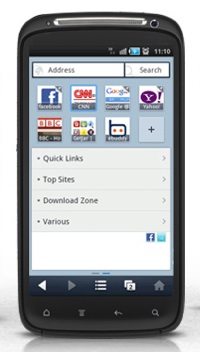
The international version of China-made UC Browser - a big hit around the world.
One of the best things about 360 for Android is the gestures, which require only a preset squiggle or movement to perform a common action, such as switching between pages.
Who are the main mobile browser challengers in China? There are desktop and now mobile offerings from Baidu, Sogou, QQ Browser, Maxthon, and Firefox. One of the most popular mobile browsers in China right now is UC Browser (pictured right); Statcounter says that it has about 50 percent of the mobile browser market share right now (see the graph at bottom). It’s from a small indie start-up that’s now under major attack from China’s giant portals. UC is having success around the world, and recently launched in Indonesia as well.
In this market, web browsers are as much complimentary as complementary: they’re about being seen to be at the service of users. In the past, the same was true of Chinese input method editor apps, which offer better Chinese-language typing abilities than most native OSes. The ultimate purpose, of course, is to get users on board with your brand. And so your browser fan might also make use of your search engine – the motive behind Tencent directing QQ Browser to Soso search – or buy your anti-virus products – which is Qihoo’s real bread-and-butter product.
If you’d like to give the Android phone or tablet version a try – or the iPad variant – head over to the 360 mobile browser homepage. Also, here’s a graph showing market share amongst mobile browsers in China. UC Browser, in orange, is clearly way ahead:





Stay updated on the go with our mobile app.
Get latest insights with smoother, more personalized experience through TIA mobile app.