 Minghe Hu · · 4 min read
Coronavirus fears cast shadow over China’s food delivery industry
Beijing resident Anna Wang, 30, is a habitual user of food delivery apps, usually ordering meals and milk tea online every week even though her company provides free meals to employees at an on-site restaurant.
That changed about 10 days ago, with the increasing spread of the new virus from China that has killed more than 560 people, with more than 27,000 cases reported.
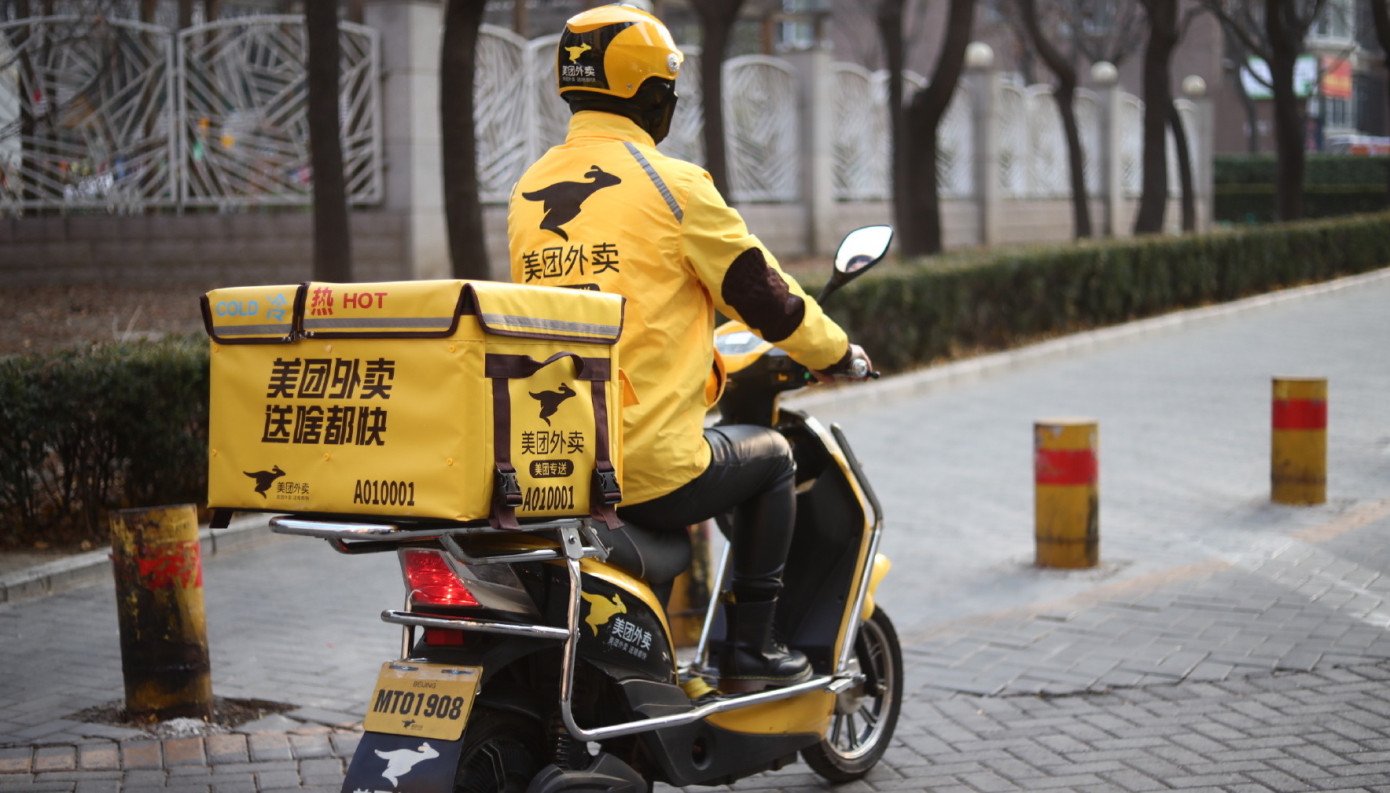
Photo credit: Meituan-Dianping
Working from home as recommended by the local government, Wang no longer orders daily meals online. “It could be a risk, as the food may contain viruses and contact with the couriers may also cause infection,” she said.
Instead, she orders deliveries of fresh vegetables and raw produce for meals cooked at home by her parents. While this still entails some contact with couriers, Wang said each order lasts her family about four days compared to having to order cooked food for each meal.
They also minimize the potential risk of infection from visiting crowded markets to buy groceries. “We are trying to avoid contact [with others] as much as we can,” she said.
Wang is one of the many regular users of food delivery services in China, which has one of the biggest on-demand delivery industries in the world. The market for food and grocery deliveries was projected to grow 30% to reach 604 billion yuan (US$86 billion) last year, more than four times its value five years ago, according to a report issued in August by market researcher Trustdata.
Food delivery apps in China had an estimated 400 million monthly active users, about 30% of the country’s population, in the third quarter last year, up 14% from a year ago, according to a separate report published in November by Trustdata.
But the coronavirus outbreak in China has cast a shadow over the booming industry. A sick courier in Shenzhen worked for 14 days before he was diagnosed with the disease, while four staff at a fast-food restaurant in Chongqing were also infected with the virus, according to local reports.
The rapidly spreading respiratory illness has resulted in more deaths in China than the SARS epidemic in 2003.
Li Zhanlin, a 34-year-old full-time delivery worker for food ordering app Meituan Dianping, said there have been fewer orders this Lunar New Year holiday from January 24 to February 2.
“The average number of daily orders this holiday has been around 20 to 30, but it was around 50 to 60 during the previous Lunar New Year holiday,” he said. “I think it’s because many restaurants are closed and customers don’t like to order food during the epidemic.”
There is generally lower activity on delivery apps during the Lunar New Year period each year as fewer couriers work, many food outlets close, and customers go on holiday, according to Yang Xu, senior analyst at research firm Analysys.
“This time [with the influence of the epidemic] the amount of activity is even lower, and the slow period might be longer,” she said. “Closed restaurants and extended public holidays out of fears for the coronavirus could bring even more damage to the industry.”





Stay updated on the go with our mobile app.
Get latest insights with smoother, more personalized experience through TIA mobile app.










📅 Upcoming Events
22 October 2026
Payoneer x CSPN Summit 2026