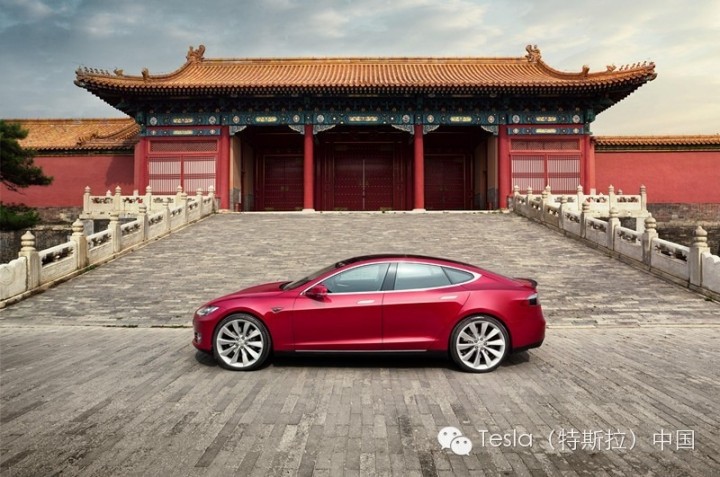
This year didn’t really get off to a great start for Tesla in China. In fact, the company’s sales were reportedly so poor that it was driven to start offering free services, and ultimately forced to lay off about 30 percent of its domestic staff.
But all that could be about to change. At least in Beijing, where Tesla is reportedly about to catch a big break.
Winning the lottery
To understand that break, you need to understand a bit about how buying a car in Beijing works. Because the city’s traffic is already horribly congested and because of its horrific air pollution issues, you can’t just run out and buy a sedan. If you want to drive a personal car with five seats or less in Beijing, you need to register for the license plate lottery. Once a month, the Traffic Management Bureau picks a few numbers from the pool of people currently waiting, and those people get license plates. Everyone else gets to keep waiting. And your chances of winning are ridiculously slim – in August, just 0.52 percent of the people in the lottery were granted license plates.
There is a way around this, though – if you’re buying one of a specific set of electric cars, you’re given priority positioning in the lottery, because Beijing wants to encourage the development of the electric vehicle segment. Buying one of these cars doesn’t automatically grant you a license, but your chances of “winning” one goes way up. As of now, Tesla isn’t on that list. But the company reportedly will be added to it this month.
That’s a big deal because it should make the Tesla much more attractive for electric vehicle buyers. Previously, if you wanted to buy an electric car, you could buy one of the government-approved ones and feel confident you were likely to get a license plate fast. Or you could buy a Tesla and rot in the lottery line for years with the people buying gas-powered vehicles. But now, Tesla buyers will be able to hop to the front of the line. That should make it easier for Tesla to compete with domestic electric vehicle brands.
Domestic companies do still have an advantage – there are purchase and tax subsidies for electric vehicles that still don’t apply to Tesla. But those are about cost, and a cost-conscious Chinese buyer isn’t looking at Tesla anyway: its cheapest model costs US$110,000 in China. One of the big reasons luxury buyers have likely been avoiding Tesla up until now was that in Beijing, it might have taken months or years to actually get a license plate for one. Now, that should no longer be the case.
Year of the Tesla?
Of course, for the moment this change just applies to Beijing, but many of China’s other major cities have similar policies and could be inspired to follow Beijing’s lead as we head into 2016. Moreover, as a luxury car brand, Beijing is a hugely important market for Tesla, as it is one of the biggest centers of China’s wealth.
Plus, there’s another big change slated for Tesla in 2016 that might help boost its sales in China – the unveiling of its low-cost Model 3 sedan. Whether that actually makes it to China in 2016 is another question entirely – I certainly wouldn’t bet on it – but assuming the car looks good, its launch is likely to lead to an uptick in buzz and interest about Tesla in China that could help spark sales of its higher-end models.
2016 could be a banner year for Tesla in China. And it may need to be. With Chinese automakers pushing further into the electric vehicle space, internet companies getting in on the action, and China’s government pushing for EV adoption, Tesla isn’t likely to be the only high-performance electric vehicle option on the market for long.





Stay updated on the go with our mobile app.
Get latest insights with smoother, more personalized experience through TIA mobile app.










📅 Upcoming Events
22 October 2026
Payoneer x CSPN Summit 2026