
(Photo by Simone)
In the movie Her, the world is introduced to the most intelligent operating system yet. The main character, Theodore, falls hopelessly in love with Samatha, an artificial intelligence. He even has intense and breathy cybersex with her.
Singapore-based startup Vibease wants you to relive that. No, it’s not close to spawning sentient robots that will fawn over you. But it’s working on a “virtual boyfriend” that syncs up with a smart vibrator to pleasure users.
“Imagine, you can download Brad Pitt. Or you can download George Clooney,” says Dema Tio, co-founder of Vibease. He tempers expectations by saying that the technology won’t be as advanced as Siri yet. But you can interact with your virtual lover, for example, by asking it to “go slower.”
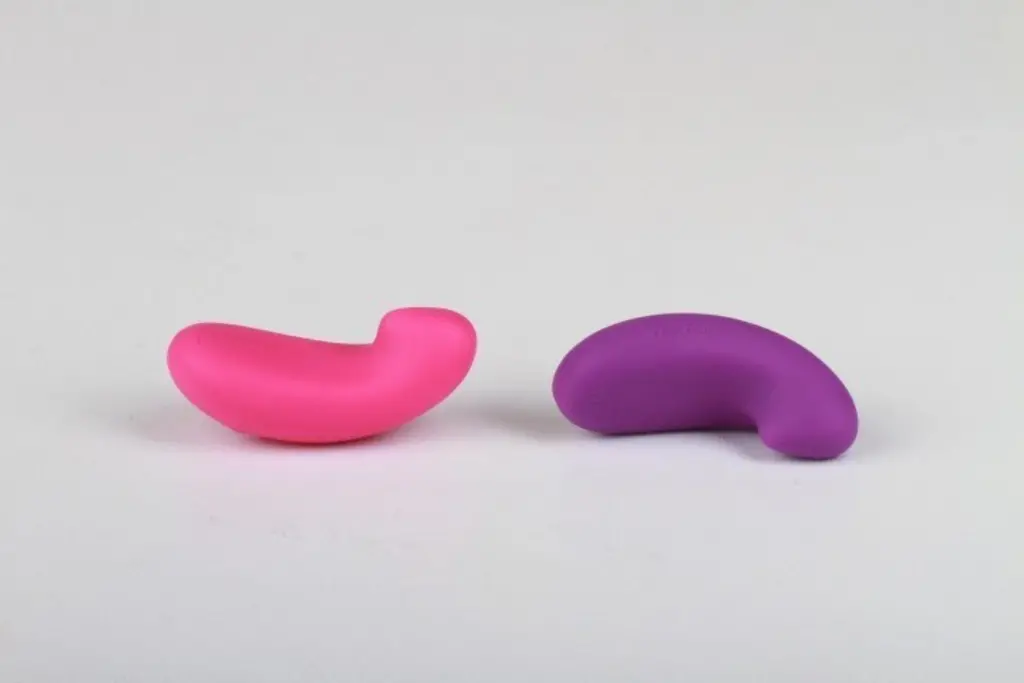
Vibease’s vibrator.
The company first burst onto the scene at Tech in Asia’s inaugural startup conference three years ago in Singapore. Imagine an engineer talking brashly and enthusiastically about sex, drawing laughter from the crowd. That was Dema.
Now, he’s again a finalist at our Arena competition; this time at Tech in Asia Tokyo 2015. He’s seasoned, wiser, and sounds like he’s talked about Vibease a million times.
Not just a fantasy

He’s made real progress. Vibease garnered US$1.5 million in sales since launching two years ago. It sells a wearable vibrator that works in concert with an app, which lets users download and listen to audio fantasies. The wellness device – as Dema calls it – changes rhythm in accordance with the story. Think an interactive 50 Shades of Grey.
“We want to make it as close as possible to real intimacy,” he says, pointing out the device can be used hands-free. “She can close her eyes, listen to a story, and that’s it.”
The “wellness” label is crucial to Vibease’s success, Dema believes. It’s good for business. Sex toys have traditionally been associated with porn, kink, and smut. In Singapore, dildos display among other quirky props under the bright neon lights of tacky sex shops. Shy passers-by avert their gazes. Giggling teenagers dare one another to enter.
Vibease’s vibrator, on the other hand, is discreet, friendly, and most definitely not dildo-sized. It wants to mainstream the use of sex toys, especially in Asia where perceptions have not changed with regards to owning these gadgets. The vibrator looks curvy and non-intimidating. It’s held in white packaging with dashes of pink and turquoise, and its body is soft silicone. The gadget fits into a palm, is wearable with panties, and is silent.
Vibease is made for women. The app-vibrator combo isn’t designed solely for the hip factor. “For women, it’s not only physical, but also about the emotions. And this is the biggest missing part in [the sexual wellness] industry.” Stories are meant to get women in the mood.
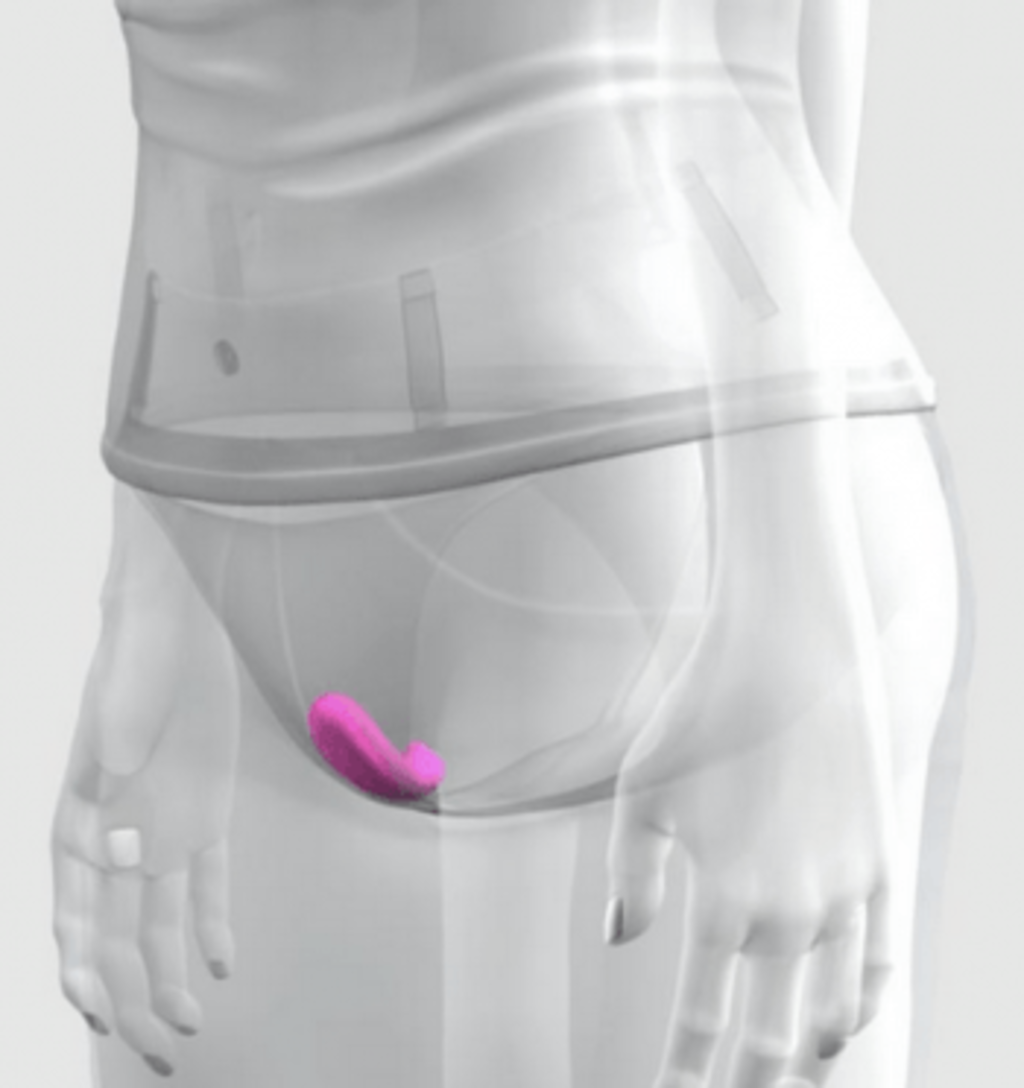 Vibease is also designed for couples to achieve a better sex life. While originally conceived for partners in long distance relationships, Dema found it can enhance sex for live-in couples too. While their sexual encounters tend to be spicy early on, guys often get lazy, especially after marriage.
According to Dema, men, who often come home exhausted from work, tend to think: “I’ve done my part, and I just want to go to sleep.” That’s the most common complaint he’s heard from women.
Now with Vibease, the guy can still finish first, while assisting his wife to climax. It eliminates the frustration that women feel when they’re aroused but don’t get an orgasm. If that happens too often, it turns them off sex, and in the end guys feel unhappy too.
Angels and venture capitalists too are onboard with the “wellness device” angle. They don’t want to touch the porn industry, despite the money spinner it is. But a device promoting better health for women through sexual pleasure? Sign me up. Dema says the startup has attracted US$500,000 in funding so far.
An operating system for sexual wellness
Now, it wants to raise more, and that’s why it’s in Tokyo. It targets receiving US$2 million to US$2.5 million, and previous investors like Golden Gate Ventures, SOSV, and Strategia Ventures have committed to this round.
Japan is also the next market Vibease is looking at to sell its goods. It plans to secure a local partner to take Vibease to offline and online channels.
The market fascinates Dema, and it’s not just because of its size. Japan is a land of contradictions. The Japanese are open about sex, they’re pretty liberal in their attitudes towards it, unlike most other countries in the region. But they don’t talk about it. Marketing Vibease will be challenging. If the startup cracks this – and that’s a big if – it’ll probably sell loads.
While Vibease is perceived as a hardware firm, it’s moving away from that a bit in order to scale faster. Now, it portrays itself as an operating system for sexual wellness devices. Rather than relying purely on hardware sales for revenue, it’s licensing its software to select sex toy manufacturers. Dema gives an example: “Maybe it will be a Dragon vibrator, powered by Vibease.”
Arena judges asked if Vibease will sync with videos or virtual reality content. Dema replied that it won’t for now, since the startup is targeting women, who respond most to audio erotica.
They also inquired about the margin on each vibrator, and Dema said it’s up to 70 percent, less of course if distributors are involved.
This is part of the ongoing coverage of Tech in Asia Tokyo 2015, our annual conference taking place on September 8 and 9.
Vibease
Vibease is a smartphone-controlled personal massager.
- Location
- Singapore
- Founded
- 2012
- Employees
- 2 – 10
- Website
- www.vibease.com
- Latest Funding
- US$155k / Seed
- Hiring
- 0 positions
Stay updated on the go with our mobile app.
Get latest insights with smoother, more personalized experience through TIA mobile app.
Recommended reads
 🇮🇳 Roundup: GlobalBees buys fitness brand Reach, more
 Nykaa’s financial health in 5 charts
 Crabs in a tub: Are Southeast Asia’s startups in a doom loop?
 Cash-rich, action-lite Bukalapak
 60/40 Podcast: No such thing as a free lunch (or chocolate)
 50 rising startups in China
 50 rising startups in Southeast Asia
 A $150m giant you’ve never heard of
 50 rising startups in Malaysia
 Tech in Asia Conference 2020 Virtual by the numbers (INFOGRAPHIC)




Editing by Charlie Custer
(And yes, we’re serious about ethics and transparency. More information here.)







📅 Upcoming Events
22 October 2026
Payoneer x CSPN Summit 2026