- Premium Content It takes our newsroom weeks - if not months - to investigate and produce stories for our premium content. You can’t find them anywhere else.
 Jack Ellis · · 9 min read
After 10x growth last year, food delivery will be Grab’s main battlefront in 2019
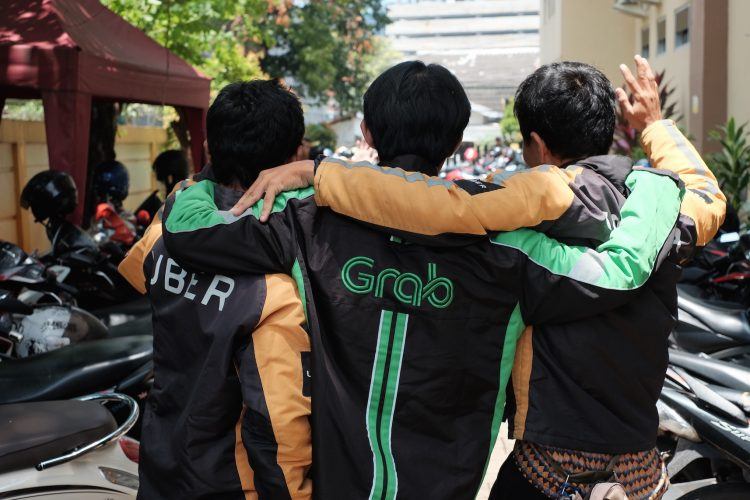
Photo credit: Grab
When Grab laid out its plans to dominate Southeast Asia’s food-delivery market last May, you’d be forgiven for thinking it was a tall order.
At the time, its GrabFood service had only been rolled out in Jakarta and on a small scale in Thailand. In the Indonesian capital, it was up against Go-Jek’s incumbent Go-Food. Elsewhere in the region, Germany’s Foodpanda, the UK’s Deliveroo, and US-based UberEats had carved out the market among them, with a host of smaller on-demand food-delivery players battling for a piece of the pie.
That changed early last year with Grab’s high-profile acquisition of Uber’s Southeast Asia business.
As a result of the deal, Grab integrated UberEats into GrabFood, almost instantaneously extending its coverage to Malaysia and Singapore. Within weeks, the GrabFood logo was also seen on mopeds in Vietnam and the Philippines.
See: With Uber SEA purchase, Grab becomes a food-delivery giant
Overall, Grab says its food-delivery footprint grew 10x between January and December last year in terms of daily deliveries.
Moreover, it claims to be the leading food-delivery company in Thailand and the Philippines, and number two in Vietnam.
Grab told Tech in Asia that most of this was “organic” growth that came after the acquisition of UberEats, rather than being from the acquisition itself. UberEats had only really been present in Malaysia and Singapore, and GrabFood overtook its predecessor in both countries in terms of peak delivery volumes within three months, according to Grab.
Merger of expertise
GrabFood didn’t just get UberEats’ merchants and network. It also inherited many team members who contributed to the success of the US firm’s food-delivery business.
Among the personnel who came on board was Tomaso Rodriguez, who was with Uber’s Mediterranean transport business for almost six years before moving to Southeast Asia to run UberEats in the region.

Tomaso Rodriguez, head of GrabFood / Photo credit: Grab
Now head of GrabFood, Rodriguez was actually poached prior to the close of the Uber deal to realize Grab co-founder and CEO Anthony Tan’s food-delivery ambitions. But it wasn’t long before Rodriguez was back working with most of his UberEats colleagues.
Localization
Head-to-head with Go-Jek
Quality control
Subsidy war 2.0?
Stay ahead in Asia’s tech landscape
This is premium content. Subscribe to read the full story.
Uber alumnus Tomaso Rodriguez is leading the charge against Go-Jek and specialist players.
We know this is not ideal. ⌛ Sign up in 20 seconds. Cancel anytime.
Our subscriber community includes professionals from these companies:





Stay updated on the go with our mobile app.
Get latest insights with smoother, more personalized experience through TIA mobile app.












📅 Upcoming Events
22 October 2026
Payoneer x CSPN Summit 2026