
Attendees of Shanghai Fashion Week scan apparel embedded with BitSE technology. Photo credit: BitSE.
The first time Sunny Lu heard about bitcoin, he was in Europe, attending one of Louis Vuitton’s yearly tech seminars. It was early 2013, before bitcoin prices surged past US$1,000, boosting awareness – and appetite – worldwide for the digital currency. Sunny, now the COO and co-founder of blockchain startup BitSE, knew it could change the world.
“Once we heard of bitcoin, we thought, this is it. This is a very cool technology, ” Sunny tells Tech in Asia. “It will definitely have prospects in the future.”
Today, the Shanghai-based startup is focused more broadly on blockchain applications. But when it began in 2013, BitSE was primarily a bitcoin mining business, with operations out in Sichuan province where electricity was cheap. That was BitSE’s “cash cow,” says Sunny, allowing the startup to operate without relying on external investment. According to the company, BitSE was generating five percent of the world’s bitcoin supply at one point.
But the founding team wanted to expand into wider applications.
“We knew the future of bitcoin was in applications,” says Sunny. “If it is just a currency, its development will definitely have limitations. And it will be very slow, because currency is not something that startups can play with.”
In searching for the blockchain application with the most potential, BitSE came across anti-counterfeiting. It was a natural fit, given Sunny’s past as Louis Vuitton’s chief information officer for China. He knew the pain of fighting fake goods – especially in Asia – and began building VeChain, which can track and verify luxury apparel and handbags.
It’s like the product’s passport.
In the same way that bitcoin’s blockchain is an immutable ledger of peer-to-peer transactions, VeChain creates a record and digital trace of physical items. Each item is given a unique ID, which is paired with either a NFC chip or a QR code, depending on the client’s requirements. That binds the item’s digital identity to real-world transactions. It’s like a passport that’s scanned or swiped every time the product undergoes a different action on the supply chain, like having its ID registered, or moving from a warehouse in Vietnam to a store in London.
Each object’s ID also comes with a public and private key pair. To verify an item’s authenticity, users can use VeChain’s app, which shows the product’s profile and checks its public key on VeChain servers.
“In one way, you guarantee security. In another, you make it auditable,” says Sunny. “Even if someone steals your key, you can trace it. For example, you can see how many IDs I’ve registered using my private key.”
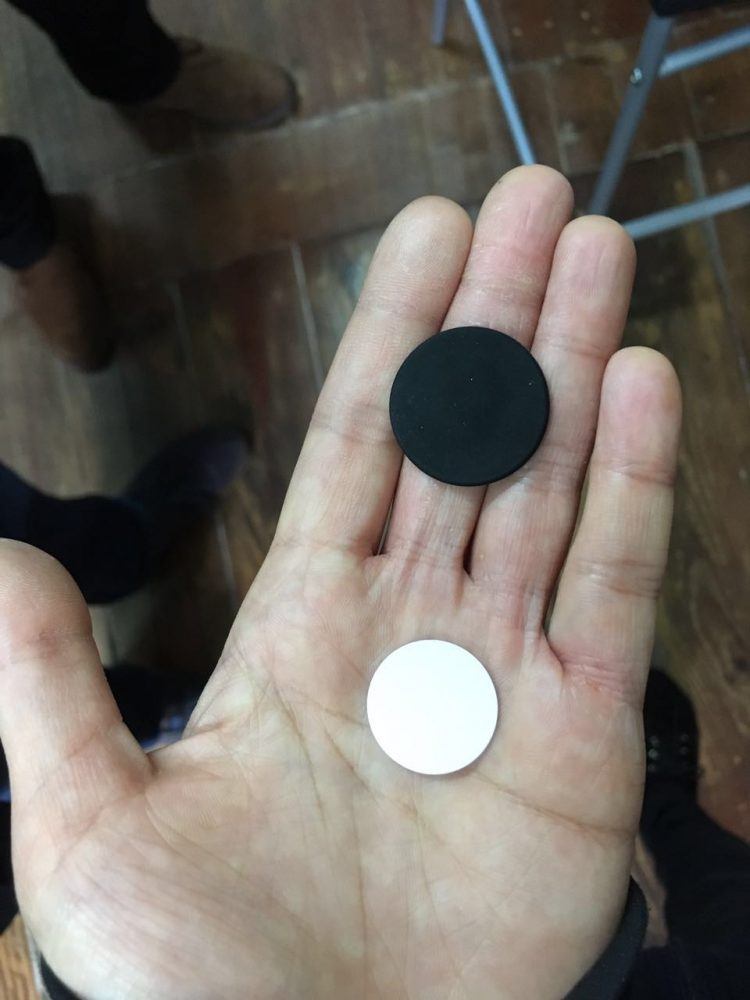
VeChain NFC chips. Photo credit: Tech in Asia.
Blockchain-as-a-service
Last summer, BitSE raised its first round of investment, an undisclosed amount from Fenbushi Capital, a Shanghai-based firm that invests exclusively in blockchain companies. The startup has also developed several partnerships for VeChain, including one with a Chinese importer of red wine.





Stay updated on the go with our mobile app.
Get latest insights with smoother, more personalized experience through TIA mobile app.