- Premium Content It takes our newsroom weeks - if not months - to investigate and produce stories for our premium content. You can’t find them anywhere else.
 Samreen Ahmad · · 7 min read
Math of the town: Can quick commerce work outside big cities?
At first glance, BazaarNow looks like any other quick commerce app. There are brightly colored category icons, discounted groceries, and the promise of getting essential items delivered to your doorstep.
But once you take a closer look, a different strategy begins to emerge.
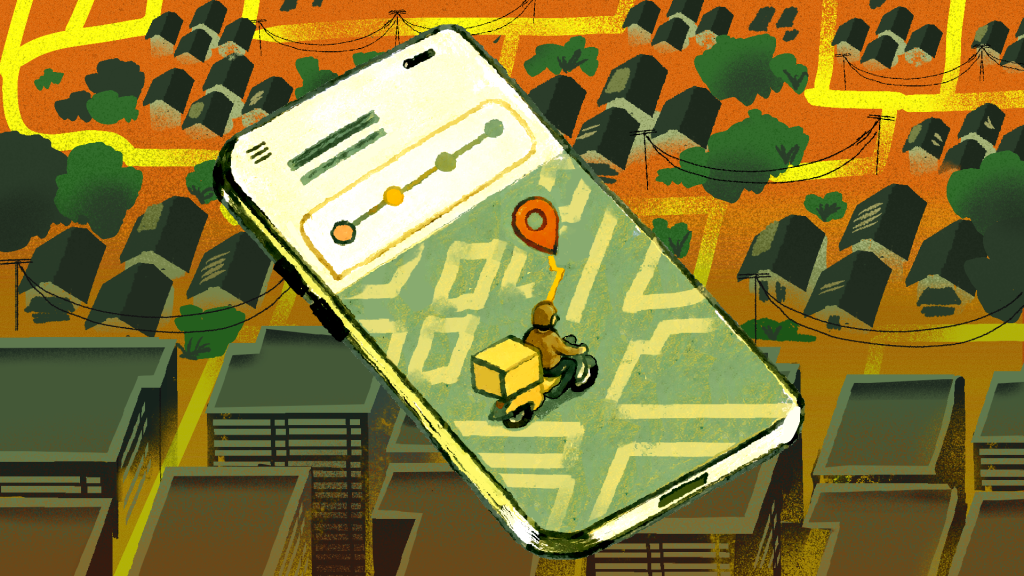
Image credit: Ulla
Established in January 2026 by former Zepto executives Priyanshu Jain, Arjun Harish, and Tarithmay Mandal, BazaarNow is focused on Tier 2 and Tier 3 cities in India.
Its app is filled with loose rice (unbranded and unpackaged, sold in bulk) and pulses (dried legume seeds) as well as neighborhood brands rarely found in India’s big cities. There are no delivery or handling charges, even on an order worth 10 rupees (US$0.10). Customers can also place orders by making a phone call instead of navigating the app.
“They are building the quick commerce habits in these towns,” says a B2B startup founder who requested anonymity.
BazaarNow operates just six dark stores across four Tier 2 towns in the south India state of Karnataka, the anonymous founder adds. Tech in Asia sought an interview with the Bengaluru-based company but was declined.
In June, BazaarNow secured US$7.5 million in a round led by Peak XV Partners. “Quick commerce for the next 700+ Indian cities has to be built differently,” Jain said in a press release for the fundraise, signaling that the company isn’t trying to replicate the metropolis playbook.
The timing of BazaarNow’s fundraise is notable. In the same month, Amazon announced the expansion of its quick commerce service Now to 300 cities, while Flipkart unveiled plans to grow its Minutes dark store network to 1,500 locations.
“Everyone is going to focus on Tier 2 [cities] in the next four quarters,” says Satish Meena, founder of market research platform Datum Intelligence.
While India’s quick commerce market is worth around US$12 billion, Meena argues that the shift is inevitable as growth in metros slows down. He points to Swiggy Instamart’s gross order value declining 0.7% between the December and March quarters as an early indicator that competition in the largest cities is intensifying, driving companies to look at smaller towns for their next phase of growth.
The same pattern is unfolding in Southeast Asia. While Shopee has begun offering “instant delivery” across several markets, Foodpanda has expanded its quick commerce offerings beyond capital cities in the Philippines and Malaysia, Kevin Zagolin, senior director of quick commerce (APAC), tells Tech in Asia.
But expansions aside, can the economics that barely work in metros survive in towns where order sizes are smaller, customers are more price-sensitive, and neighborhood stores remain deeply entrenched?
Building for towns
BazaarNow’s approach begins with examining assumptions that have defined quick commerce.
The hunt for margins
Lessons from Southeast Asia
Stay ahead in Asia’s tech landscape
This is premium content. Subscribe to read the full story.
Hyperlocal products, US$0.10 orders, and fixed-cost riders could be the winning quick commerce formula for smaller towns.
We know this is not ideal. ⌛ Sign up in 20 seconds. Cancel anytime.
Our subscriber community includes professionals from these companies:





Stay updated on the go with our mobile app.
Get latest insights with smoother, more personalized experience through TIA mobile app.