 Kaya Domingo · · 5 min read
How young Singaporeans can thrive in an uncertain world

In today’s world, things are always changing. Tech disruptions have heavily contributed to the volatile, uncertain, complex, and ambiguous (VUCA) environment that the young have to navigate as they enter the workforce.
At Youth in Tech, a panel discussion hosted by Singapore’s Ministry of Culture, Community, and Youth (MCCY), Senior Minister of State Sim Ann shared that young Singaporeans have learned how unpredictable the world truly is through their teachers, higher learning institutions, and the media.
Among the 8,000 people surveyed via the Youth Conversations program organized by MCCY in 2018, issues such as social inclusivity, environmental sustainability, and mental well-being came up as top concerns. While most would assume that the young are the most prepared for the impending changes in the future of work, that’s not a sentiment that the demographic in question shares, Sim posits.
“I think they feel very much this uncertainty – the idea that disruption is here, and that there’s more disruption to come,” she said. “There’s a lot of questioning about how we can feel more secure and how we can be more confident about the future.”
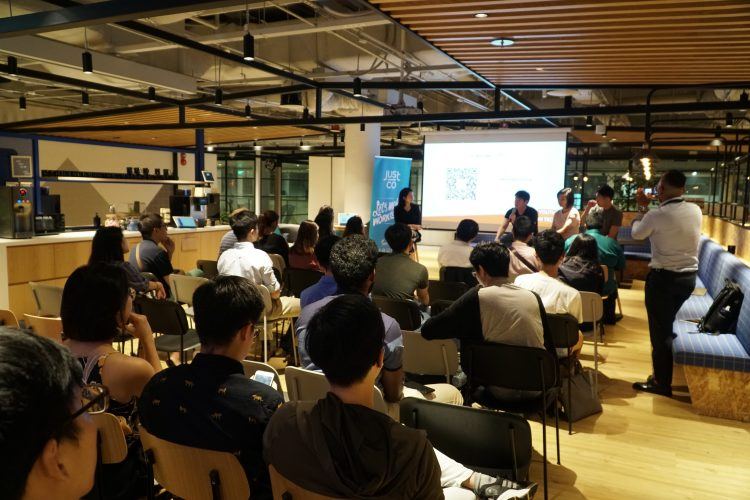
Photo credit: Tech in Asia
Skills needed for the future of work
In 2009, when Tech in Asia founder Willis Wee first started out in the tech space, the Southeast Asian tech community was virtually nonexistent.
“It can be super lonely,” he shared at the panel discussion. This, coupled with a lack of talent, were challenges he faced in the beginning. Wee encouraged those just starting out in the workforce to develop empathy for users in order to better understand their needs – a crucial element for success, especially for online businesses. For instance, empathy can assist founders in managing human resources, working with clients or customers, and even speaking with investors.
“Empathy is not just for software. In general, it is for every single thing, every single touchpoint,” he urged, adding that in a lot of ways, empathy can drive innovation.
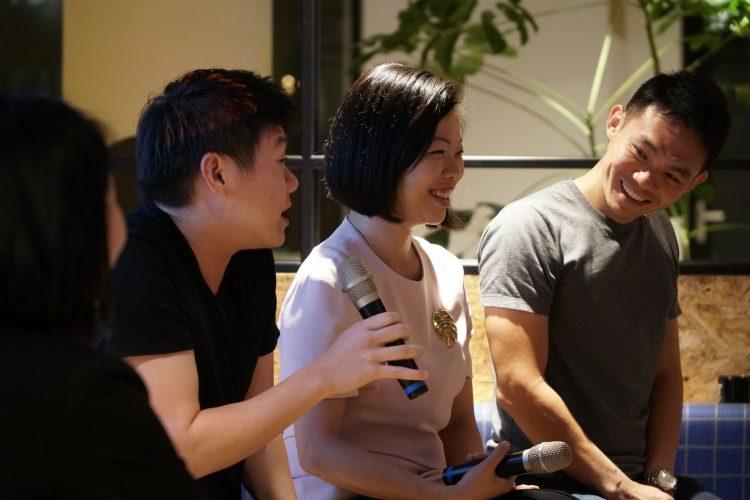
(From left) Ninja Van CEO Chang Wen Lai, Senior Minister of State Sim Ann, and Tech in Asia founder Willis Wee / Photo credit: Tech in Asia
To prepare for the future, Ninja Van CEO Lai Chang Wen advised the youth to hone their self-awareness by first breaking down their ego. To him, without the desire for learning and self-reflection as well as the resilience to keep improving, success will be unattainable.
“You may be the smartest person in the room, but if you’re not willing to learn and improve, there’s no future ahead of you,” Lai said.
With the rapid development of technology and shorter cycles of learning, the gap between generations at workplaces has also never been wider. But despite this, Sim believes that the older generation is keen to get to know their younger counterparts. Being more experienced, they’re looking to groom successors by passing on the knowledge that they’ve accumulated over the years and to even help their younger colleagues do better than them.
“The young person who reaches out across the span of years to speak with an older co-worker will have a lot to gain,” she advised.
How Singapore can compete in the Southeast Asian tech space
On a wider scale, Singapore needs to remain competitive. The domestic market isn’t large, so the city-state needs to know its strengths in order to go up against its rivals across the region.
“I think we can compete by continuing to be a good hub, which means that we should be the centerpoint that allows access to other countries,” said Wee.
For Sim, Singapore can remain competitive if its various sectors function as a team. In the tech industry, networking events, government grants, and a healthy tech media industry are just a few components in an interconnected ecosystem – each part helps and feeds into the others.
“We work with one another – not very often against one another – and this means that we try to optimize every human talent we have,” she shared. “This may not be the case in larger systems, in which there may be more internal competition.”
Support from the government
In 2002, government agency Spring Singapore (now known as Enterprise Singapore) was launched. It dispersed grants across universities, and its team gave talks to encourage young budding entrepreneurs to make the leap and start their own businesses. This form of support has grown over the years.
Priyadarshini Majumdar, CEO and co-founder of travel firm ExploreMaps and a recipient of the Enterprise Singapore grant, thinks highly of such initiatives.
“I think it’s great [that the government is] enabling more people to start up on their own by providing this grant,” she told Tech in Asia at the sidelines of the panel discussion.
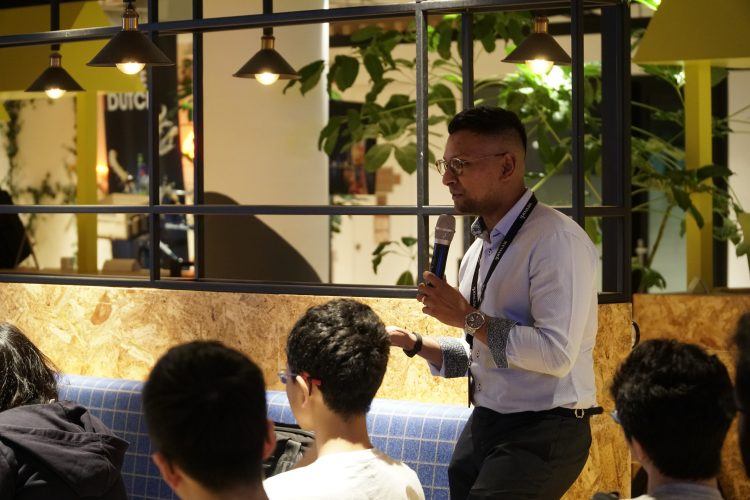
Photo credit: Tech in Asia
Apart from these grants, agencies like MCCY and the National Youth Council seek to facilitate conversations between the government and the youth to understand their aspirations and support them amid changing times. The SG Youth Action Plan, for instance, launched in May this year with the goal of giving young Singaporeans a voice in building a vision of the city-state and making the change they want to see through policy recommendations and partnerships. The government is teaming up with young leaders like Ninja Van’s Lai in this MCCY initiative.
“We want to reach out to youth who may be working or studying to hear what’s on their minds and what’s of interest to them,” Sim explained at the gathering. The SG Youth Action Plan engages the young in different formats, from panel discussions that stimulate conversation to leadership programs and grants.
While such initiatives are in place, Raphael Yeo, a graduate student at the National University of Singapore, thinks that more can be done to address the key issues facing the youth. He believes that while the Singapore government has done well in terms of planning, there remains a gap.
“There is a gulf between authority and what we perceive as alternative resources like social media,” he told Tech in Asia at the event. “We don’t see the space shared by [the government and the youth] – we think authority operates in one arena and social media is where everyone can say everything else.”
A partnership
For the next generation, what’s important is for the government to continue focusing on the technology sector. The young want to see a world where tech is used to create solutions for society.
At the same time, the government seeks to collaborate with them to come up with plans and policies to do just that, and it hopes that more youth will come forward to achieve their vision for the future of Singapore.
If you have an idea or want to find out more about the SG Youth Action Plan and the youth’s vision for Singapore, visit the Spark The Next website.
Stay updated on the go with our mobile app.
Get latest insights with smoother, more personalized experience through TIA mobile app.
Recommended reads
 How Circles Life supports the development of its employees
 Asia is setting a new benchmark for growth via intangible assets
 TIA x IMDA: A long-term partnership built on a common goal
 Carsome expands Malaysia HQ, earmarks country as talent hub
 What we learned at Ovo on how to stay afloat in a post-pandemic world
 SG to require local listed firms to disclose CEO salaries
 QuickBytes: How this startup supports side hustles and flexible work
 How Singapore is ensuring no one gets left behind in its digital future
 What caused PayMongo’s crisis? Insiders tell us
 Tokopedia chief on building a company that outlives its founders





Editing by Winston Zhang, Nathaniel Fetalvero, Jaclyn Teng, and Eileen C. Ang
(And yes, we’re serious about ethics and transparency. More information here.)






📅 Upcoming Events
22 October 2026
Payoneer x CSPN Summit 2026