Erik Crouch · · 4 min read
Shanghai sees the rise of co-working spaces with benefits
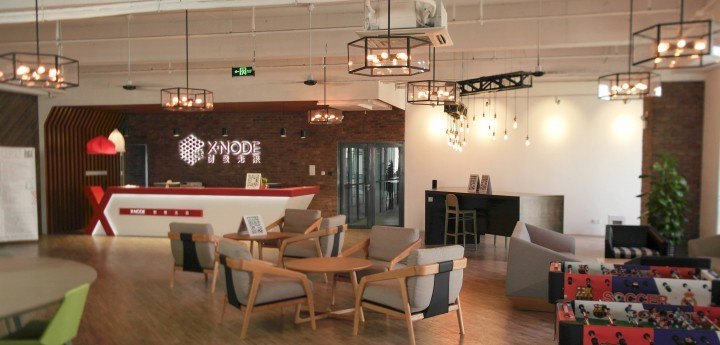
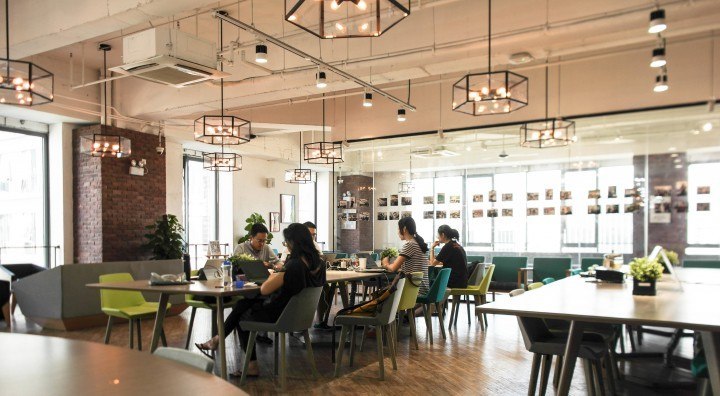
On the seventh floor of a new office complex in Shanghai’s Yangpu District, just outside Fudan University, a handful of construction workers are putting finishing touches on the XNode co-working space. Already, a few entrepreneurs are set up at the long wooden tables in the sizable open work area, but the foosball and ping pong tables are – for now – unattended.
XNode has all the trimmings of a typical co-working space: rows of work tables, some private offices and meeting rooms, and a lounge-style common area replete with couches and a soon-to-be-installed library. But XNode isn’t just a space.
“If you’re really going into the fundamentals, what do entrepreneurs need? What are the key factors? Workspace accounts for a tiny percentage of that,” says Wei Zhou, XNode CEO.
Those may be strange words coming from the head of a co-working space, but Wei continues: “What really matters is the software; not the hardware.”
XNode is also a startup accelerator and therefore, fills a gap.
“A decent space obviously doesn’t hurt,” he says, “but what really matters is that you get help. You get access to money, you get access to mentorship, and you get access to a lot of resources. That’s what a company really needs to grow and to succeed.”
Working with local partners
XNode aims to give Shanghai entrepreneurs a suite of tools to get their companies off the ground.
It already has a foot in the door thanks to the fact that it is co-owned by TechNode, the China-focused blog that’s a partner of TechCrunch. XNode also has the blessing and financial support of numerous government agencies and state-owned enterprises throughout Shanghai, all vying to pull more investment and economic activity into their districts.
One notable equity partner is Shanghai Real Estate Group, which “owns pretty much half of the city,” Wei says with a laugh.
XNode was able to secure its space in Yangpu District by working with Yangpu Ventures Group, an arm of the local government, which hopes that the city’s university hub can become a hotbed for tech development.
XNode has also been in negotiations for office space with the district government of the Zhangjiang Hi-Tech Park, an area of Shanghai overflowing with the headquarters of various Fortune 500 companies eager to tap into the high-growth potential of startups.
Pitching





Stay updated on the go with our mobile app.
Get latest insights with smoother, more personalized experience through TIA mobile app.