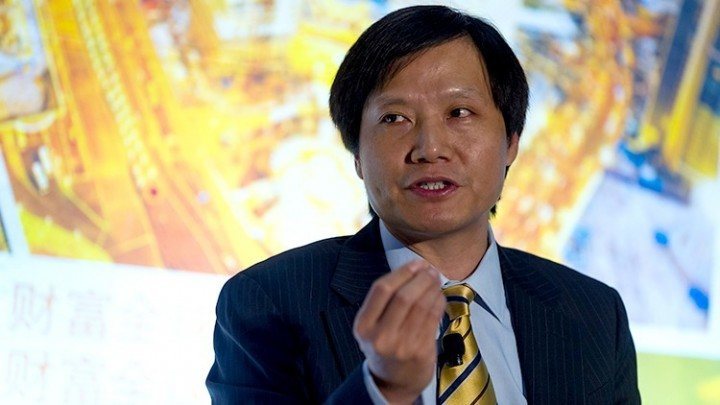
Xiaomi CEO Lei Jun, image via Fortune Live Media
The company’s phones – especially higher-end models – were sold at razor-thin margins, and Xiaomi made up the difference through its app store, in-app purchases, and the like. Xiaomi’s About page on its website begins, “Xiaomi is a mobile internet company dedicated to making quality technology,” and doesn’t mention phones until the second-to-last sentence.
It was this attitude that allowed CEO Lei Jun to (somewhat) shrug off the company’s failure to hit its phone sales target in 2015. After all, the phones are merely a vehicle for the services, and one can still excel if the other falters – right?
Apparently not. According to leaked documents picked up by Reuters, Xiaomi missed its 2015 targets for both handset sales and internet services revenue.
It might be time to lower those expectations
Xiaomi earned about US$564 million from its services in 2015, a 150 percent increase from 2014. Not bad – but still far short of the projected target of 266 percent growth and US$1 billion, which proved to be unreachable.
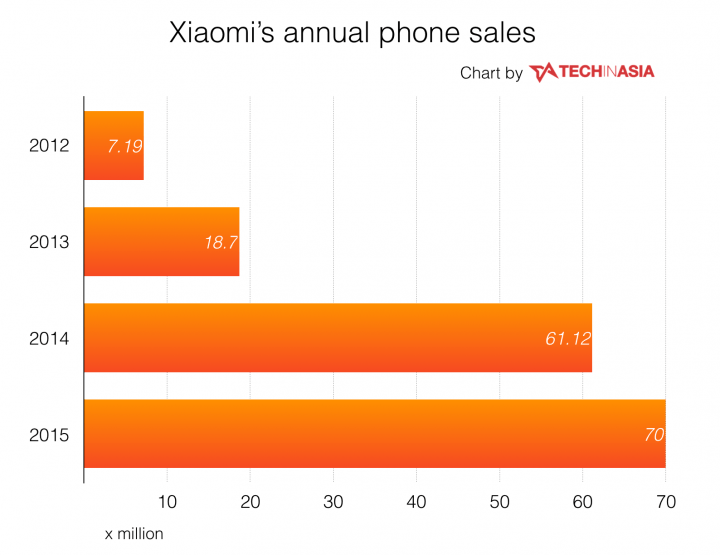
This overestimation was also seen in Xiaomi’s phone sales. The company saw a huge jump in sales from 2013 to 14, experiencing more than 300 percent growth – so the target for 2015 was stretched to a massive 100 million devices.
When a company fails to live up to expectations, that can mean two things: the company did something wrong, or the expectations were wrong.
In Xiaomi’s case, it seems to be a bit of both, with an emphasis on the latter. Sure, the company made some mistakes – the India roll-out was not as successful as many had hoped, and the company wasn’t able to release its Mi5 phone before the end of 2015. But it’s hard to picture a world where Xiaomi sold 100 million phones last year without fundamentally reinventing itself.
Xiaomi was the kid who’d had a huge growth spurt and thought it was never going to stop.
As of early 2015, Xiaomi was the kid who’d had a huge growth spurt and thought it was never going to stop – and started dreaming about what it would be like when he’s 30 feet tall.
But this year is when the company realized that there’s a reason why the streets aren’t filled with giants.
Carving out a space
While Xiaomi was unable to reach its sky-high goals for 2015, the company still cracked the top five list of the world’s biggest phone suppliers.





Stay updated on the go with our mobile app.
Get latest insights with smoother, more personalized experience through TIA mobile app.













📅 Upcoming Events
22 October 2026
Payoneer x CSPN Summit 2026