 Gabriel Budi Sutrisno · · 5 min read
SEA companies making waves in the Middle East
Charts and visuals, only for subscribers
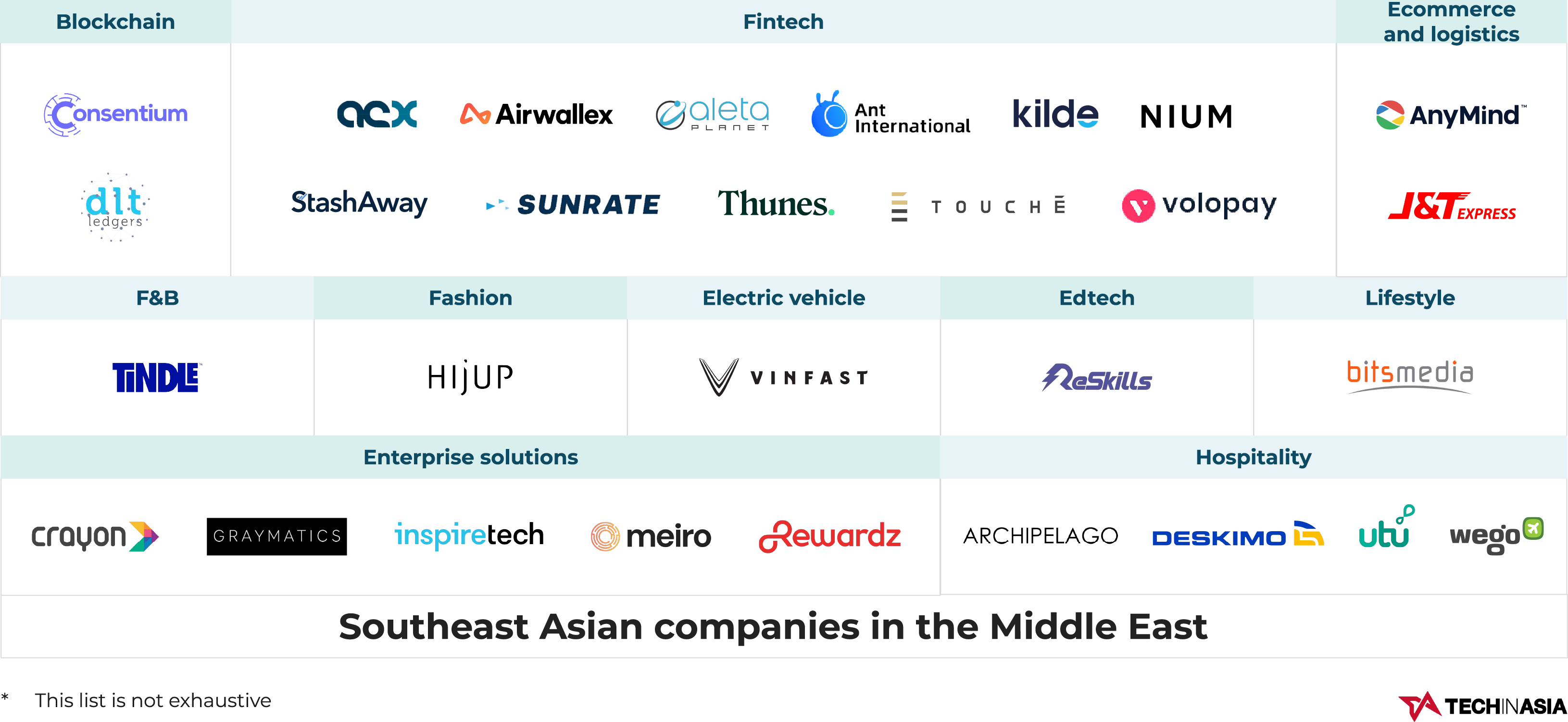
Global tech companies are expanding to the Middle East, with the region’s digital economy projected to reach US$780 billion by 2030. Southeast Asian startups want their share of the spoils.
Tech in Asia has identified over two dozen tech companies from Southeast Asia that have established operations in the Middle East.
This comes as the governments of Saudi Arabia and the United Arab Emirates (UAE) are looking to attract trillions of dollars in investment, which is part of the region’s efforts to become a global tech hub.
Fintech companies are leading the push from Southeast Asia to the Middle East, in line with rising financial needs in the latter region. One such player is Singapore-based Ant International, which has integrated its Alipay+ solution, enabling its e-wallet and bank app partners as payment options in retailers, airports, and taxis in the UAE.
Hospitality and enterprise solution providers from Southeast Asia are also making waves. These include online travel marketplace Wego, which opened its Middle East and North Africa (MENA) regional office in May, and customer data platform Meiro, which raised US$3 million in January to drive its expansion efforts in the region.
Meanwhile, Vietnamese electric vehicle manufacturer VinFast struck a deal in February to distribute its products in Oman. It aims to open 13 stores and service centers in the country by 2027.
US$110 billion trade relationship
Part of the growing connection between Southeast Asia and the Middle East is the similarities between their economies.
Both regions face similar challenges in digitizing their finances and records, including issues related to cybersecurity and online money laundering, says Neha Singh, co-founder of market research platform Tracxn. Addressing these challenges will accelerate investment flow, she adds.

Photo credit: Shutterstock
Moreover, the two regions already have a strong economic relationship, with trade between the Gulf Cooperation Council (GCC) and ASEAN currently at US$110 billion.
Vietnam will soon join Indonesia and Cambodia in signing a comprehensive economic partnership agreement with the UAE. This will go beyond traditional free-trade agreements and support broader economic diversification, involving both goods and services.
“The Middle East can be a lucrative expansion target for Southeast Asian companies as these countries already have a healthy trade relationship,” Singh says.
The expat factor
VCs want in too
Share, tag us, and land on our Wall of ❤️ !
Stay ahead in Asia’s tech landscape
This is premium content. Subscribe to read and use our charts, graphics, and other visuals legally
Over two dozen tech firms from Southeast Asia have set up shop in the Middle East, which seeks to become a global tech hub.
We know this is not ideal. ⌛ Sign up in 20 seconds. Cancel anytime.
Our subscriber community includes professionals from these companies:





Stay updated on the go with our mobile app.
Get latest insights with smoother, more personalized experience through TIA mobile app.