 Miguel Cordon · · 4 min read
The players pushing the Philippines into the SEA fintech spotlight
Charts and visuals, only for subscribers
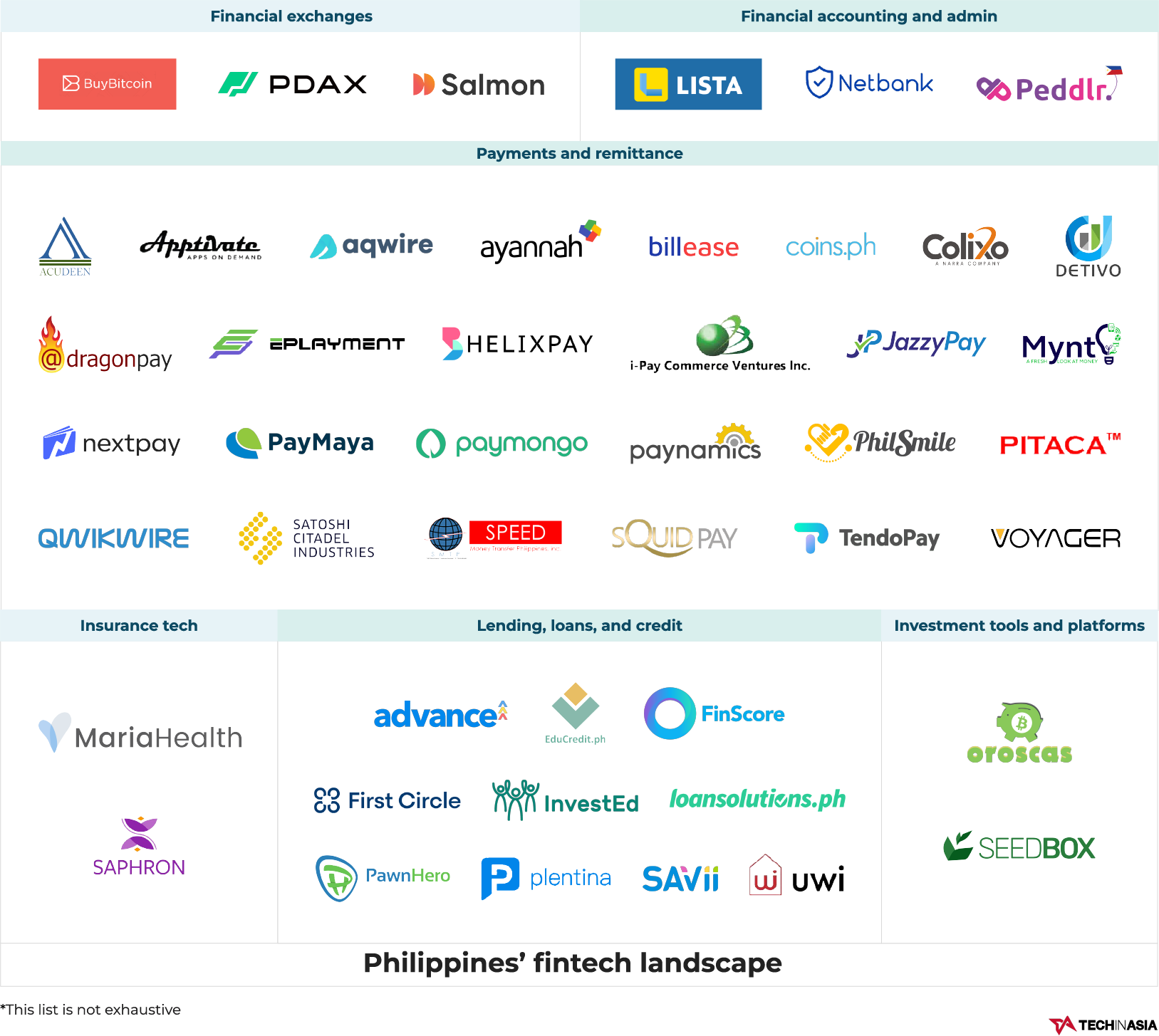
Gabriel Budi Sutrisno contributed to this report.
The Philippines has largely been a country where cash is king. This still holds true today – cash remains the only mode of payment for a majority of public transportation and smaller businesses, such as sari-sari (convenience) stores and carinderias (food stalls).
But as the pandemic pushed more people online, fintech platforms are moving fast to gain users.
Around 44% of the Philippines’ 114 million population is currently unbanked, making the market ripe for fintech innovation. Investors have opened their wallets: fintech startups received the most funding in the Philippines in 2021 and 2022.
The payments and remittance sector currently dominates the space, housing the majority of the country’s fintech startups and bringing in the most VC funding.
A report by Foxmont Capital Partners revealed that the Philippines had the highest digital payments transaction value as a percentage of GDP in the region last year, beating out Indonesia and Thailand.
The report also said that mobile wallet transactions in the country reached US$28.6 billion last year, nearly doubling from 2020.
Cashless payments are also integrated with a growing number of apps that Filipinos use daily such as Lazada, Shopee, Grab, and Foodpanda. Increasingly, sari-sari stores are also accepting payments through e-wallets.
Some of these establishments have even partnered with GCash and Maya, the two largest e-wallets in the country by number of users, to act as ATMs, allowing customers to top up or withdraw funds from their e-wallets.
These partnerships with small businesses come as internet penetration in the country continues to rise, reaching 73% at the start of the year. Smartphone ownership also hovers around the same level.
GCash and Maya dominate, fueled by telcos
Two dominant players in the Philippines’ payments space are GCash and Maya, with millions of users on each of their platforms and a wide range of services offered. The pair have also raked in the most capital among the country’s fintech firms.
GCash, which is backed by Philippine telco Globe, recorded about 60 million registered users on its platform as of March 2022, according to Statista. Maya, which is under rival telco PLDT, had around 50 million registered users in June that year.
Ernest Cu, CEO of Globe, said that GCash is planning to launch an IPO this year, adding that the company has the growth and profitability to make its listing a success.
Unlocking cross-border growth
Share, tag us, and land on our Wall of ❤️ !
Stay ahead in Asia’s tech landscape
This is premium content. Subscribe to read and use our charts, graphics, and other visuals legally
GCash and Maya are the dominant players in the country’s payments sector, having secured the highest capital among fintech firms.
We know this is not ideal. ⌛ Sign up in 20 seconds. Cancel anytime.
Our subscriber community includes professionals from these companies:





Stay updated on the go with our mobile app.
Get latest insights with smoother, more personalized experience through TIA mobile app.