 Jofie Yordan · · 3 min read
Mapping the key Islamic tech startups in Southeast Asia
Charts and visuals, only for subscribers
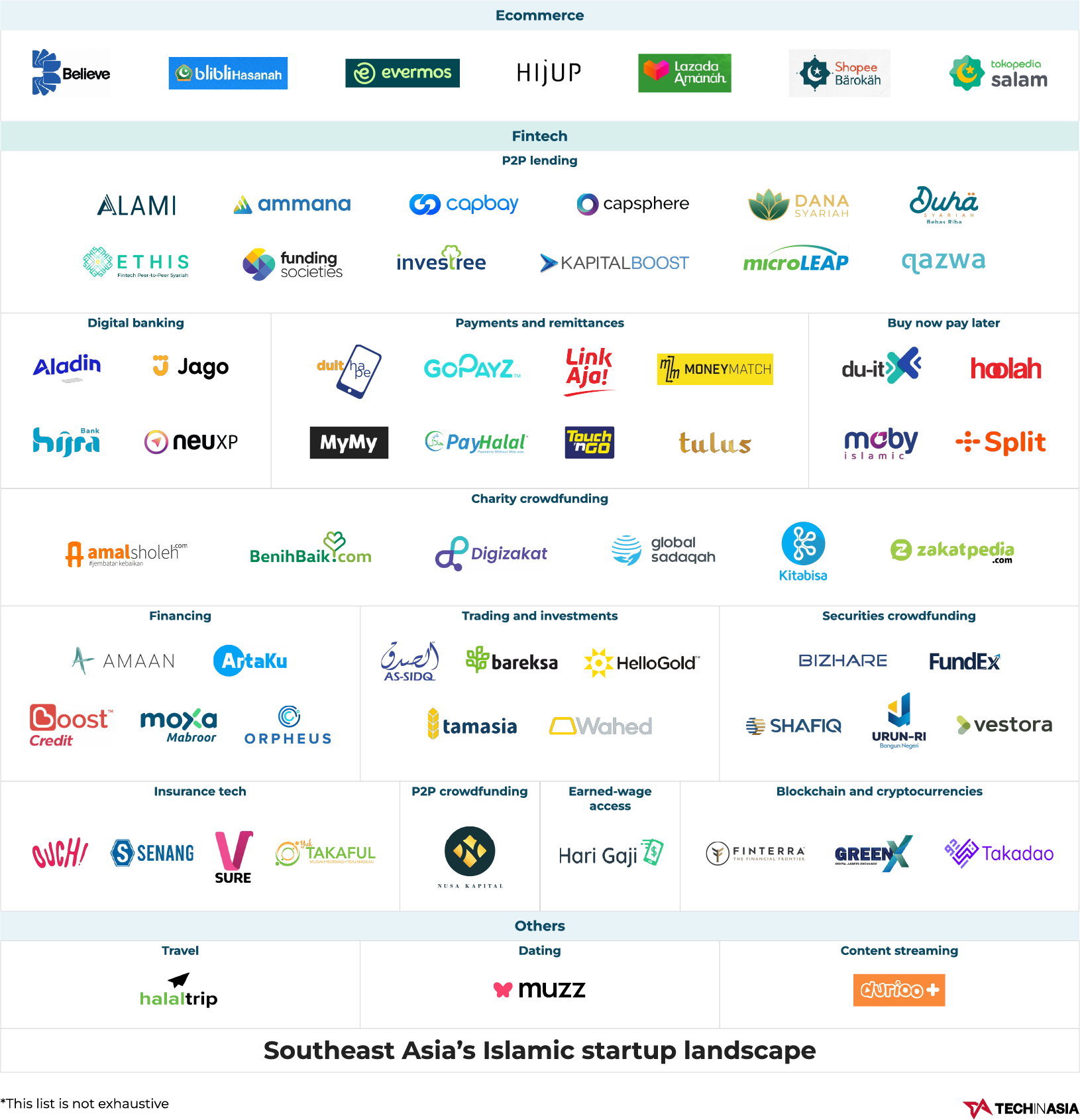
Islamic tech startups are on the rise in Southeast Asia. The industry has seen many new players emerge in recent years, especially in the fintech space.
Meanwhile, major ecommerce players such as Shopee, Lazada, and Tokopedia have also launched dedicated pages for halal products, which include fashion and food. This makes it easier for consumers looking for such products.
The number of funding deals for the industry surged in 2021 but declined in 2022. However, the funding amount reached an all-time high last year, largely because of Indonesia-based Alami, a peer-to-peer lending firm focused on MSMEs, and Singapore-based Funding Societies, which offers Shariah-compliant services in Malaysia.
Southeast Asia is a high-potential market for Islamic fintech and ecommerce startups, especially Indonesia and Malaysia. The former has a Muslim population of more than 230 million while Islam is the official religion of the latter, home to more than 20 million Muslims.
Fintech startups can also take advantage of 90 million Indonesians who do not have a bank account as well as the 55% of Malaysian adults who are unbanked or underbanked.
In addition, regulations in both countries can facilitate the future development of Islamic tech. In Malaysia, local rules make it easier for companies in the sector to establish operations, launch products, and collaborate with larger incumbents. Shariah finance scholars in the country can also assist in developing new financial products by providing guidance on emerging trends such as blockchain and cybersecurity.
Meanwhile, Shariah-compliant fintech operations in Indonesia are governed by both general fintech laws and fatwa (Islamic legal opinions) issued by the Indonesian Ulema Council, which is the highest Muslim clerical body in the country. The fatwa contains guidelines stating that Shariah-compliant fintech businesses should not contradict Islamic principles.
Hence, these fintech startups are prohibited from riba – the charging of interest on loans or deposits. For example, lenders do not charge interest but generate returns through a profit-sharing system instead. Similarly, in Islamic banking services, depositors’ returns depend on the bank’s profits.
Indonesia’s Alami Group has a P2P lending service called Alami and a digital bank called Hijra. The company has raised US$67 million since its establishment in 2018.
Other startups that emphasize their compliance with Islamic legal principles include Malaysia-based P2P and crowdfunding firm Ethis, Indonesia-based lender Aladin Bank, and Singapore-based P2P company Kapital Boost.
See also: Can Malaysia find its niche as a Shariah fintech hub?
Like Funding Societies, there are many general fintech players who also provide Shariah-compliant services such as Investree and Bank Jago. The former recently closed its Shariah operations but is preparing to relaunch these services within a new entity.
Share, tag us, and land on our Wall of ❤️ !
Stay ahead in Asia’s tech landscape
This is premium content. Subscribe to read and use our charts, graphics, and other visuals legally
With a total Muslim population of more than 250 million, Indonesia and Malaysia are promising markets for startups servicing the Islamic community.
We know this is not ideal. ⌛ Sign up in 20 seconds. Cancel anytime.
Our subscriber community includes professionals from these companies:





Stay updated on the go with our mobile app.
Get latest insights with smoother, more personalized experience through TIA mobile app.