 Simon Huang · · 6 min read
Mapping Indonesian conglomerates’ tech activities
Charts and visuals, only for subscribers
Indonesia’s corporate scene, which has long been dominated by wealthy and powerful families, can often seem like a game of snakes and ladders.
At the peak of the Asian financial crisis in 1998, the Salim family gave up control of its crown jewel, Bank Central Asia (BCA). BCA, founded in 1957 by family patriarch Sudono Salim, was (and still is) Indonesia’s largest privately owned bank.
BCA’s eventual acquirer was Djarum, which started as a manufacturer of clove cigarettes before diversifying into several industries. The Hartono brothers, Budi and Michael, inherited Djarum from their father and are now the richest people in Indonesia. According to Forbes, their combined net worth is almost US$40 billion, and around 80% of this is from their 55% share in BCA.
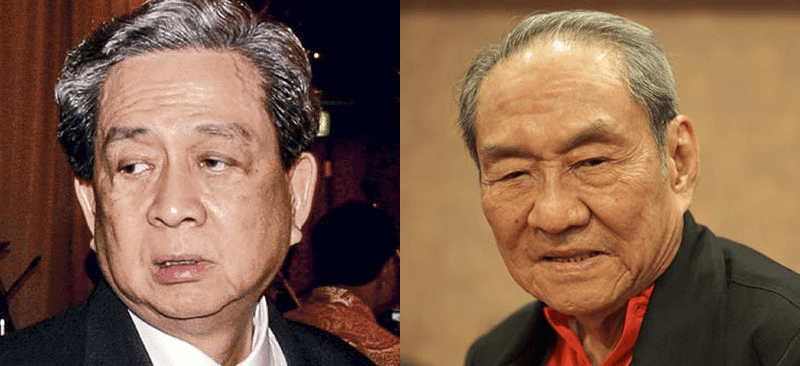
Djarum owners Budi and Michael Hartono / Photo credit: Forbes
Luckily, the Salims held on to Indofood, the maker of the wildly popular Indomie instant noodles. Anthoni Salim, Sudono’s son, is now the fourth richest person in Indonesia, worth US$6 billion.
Families like the Salims and Hartonos continue to control conglomerates active in wide swathes of the economy – from finance, property, to retail. But things have since evolved: Tech and the influx of capital are now enabling small, nimbler startups to disrupt established players and the norms they’ve relied on.
That said, Indonesia’s large corporations are not just passive bystanders. Many are involved in the tech scene, both as operators and investors.
Apart from family-owned businesses like the Lippo Group and Sinar Mas, state-owned enterprises (SOEs) like Bank Rakyat Indonesia (BRI) and Telkom also participate in the tech landscape, though their strategies vary.
Some have taken an active role in developing and operating tech companies or invested in startups directly from their balance sheets. Many have seeded separate corporate venture arms, while others prefer to participate as limited partners in venture capital firms, providing capital but leaving the investment decisions to the general partners.
Corporate investments in Indonesian tech spiked this year
In 2021, Indonesia is set to see the highest level of deal activity in tech for the last five years.
The percentage of deals that involve Indonesian corporates is also expected to hit a high this year, though this does not include corporations investing in VC firms as limited partners.
Based on Tech in Asia data, local corporations and their venture arms are most active at the seed and pre-series A (32%), series A (24%), and series B (17%) stages. However, compared to overall funding, corporates did proportionally more deals in the series A, series B, and series C stages and beyond.
Telkom comes out on top
A game of musical chairs
Can corporate shareholders tolerate the cash burn?
The promise of digital banking
Share, tag us, and land on our Wall of ❤️ !
Stay ahead in Asia’s tech landscape
This is premium content. Subscribe to read and use our charts, graphics, and other visuals legally
For decades, Indonesia’s largest corporations have survived by adapting to changing circumstances. Now, with the advent of tech, they must transform again.
We know this is not ideal. ⌛ Sign up in 20 seconds. Cancel anytime.
Our subscriber community includes professionals from these companies:





Stay updated on the go with our mobile app.
Get latest insights with smoother, more personalized experience through TIA mobile app.