 Samantha Cheh · · 5 min read
Diverse and determined: Southeast Asia’s potential drives global growth

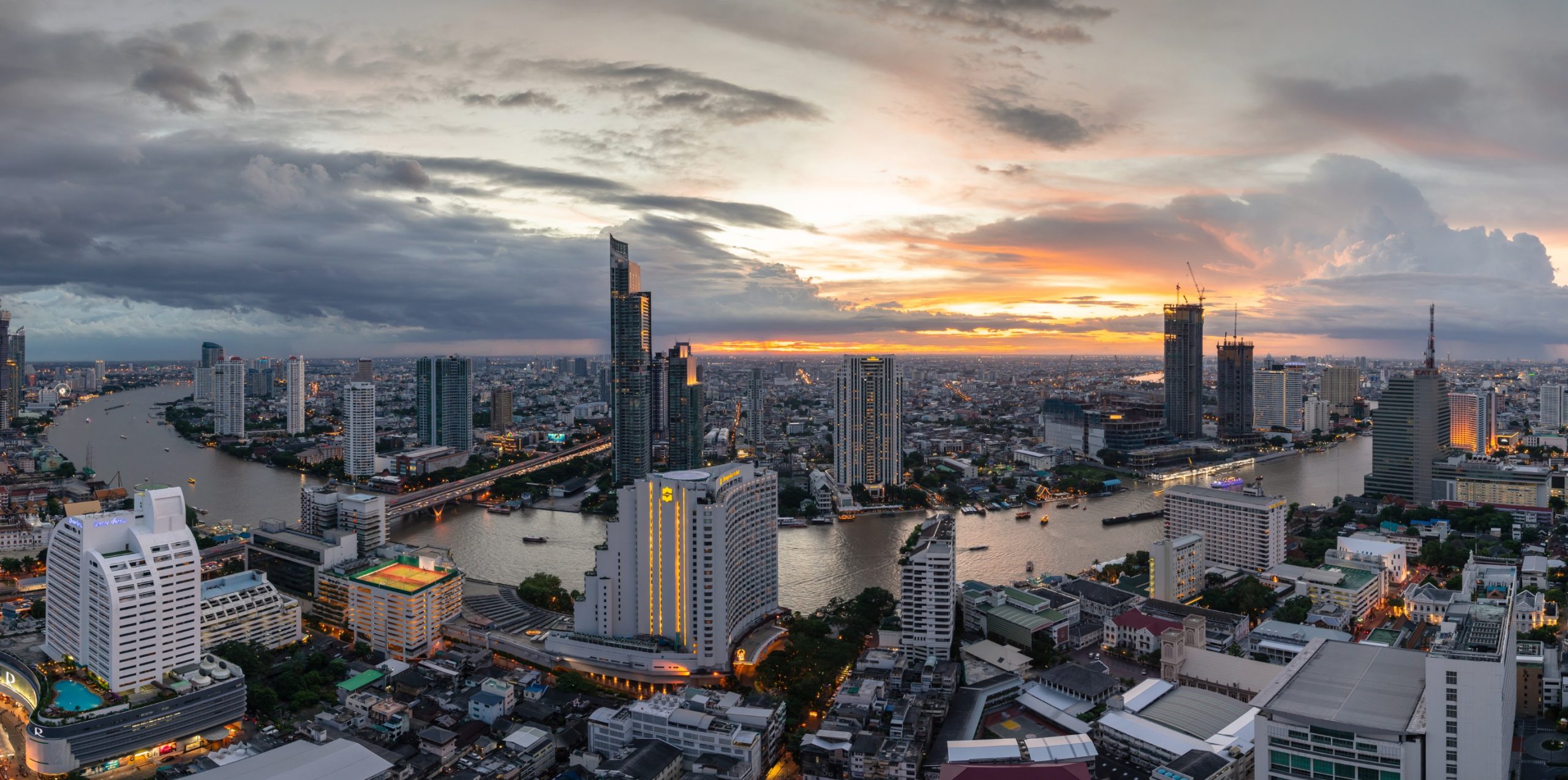
Photo credit: thailandphoto77 / 123RF
In a downbeat year for the global economy, Southeast Asia has emerged as a bright spot.
With 680 million people and 1,200 spoken languages across 11 countries, the region is the world’s fastest-growing trade bloc, accounting for almost 8% of global exports. In 2021, foreign direct investment flows into the region reached a record US$174 billion.
While markets all over the world grapple with soaring inflation and declining optimism, Southeast Asia is projected to grow by 5% in 2023 – higher than China and twice as fast as the overall global economy.
“Over the last 10 years, Southeast Asia has changed from one of the poorest regions to a workforce comparable with China,” says Justin Nguyen, chief executive and founder of Golden Owl, a global IT outsourcing company.
What’s driving the region’s growth?
According to Justin, there are several engines behind Southeast Asia’s success.
First, its strategic location and connections makes it the ideal bridge for international trade between Western markets and the rest of Asia Pacific.
Second, Justin says Southeast Asia’s exports and manufacturing sectors have greatly benefited from lower labor costs, which incentivized global companies to shift parts of their supply chain to the region.

Justin Nguyen, chief executive and co-founder of Golden Owl / Photo credit: Golden Owl
“When I first came to London, I saw just how expensive everything was,” he shares. “In Southeast Asia, everything is half the cost.”
Finally, he points to the rapid expansion of the region’s middle class, whose average disposable incomes have surged in recent years, leading to more consumption. This growth has enabled the flourishing of Southeast Asia’s internet economy and the birth of some of the biggest tech companies in Asia such as Tokopedia, Grab, Lazada, and Sea. By 2025, Southeast Asia’s internet economy is set to double to US$363 billion.
“With stronger purchasing power, Southeast Asia becomes a catalyst for tech innovations, with more opportunities for investors to support fintech and retail businesses,” says Justin.
Rife with future opportunity
Some verticals are riding this wave better than others. Green technologies, for example, have immense relevance to Southeast Asia, a region that is vulnerable to the impacts of climate change. Investments in the space have grown: In 2022, climate startups raised US$1 billion in funding, 80% more than in 2021.
Despite lagging behind other regions in many aspects of its transition to green solutions, Southeast Asia has many areas where climate and greentech can have an outsized impact. The region’s relatively nascent development is one factor for this. For example, though Vietnamese energy consumption has doubled since 2010, the country’s usage is only half that of a consumer in more developed China. As such, Southeast Asia can “leapfrog” deeply embedded, carbon-intensive systems that currently underpin developed markets.

Photo credit: oohphoto / 123RF
Justin says that the tourism and travel tech sector is also well-placed to drive significant growth in the region. Until recently, these segments have largely retained manual processes, leaving plenty of room for digitalization to make significant inroads. In fact, Southeast Asia’s digital travel economy could grow by 20% annually by 2025.
Justin also adds that there’s potential for the sector to extend beyond consumer-led offerings, especially as the expansion of international companies in the region bolsters business travel.
“As more international companies build teams and open factories in Southeast Asia, their workforces will bring in more tourism demand and spend money on local tourism,” he says.
Finally, fintech will continue to be a major engine of opportunity for Southeast Asia, where large swathes of the population remain financially underserved. Additionally, over 60% of SMEs surveyed in 2021 report struggling to gain access to financing.
Funding in the sector remains strong throughout the region. Within the first nine months of 2022, fintech firms in ASEAN raised US$4.3 billion, with Singapore and Indonesia dominating in fundraising activity.
Click on a country’s flag to learn more about the opportunities it holds.
A bridge across the world
Southeast Asia has also emerged as a global outsourcing powerhouse. By 2027, the region’s IT outsourcing segment is expected to become a US$13.1 billion market, narrowly outpacing India.
According to Justin, Southeast Asia’s existing ties to developed markets in Europe and North America have helped grow its role as an outsourcing hub. Vietnam, for example, has benefited from its long-standing relationships with the US and European countries as well as its strong base of technically skilled workers.
“We’ve essentially been doing this for years so we have a lot of experience in this field,” he says.
Cutting the cost of scaling
This revelation showed Justin and his co-founders that there was an opportunity to leverage Southeast Asia’s international connections and low labor costs to help global companies looking to scale. Golden Owl was launched in 2015 to take advantage of this cost differential. With its services, companies can access a large pool of experienced technical and non-technical talent at a lower cost and for a one-time payment.
“We’re trying to solve the problem of companies sending expats here and investing a lot of money to set up a branch,” he says. “With us, they can already have a team here who knows what to do, cutting down on operation costs.”
One aspect that sets Golden Owl apart from generic outsourcing firms is that it doesn’t just connect clients to individual freelancers but to an entire team with a range of skills.
“[Our clients] work with our whole company – they pay for one guy, but they can access knowledge from a bigger pool of talent,” he says. “We want to be a provider of skills, combining the different strengths of Southeast Asia.”
Justin predicts that within the near term, the region’s upward trajectory will eventually transform it into a significant lynchpin.
“Southeast Asia stands in the middle of all these different developed countries,” he concludes.
“People may first come here for the low costs, but in five to 10 years, it will become a major development engine for the biggest companies.”
Golden Owl is a leading provider of IT outsourcing services that aims to provide global companies with world-class talent at an affordable price.
If you’re interested in exploring how Golden Owl can help you grow your business in Southeast Asia, reach out to the company via its website.
This content was produced by Tech in Asia Studios, which connects brands with Asia’s tech community. Learn more about partnering with Tech in Asia Studios.
Stay updated on the go with our mobile app.
Get latest insights with smoother, more personalized experience through TIA mobile app.
Editing by Winston Zhang, Stefanie Yeo, and Jaclyn Tiu
(And yes, we’re serious about ethics and transparency. More information here.)