 Peter Cowan · · 4 min read
Charting Vietnam’s fintech terrain under evolving regulations
Charts and visuals, only for subscribers
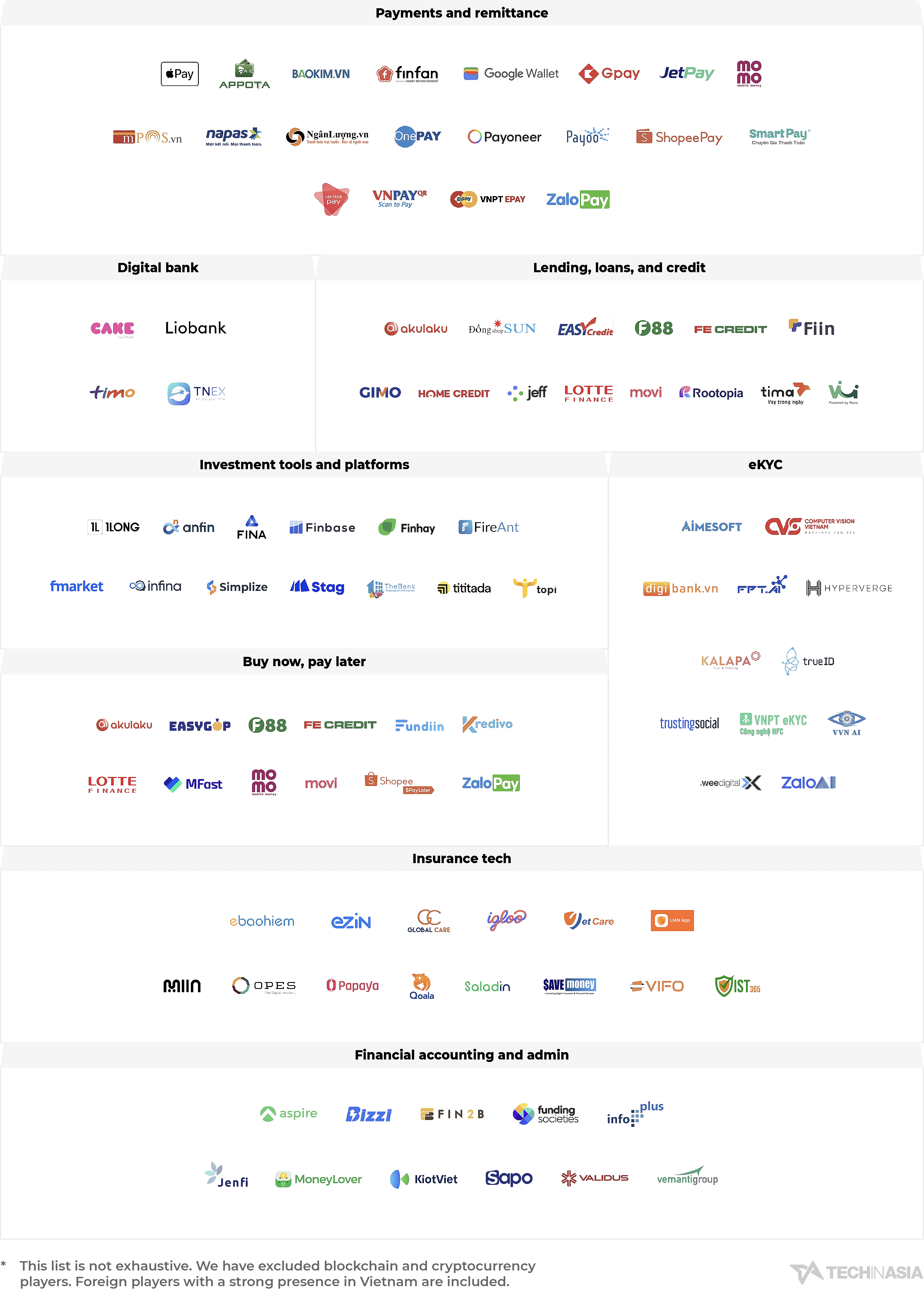
An earlier version of this article was published on June 7, 2023.
Vietnam’s cashless revolution is moving at unprecedented speed.
Non-cash payment volume rose 50% in 2023 and grew even more rapidly in 2024, according to estimates by the State Bank of Vietnam. Not long ago, cash ruled the country. Now, a phone and a QR code are all it takes to navigate daily life.
The rise of QR code payments – spearheaded by VietQR, which was standardized by the National Payment Corporation of Vietnam – has put pressure on digital wallets like MoMo and ZaloPay to reinvent themselves and stay relevant in users’ minds.
Amid the tech funding drought, fintech firms in the country are also navigating a tougher regulatory landscape.
Less funding, more hustle
Tech in Asia data shows that fintech companies in Vietnam raised less than US$1 million in 2024, a mere drop in the ocean compared to the US$474 million they secured in 2021.
The actual figure may be higher, as some deal amounts were not disclosed.
That said, Vietnam is still an enticing market for deep-pocketed foreign entrants, as Airwallex’s acquisition of CTIN Pay shows. The Vietnamese firm holds an intermediary payment service license, which will allow Airwallex to expand in the country.
Beyond acquisition, diversifying services seems to be the core strategy for a number of players.
As the QR revolution gains traction, both MoMo and ZaloPay rolled out “universal” QR codes last year, allowing any VietQR user to pay at their affiliated merchants even without using those specific wallets.
See also: Vietnam’s QR code revolution puts pressure on digital wallets
Nevertheless, these companies are still trying to shed their digital wallet image and adopt a super-app strategy, hoping users will stick around for tasks like buying insurance, paying bills, investing, or even trading stocks. Both MoMo and ZaloPay rebranded in 2024, positioning themselves as AI-powered financial super apps.
At Tech in Asia’s Saigon Summit in May last year, MoMo CEO Tuong Nguyen said he didn’t view VietQR as a competitor and noted that the QR trend had actually led users to engage with the app more than before.
Tighter regulation
Share, tag us, and land on our Wall of ❤️ !
Stay ahead in Asia’s tech landscape
This is premium content. Subscribe to read and use our charts, graphics, and other visuals legally
Tougher rules and market shakeups are reshaping Vietnam’s fintech sector. Here’s how it’s changing and what lies ahead.
We know this is not ideal. ⌛ Sign up in 20 seconds. Cancel anytime.
Our subscriber community includes professionals from these companies:





Stay updated on the go with our mobile app.
Get latest insights with smoother, more personalized experience through TIA mobile app.