- Premium Content It takes our newsroom weeks - if not months - to investigate and produce stories for our premium content. You can’t find them anywhere else.
 Kenan Machado · · 7 min read
Video streaming in Asia is not for the faint of heart
Asia’s video-streaming startups are finding just how tough the going can be as they contend with the steep costs of producing content for consumers who are price conscious and spoiled for choice.
The latest player tripped up by the fierce competition is Singtel-backed Hooq, which filed for liquidation last month. A joint venture that also involves Sony Pictures Television and Warner Bros. Entertainment, Hooq wasn’t able to provide sustainable returns nor cover escalating content and operating costs amid structural changes in the over-the-top (OTT) video scene, a company spokesperson tells Tech in Asia.

Photo credit: Hooq
The high costs of content likely dragged down Hooq’s financials, according to analysts at Fitch Solutions. “Streaming players will need to justify greater content investments with the ability to drive higher-value subscription growth,” they say.
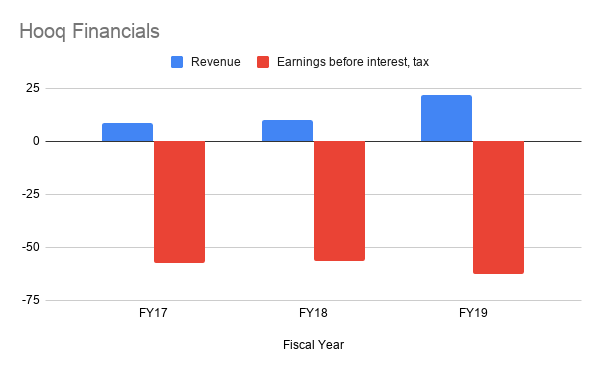
All figures in millions of US dollars
Source: Hooq, ACRA
Hooq’s average revenue per user would be just US$0.11 (S$0.15) in the quarter that ended in March of last year, estimates Fitch Solutions.
In May 2019, Singtel announced Hooq’s revenue doubled for the financial year that ended in March 2019 from a year earlier. By June, the Singaporean telecommunications giant said it was looking at unlocking value through a potential initial public offering or a sale of a stake in Hooq to a new strategic partner.
Southeast Asia poses a challenge for OTT companies such as Hooq, given the insufficient levels of disposable income in the region’s emerging markets and the abundance of low-cost local competitors, according to Fitch Solutions.
Hooq’s troubles are emblematic of local businesses in developing markets that go head-to-head with global heavyweights such as Netflix, which have deep pockets due to their seemingly unlimited access to relatively cheap capital from public sources.
That financial advantage helps major players sustain operations in a competitive environment driven by affordable prices. Meanwhile, regional firms are finding themselves running out of firepower, more so now because of the downtrend brought about by the Covid-19 pandemic.

Image credit: Iflix
Singtel’s sudden decision to shut down Hooq came as a surprise to some of the startup’s senior staff. “At the start of the year, we were evaluating options to close operations in our weakest markets such as India and the Philippines,” recalls a former Hooq executive who didn’t want to be named.
Going all in
Cold start
Opportunity in adversity
Stay ahead in Asia’s tech landscape
This is premium content. Subscribe to read the full story.
Insufficient disposable incomes and intense competition make Southeast Asia a challenging market for players in the over-the-top video scene.
We know this is not ideal. ⌛ Sign up in 20 seconds. Cancel anytime.
Our subscriber community includes professionals from these companies:





Stay updated on the go with our mobile app.
Get latest insights with smoother, more personalized experience through TIA mobile app.








📅 Upcoming Events
22 October 2026
Payoneer x CSPN Summit 2026