 Malavika Velayanikal · · 6 min read
Read this before you take sides in the tussle between publishing houses and Amazon, Flipkart
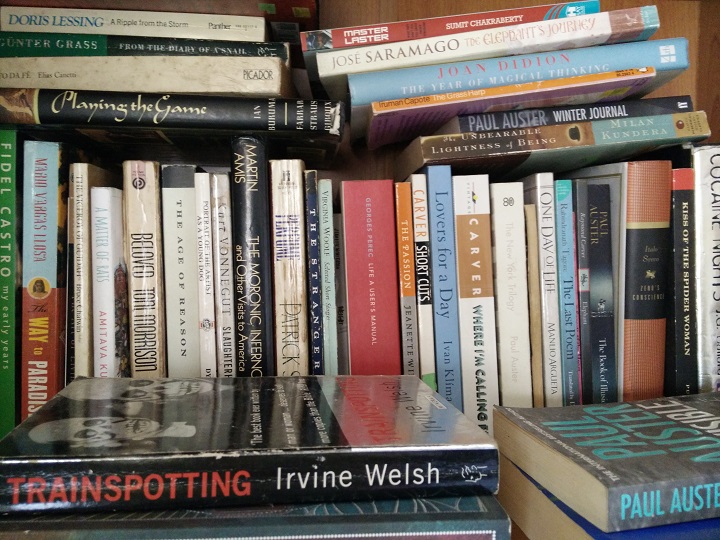
The tussle between big book publishers and Amazon, which started in the US, has now spilt over to India, where local ecommerce leader Flipkart has also been dragged in.
The arguments made against Amazon and Flipkart have a familiar ring – that their discounts will kill the publishing industry in the long run, that the two companies are becoming a duopoly, and that ebooks need to be priced higher for the sake of authors.
The publishing houses enjoy sympathetic coverage in the mainstream media in both the US and India, as the godzilla Amazon makes an easy target for scare-mongering. This report in The Economic Times, for instance, presents a one-sided view of the issue. It doesn’t alert readers that the claims made by publishing houses are exaggerated on several counts, not the least of which is that digital publishing and online distribution are hurting authors.
Ashok Banker, well-known Indian author of the Ramayana Series, is unequivocal when he explains how much he has gained from ebooks. He tells Tech in Asia:
The ebook editions of my books now outsell the print editions by a factor of easily 100:1. As in, for every 100 ebooks sold of a particular title, the publishers sell barely one print copy. To look at it another way, the print editions have increased in sales at a rate of about 10 percent each year, while ebook sales have doubled every six months or so for the past three years.
So there you have a successful author, who has been published by major publishing houses like Penguin, Rupa, and Little Brown, now preferring online platforms for his books.
Why self-publish?
By and large, however, the well-established authors, who manage to wangle decent royalty deals for printed books, pitch in for the brick-and-mortar publishing industry. And they are the ones usually quoted in the print media. Amish Tripathi, author of the much-loved Shiva Trilogy, had this sweeping statement in The Economic Times: “Online stores are not convenient for browsing as against a physical bookstore where people spend hours discovering new titles. This creates a problem for new authors who find it difficult to be visible on these sites.”
Tech in Asia reached out to Tripathi yesterday, but we’ve yet to receive a response.
Browsing through online stores from the comfort of your home or office, the personalized recommendations you get, and the many options on format and pricing are just some of the advantages of “these sites” that book-lovers have come to enjoy. And yet, Tripathi, who has himself been among the most innovative in digital marketing of his books, advises new authors to take a hike on the offline route.
Initially, when he submitted the manuscript of his first book to the publishers, all of them, without exception, rejected the book. Then Tripathi decided to self-publish. His agent invested in printing, and he in its marketing. The management techniques Tripathi learnt at IIM (Indian Institute of Management) probably helped him spread the word about the book on social media. “When my book became a best-seller within a week, and sold 45,000 copies in less than four months, the publishers came back to me,” he told me in an interview earlier this year.
‘Factory publishers’
Newbies get roughest deal
No stopping the march of digital technology





Stay updated on the go with our mobile app.
Get latest insights with smoother, more personalized experience through TIA mobile app.











📅 Upcoming Events
22 October 2026
Payoneer x CSPN Summit 2026