- Premium Content It takes our newsroom weeks - if not months - to investigate and produce stories for our premium content. You can’t find them anywhere else.
 Terence Lee · · 4 min read
There’s too much cynicism about Grab and Go-Jek
Bloomberg columnist Tim Culpan’s recent takedown of Grab’s latest boast about its massive and still ongoing series H round made some good points.
His criticism goes like this: Grab and Go-Jek’s fundraising war, fueled in part by SoftBank, has become a toxic game of one-upmanship. Worse, it’s a smokescreen obscuring the possibility that these businesses may be financially unsustainable.
But Culpan’s view on the matter comes across as jaded. More importantly, it ignores the big picture.

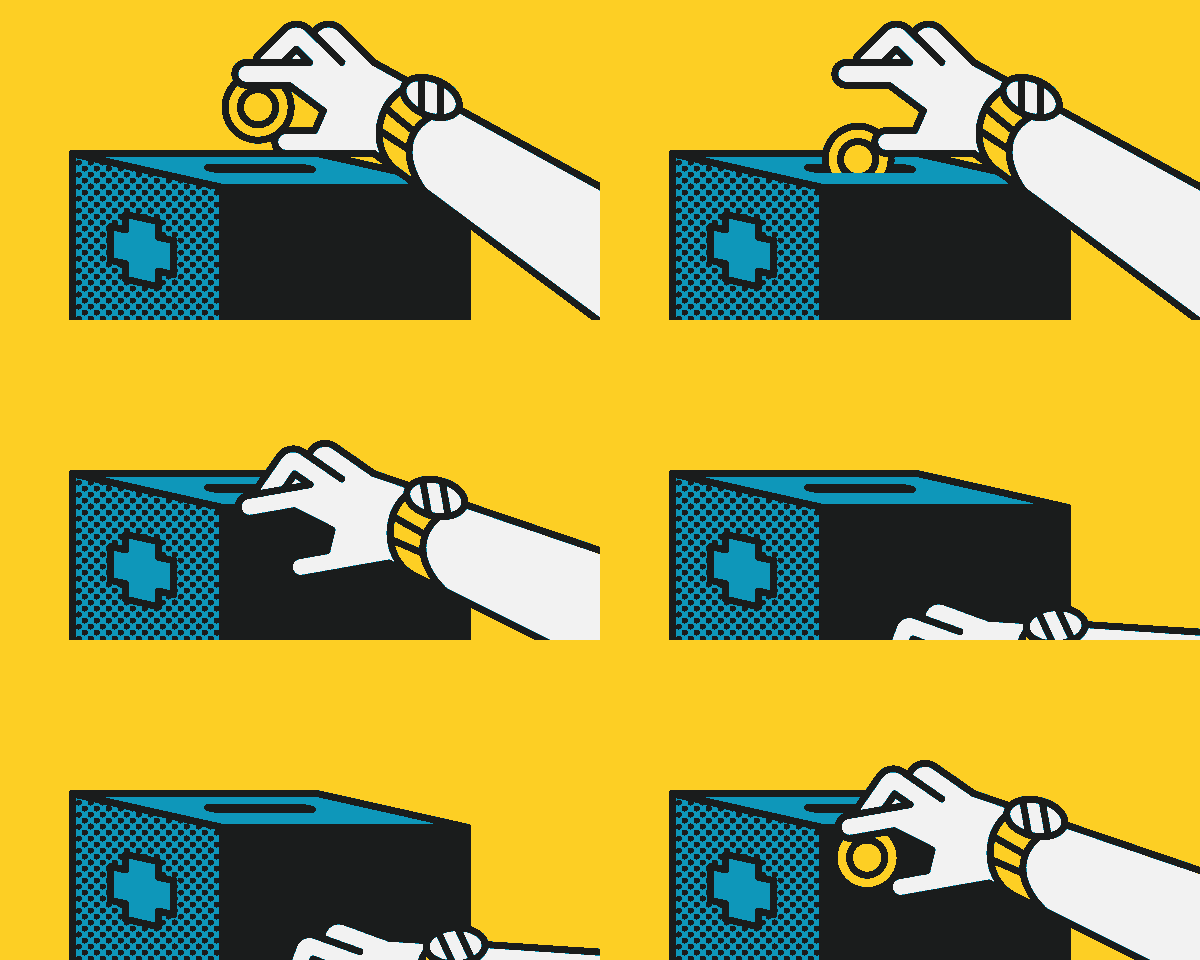
Illustration: Centaine Lim
The US$100 billion SoftBank Vision Fund, an investor in Grab, is itself a startup on the grandest scale.
It’s disrupting traditional venture capital firms by writing checks worth far above what these investors can write. It shuns conventional wisdom, often investing in direct competitors.
It’s backing category leaders, giving them unlimited resources to monopolize their industry. It has a 30-person team focusing solely on partnerships and integrations between its portfolio companies.
If SoftBank founder Masayoshi Son succeeds, he’ll have catalyzed a handful of global multibillion conglomerates at a speed that’s never been attempted before.
“We only live once, so I want to think big. I have no intention of making small bets,” he once told investors.
The Vision Fund has upped the stakes or companies on the receiving end of Son’s pitch. If they don’t accept the money, it will go to their rivals. So when SoftBank comes calling, it’s a deal they can’t refuse.
Son once told Anthony Tan, the co-founder of Grab: “If you take my money, good for me, good for you. If you don’t take my money, not so good for you.”
There’s a price to pay for refusing SoftBank. Uber’s Indian rival Ola rejected a US$1.1 billion preliminary deal from Son – reportedly because founder Bhavish Aggarwal wanted to retain control of his firm. The jury’s still out on his decision, but it’s already costing him.
Uber received money from SoftBank, and Aggarwal has had to scrape together much smaller checks since then. Its significantly more labor intensive to pitch to many small backers than one big investor.
Consequences of the Vision fund
With the money and stakes involved, can anyone blame Grab and Go-Jek for fighting a subsidy war?
Stay ahead in Asia’s tech landscape
This is premium content. Subscribe to read the full story.
Let’s pause the Grab and Go-Jek bashing for a moment and examine them for what they are.
We know this is not ideal. ⌛ Sign up in 20 seconds. Cancel anytime.
Our subscriber community includes professionals from these companies:





Stay updated on the go with our mobile app.
Get latest insights with smoother, more personalized experience through TIA mobile app.