China’s video game market can be a tough nut to crack. Sure, there are a few foreign games on the country’s top 10 list, but in general the market is dominated by domestic games and things developed by Blizzard. Other companies that want to achieve mainstream PC gaming success in China are generally in for a challenge.
(See: The top 10 hottest PC games in China this month)
But Valve’s Counter-Strike, although it isn’t actually in the top 10 right now, has managed to break through the obstacles and achieve something most games haven’t: long-term mainstream success in the Chinese market. (In fact, although it’s not in the top 10, it is still in the top 20—not bad for a game that’s well over a decade old!)
And although Counter-Strike came to China in a different era for the internet, its success story is still worth discussing. Netease’s eSports portal has been running a retrospective series about it, and since I’m not really a CS expert myself, I’m just going to translate sections of this article, titled “What were the reasons for the domestic success of Counter-Strike?”, below.
Developing eSports competitions
In the earliest days, most players looked at CS as a multiplayer battle game. What a CS competition looked like, and whether or not CS was an eSport was not something that players cared about.
In 2001, the World Cyber Games (WCG) came to China, and at that year’s WCG China made its first connection between CS and eSports competitions. The Chinese team EVIL convincingly took the Chinese region title, and got a spot in the world finals. More and more people were getting interested in CS at that time, and [what happened at that year’s WCG] made them look at the game in a new light.
At the time, WCG, ESWG (Electronic Sports World Cup), and the CPL (Cyberathlete Professional League) were the big three global CS competitions. But WCG was the first to enter China, and those matches were a major contributing factor to the development of Counter-Strike in China.
As [domestic] CS competitions developed, new strategies and techniques [for playing the game] emerged—that’s the beauty of eSports. [Numerous old techniques and exploits are listed]. Some of these techniques would be patched in subsequent versions of the game and become unusable, and sometimes [players with high-level mechanics] would be suspected of exploiting bugs in the game, but from a broad perspective [these exciting and ever-changing new techniques] helped the game continue to develop. It’s like the fountain hook bug from Dota 2 at TI3. There will always be controversy, but those who are good at discovering these techniques and dare to exploit them in competitions will always garner respect.
[…]
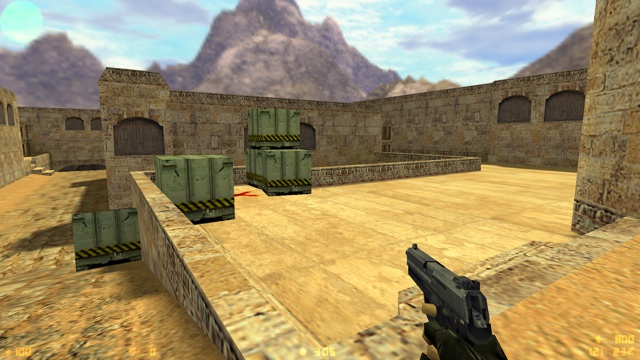
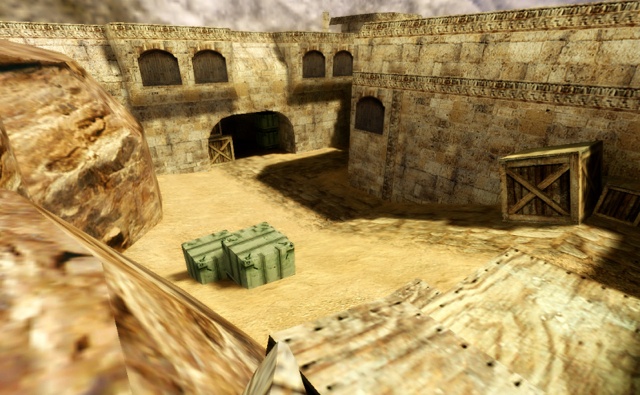
In addition to creating new tactics and pushing changes in the game, CS competitions helped ensure that maps were constantly rotating. The earliest CS maps included cbble, train, dust2, aztec, nuke, and inferno, but because of map size, spawn points, and some bugs, cbble and aztec slowly faded from large-scale competitions. Ultimately, inferno, train, dust2, and nuke became the four most popular maps [for competitions]. Of those, dust2 came to be known as the “domestic map” because of how beloved it was by Chinese players.





Stay updated on the go with our mobile app.
Get latest insights with smoother, more personalized experience through TIA mobile app.