- Premium Content It takes our newsroom weeks - if not months - to investigate and produce stories for our premium content. You can’t find them anywhere else.
 Nadine Freischlad · · 6 min read
How Indonesia’s richest families run the ecommerce industry
The Indonesian government is targeting an ecommerce transaction volume of US$130 billion by 2020. In 2014, that figure was at US$12 billion.
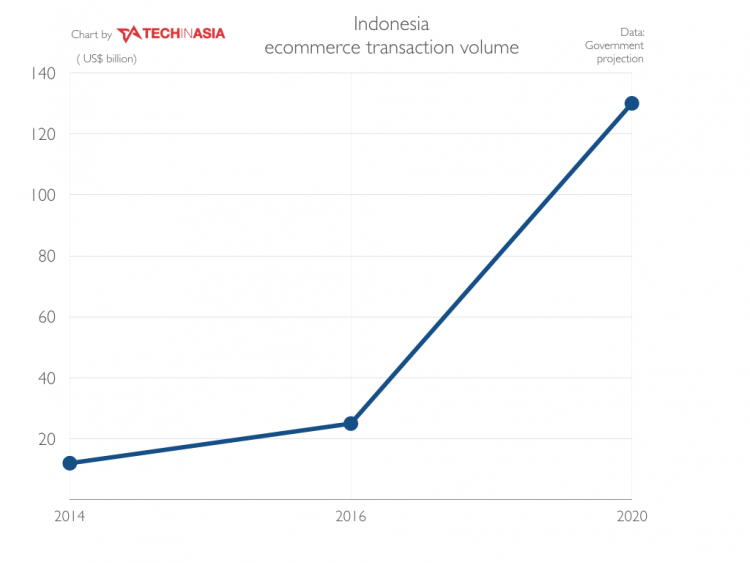
The Indonesian government expects explosive growth in the ecommerce industry.
It’s not that Indonesian purchasing power is going through the roof – although granted, the general affluence of the population as measured by GDP per capita is on the rise. A surge in the ecommerce industry is more or less inevitable as consumers shift away from offline to digital shopping habits.
To stay relevant, those who own Indonesia’s traditional retail market today must hop aboard the ecommerce train, fast. That’s what we witnessed in the past years and months: one by one, the archipelago’s largest conglomerates announced their foray into the digital economy, drawing on massive resources, international networks, and brick-and-mortar infrastructure.
Here’s a closer look at some of those dynasties.
The Hartonos

Martin Hartono. Photo credit: Ruangkabar
According to Forbes, the Hartonos are Indonesia’s richest family. Their net worth amounts to US$15.5 billion. At the core of their wealth lies Djarum, a tobacco empire. Djarum also owns part of Bank Central Asia.
A member of the family, Martin Hartono, became active in the digital economy through a venture capital firm called GDP Venture. This entity invests in local startups from a variety of verticals. Its portfolio includes the legendary online community Kaskus. GDP-backed ecommerce site Blibli launched in 2011, making Djarum an early local ecommerce player.
The Salims

Anthony Salim. Photo credit: Kompasiana
Anthony Salim, head of the Salim Group, is Indonesia’s third richest person, worth US$5.4 billion. Salim Group has diversified interests in the food and beverage industry (they own the infamous instant noodle brand Indomie), telecommunications, retail, and property.
Salim’s chain of convenience stores – Indomaret – can be found in every corner of the archipelago. The Salim family was one of the first to dabble in online business in Indonesia, back in the 1990s. But that endeavour failed. Indonesia was in the middle of political turmoil and an economic crisis. The Salim family then lost part of its fortune but managed to bounce back.
Since that failed attempt, the Salim Group has been quietly shaping Southeast Asia’s ecommerce landscape through its partnership with German internet company builder Rocket Internet.
Widjaja family
Tanjung family
The Riadys
Tanoesoedibjo family
Gozali family
Stay ahead in Asia’s tech landscape
This is premium content. Subscribe to read the full story.
They draw on massive resources, international networks, and brick-and-mortar infrastructure.
We know this is not ideal. ⌛ Sign up in 20 seconds. Cancel anytime.
Our subscriber community includes professionals from these companies:





Stay updated on the go with our mobile app.
Get latest insights with smoother, more personalized experience through TIA mobile app.







📅 Upcoming Events
22 October 2026
Payoneer x CSPN Summit 2026