Stefanie Yeo · · 4 min read
What I learned about Shopee’s and Garena’s user engagement game

Customer engagement is challenging. In a world where consumers are bombarded with information from a variety of sources across various different channels, it has become pretty hard for businesses to capture and keep users’ attention. Brands are therefore turning to creative solutions to better engage their customers, but figuring out what exactly to do can be tricky.
At the recent Tech in Asia x Sea webinar, held on July 29, I had the opportunity to understand just how Sea and its companies are creating engaging customer experiences. Titled “Rewriting the Rules of User Engagement with Shopee and Garena,” the webinar zoomed in on how the two companies are utilizing AI-driven recommendation engines and mobile game livestreaming to create better customer experiences.
Shopping made personal
The first half of the session was led by Zhong Nan, product lead of search and recommendations at Shopee.
He explained that a company’s ability to provide recommendations that are useful and relevant elevates the user experience, as it helps people make quicker and better decisions.
Consider YouTube: The platform’s algorithms recommend videos based on what a user has watched previously, making it easy for them to find content that they like without having to trawl through millions of videos.
The same logic applies to online shopping. Shopee uses artificial intelligence and machine learning to power its recommendation engines. By generating predictions through the use of user data, item information, and user-item interactions, these engines can create recommendations that are unique to each customer.

Photo credit: Shopee
“At Shopee, we use such engines to connect people to what they want to buy, to find things relevant and interesting among billions of items,” said Zhong. “[It could be] an item to buy, a livestream to watch, a voucher, or a shop to follow.”
Shopee uses three key approaches in making recommendations: popularity-based, content-based, and collaborative filtering. While the first two are fairly straightforward, collaborative filtering – which aims to find hidden similarities in user-item interactions between different users – is a little more interesting.
For example, let’s say another user and I have purchased earrings from the same seller – this indicates a degree of similarity between us. If I then go on to look at some watches, the engine could recommend the same watches to the other user based on that perceived similarity.
Using a hybrid of these approaches enables Shopee to recommend new things to users that are outside the filters of popularity or similar searches. When users feel that Shopee is able to recommend products that are actually relevant and useful to them, they are more likely to browse on the app, which would then lead to sales.
Going live on mobile
Webinar attendees also heard from Omer Iqbal, engineering lead at Garena’s newest offering, mobile livestreaming app Booyah.
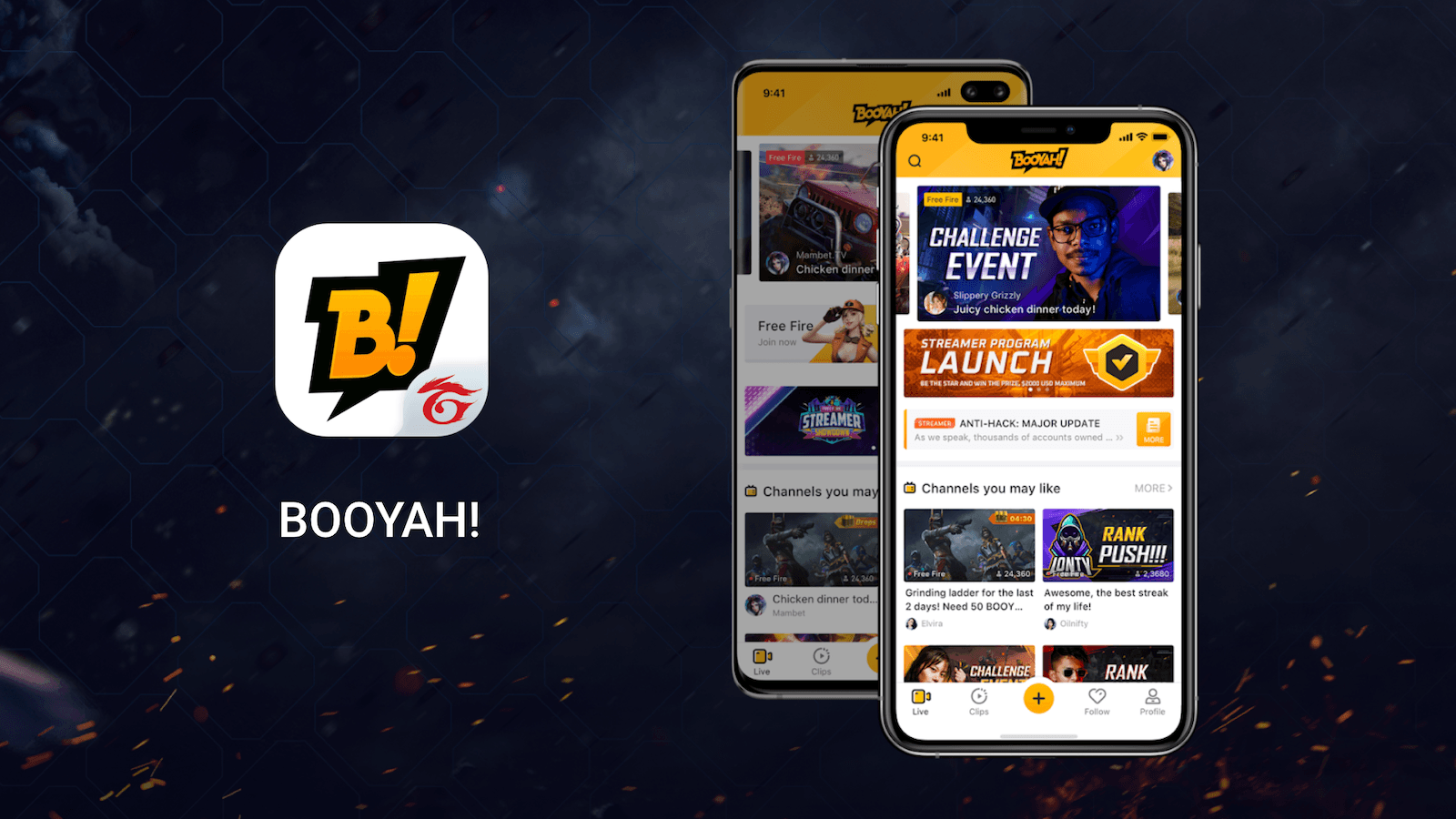
Photo credit: Garena
Launched earlier this year, Booyah was developed in response to the surge of interest around mobile game livestreaming. While the ecosystem of gaming livestreams was initially dominated by PC or console titles, the demand for the livestreaming of mobile games is on the rise.
Booyah is looking to tap into that market by making livestreaming easy and accessible to everyone. Users just need to download the app in order to watch, stream, and interact with other players directly from their phones without needing a fancy gaming setup.
The app was also designed with Garena’s mobile game Free Fire in mind. Players can connect their Free Fire accounts to Booyah, and the app will automatically generate highlight reels when a match is played. Streams and highlight reels can then be shared on users’ social media accounts or uploaded to platforms like Twitch and YouTube – extremely useful for the less tech-savvy gamer.
And much like the game it supports, Booyah was built to meet the needs of players in emerging markets where the internet infrastructure may not be as developed and data consumption is a concern.
The company also deploys its servers as close to its streamers as possible, setting up edge servers in Garena’s key markets to ensure the stable transmission of data. Additionally, stream bitrates are dynamically adjusted based on network situations, and videos are automatically transcoded into the best resolution for viewers. These initiatives eliminate lag, which is a universal cause of frustration for gamers and streamers all around the world.
As a result, streaming games and watching videos on Booyah becomes a smooth, fuss-free experience for users, regardless of the kind of internet connectivity they may have.
Booyah is still in the early stages, and there is a “constant process of tweaking the platform,” according to Iqbal. Functionalities like gifting and reward systems are just some of the things Booyah is fine-tuning in order to attract and retain users on the app.
Rewriting the rules
Ultimately, user engagement is a journey, not a destination. Through the process of constant testing, reviewing, and adapting, Shopee and Garena are rolling out new initiatives to keep customers engaged with their brands.
By talking to users through surveys and focus group discussions, both companies make sure that what they do addresses their customers’ needs and that their strategies are genuinely helpful and relevant.
Engaging users effectively is a constant, complex process, but based on what Shopee and Garena shared during the webinar, I understood that as long as brands listen to their customers, it’s something that will pay off in the long run.
Sea is the leading internet company in Southeast Asia, with vertical leading brands such as Shopee, Garena, and SeaMoney. It is constantly on the lookout for new talent to join its growing team.
Learn more about careers with Sea and Garena here, and with Shopee here.
This content was produced by Tech in Asia Studios, which connects brands with Asia’s tech community. Learn more about partnering with Tech in Asia Studios.
Stay updated on the go with our mobile app.
Get latest insights with smoother, more personalized experience through TIA mobile app.
Recommended reads
 Indonesian AI startup goes global
 Forrest Li on scaling Sea, building smarter bots, and founder grit
 An AI assistant that joins sales calls and scores team skills
 SGX’s CEO says it doesn’t need a unicorn to win
 SMEs want AI too, but not the kind Big Tech is selling
 Oatside’s alt-milk rise hits a profitable gear
 Alibaba’s financial health in 12 charts
 Asia’s telcos bundle AI into mobile plans. Will it pay off?
 M-Daq chases bigger clients as revenue falls, losses grow
 VC tracker: Accel raises US$3.5b, including US$550m for India





Editing by September Grace Mahino and Jaclyn Teng
(And yes, we’re serious about ethics and transparency. More information here.)