
The pandemic was a pivotal moment for enterprises everywhere, especially those that relied on traditional data centers or offline infrastructure. These companies had to come to terms with the fact that such arrangements were no longer tenable as working from home became the norm.
As a result, the adoption of cloud computing accelerated like never before. Worldwide spending on public cloud services this year is expected to grow by 23.1% to reach a total of US$332 billion, a US$60 billion increase from the previous year.
With growing opportunities in the cloud computing space, Google Cloud is looking to step up its game even further. The tech giant recently held a keynote event, Google Cloud Next, from October 12 to October 14, where Google and Alphabet CEO Sundar Pichai as well as Google Cloud CEO Thomas Kurian introduced a slew of new offerings and developments.
Here are the top five announcements made during the session.
1. Google Cloud enables integration with Tableau
Google Cloud is integrating several cloud solutions (data analytics platform Looker, spreadsheet application Google Sheets, and data warehouse platform BigQuery) with visual analytics platform Tableau.
The firm hopes to use this integration to improve data governance and access to data by providing a more comprehensive view of companies’ operations and, in turn, help them gain more insights into how different data points affect or work in relation with each other.

The integration allows Tableau customers to use Looker’s semantic data model and access data from Looker, Google Sheets, and Tableau through a single platform.
For sports team management app TeamSnap, the platform was a game changer. While the company had a rapidly growing marketing budget, it was difficult for the firm to track its return on investment. Much of its data was scattered across different platforms, making it labor-intensive to manually transfer and analyze all this information.
With solutions like Google BigQuery now integrated with Tableau, TeamSnap was able to constantly sync and view its data – such as spending and return on investment details – on Tableau.
This helped the company easily break down and visualize key metrics, such as the performance of certain keywords in marketing campaigns, and made it easier for the firm to gain insights on marketing efforts like which sources of lead generation were working best.
2. Launching Google Distributed Cloud
Google Cloud announced the launch of Google Distributed Cloud, a portfolio of hardware and software solutions that extends Google Cloud’s infrastructural reach and capabilities.
The goal of this offering is to improve customers’ deployment flexibility and ensure consistent operations across hybrid and multicloud environments. “Some workloads cannot move to the public cloud entirely due to the need for large amounts of local data processing, extremely low latency, or strict regulations,” Google Cloud’s Kurian explained during his presentation at the conference.
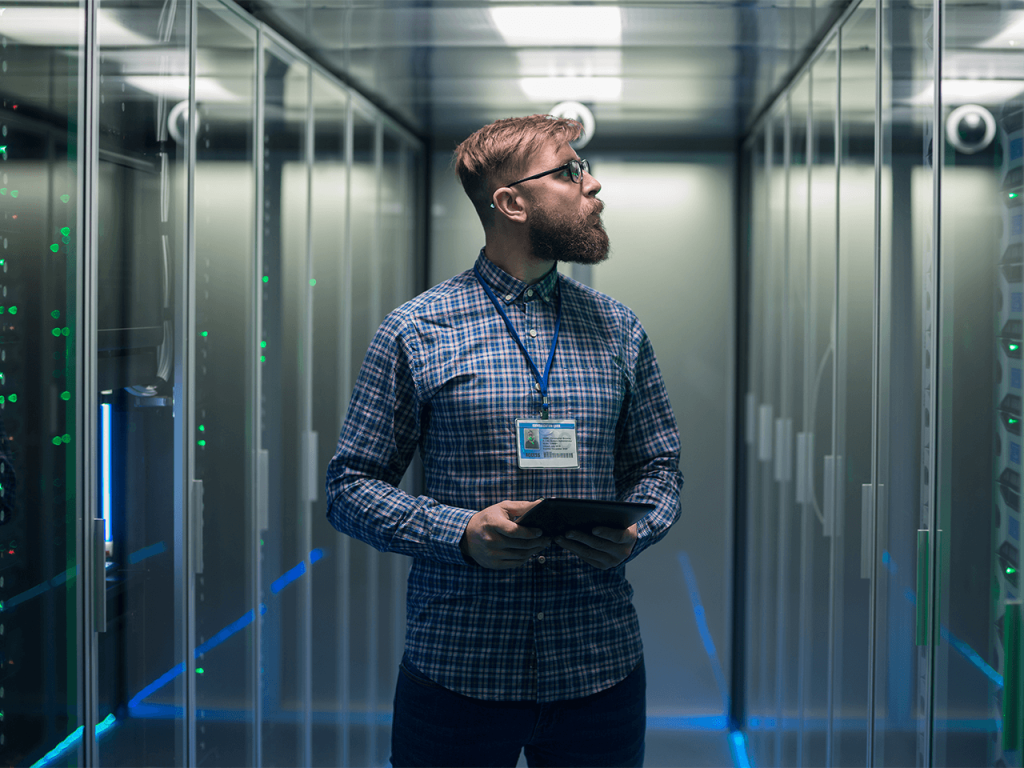
Photo credit: evgeniyshkolenko / 123RF
These solutions work as a set of fully managed services – such as computation, networking, storage, databases, and more – that run on Google Cloud’s hardware. What this means for companies is that they can leave the deployment and management of their back-end infrastructures to Google Cloud.
Additionally, Distributed Cloud includes a mode that allows firms to run sensitive workloads and fulfill data security, residency, and privacy requirements. More importantly, this mode does not require an active connection to Distributed Cloud itself.
3. Advancing cybersecurity
With rising global threats like data breaches and malware attacks – which rose by 358% in 2020 – Google Cloud announced several new measures to help companies beef up their cybersecurity.
BeyondCorp, a zero-trust cybersecurity architecture, is now available on all of Google’s applications on the Google Cloud Platform.
Additionally, the proprietary technology used by Google Cloud to secure its software supply chain is now available through an open-source framework known as Supply-chain Levels for Software Artifacts. The technology involves several layers of security checks and stringent verifications on how the software was built.
Google Cloud also announced that it has integrated the threat detection capabilities of Chronicle, a cybersecurity analytics platform, with Google Cloud’s security and risk management platform, Security Command Center. This would empower businesses to respond faster to potential risks.
Finally, the company revealed its Cybersecurity Action Team, which includes leading security experts who provide strategic advisory, trust and compliance, customer and solutions engineering, and threat intelligence and incident response services.
4. New Work Safer Program
In line with its efforts to improve security, Google Cloud also announced the launch of its Work Safer Program for Google Workspace apps, which will now have the same level of protection as other services within Google Cloud.
The program aims to help businesses keep collaborations secure and private in hybrid work environments. It also brings the Google Cloud Workspace apps together with existing security technologies – such as Google Cloud’s two-factor authentication service Titan Security Keys and BeyondCorp – to improve security measures and capabilities.
5. The next level of Vertex AI
Earlier this year, Google Cloud launched Vertex AI, a machine learning platform that helps companies speed up the deployment and maintenance of AI models.
During the Google Cloud Next event, the organization unveiled the next step in Vertex AI’s capabilities with Vertex AI Workbench, an AI development environment that helps speed up the deployment of machine learning models even further. With the platform, data scientists will be able to build and train these models 5x faster than on traditional notebooks.
What’s next for Asia Pacific?
Following Google Cloud Next, the company held the Next Recap: Indonesia event on November 9, which included specially selected sessions from Google Cloud Next tailored to the local market and a keynote from Megawaty Khie, country director for Google Cloud Indonesia.
The sessions were organized into two tracks: digital natives and enterprises. The latter included a session on systems applications and products with local energy company PT Adaro Energy.
Other speakers at the event included those from ecommerce company Blibli, agritech startup TaniHub, fintech firm Xendit, and fundraising platform KitaBisa.
The speakers shared their experiences in areas such as growth acceleration through tech, as well as how they used Google Cloud to improve agility, performance, innovation, trust-building, and create smart enterprises.
With the Next Recap event out of the way, Google is also hosting a recap session for APAC, slated to be held from December 7 to December 9.
Google Cloud’s mission is to enable organizations around the world to transform their businesses using digital technology and to do so by offering the best infrastructure, a digital transformation platform, and industry-specific solutions.
To attend the APAC Next Recap event and learn more about Google Cloud, register at its website.
This content was produced by Tech in Asia Studios, which connects brands with Asia’s tech community. Learn more about partnering with Tech in Asia Studios.
Stay updated on the go with our mobile app.
Get latest insights with smoother, more personalized experience through TIA mobile app.
Recommended reads
 Indonesian AI startup goes global
 Forrest Li on scaling Sea, building smarter bots, and founder grit
 An AI assistant that joins sales calls and scores team skills
 SGX’s CEO says it doesn’t need a unicorn to win
 SMEs want AI too, but not the kind Big Tech is selling
 Oatside’s alt-milk rise hits a profitable gear
 Alibaba’s financial health in 12 charts
 Asia’s telcos bundle AI into mobile plans. Will it pay off?
 M-Daq chases bigger clients as revenue falls, losses grow
 VC tracker: Accel raises US$3.5b, including US$550m for India




Editing by Nathaniel Fetalvero and Jaclyn Tiu
(And yes, we’re serious about ethics and transparency. More information here.)





