 Whenever I teach the Entrepreneurship course in NTU, I often made the point that my aim is not to teach people how to start companies, but rather to impart some best practices on how successful people build their companies.
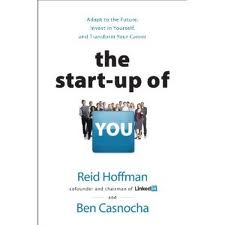
Finally, I found a book that echoed exactly the same view. “The Start-up of You” by Reid Hoffman (Co-founder of LinkedIn) and Ben Casnocha describes in detail on how one can map the lessons of successful entrepreneurs in Silicon Valley into their own careers in an uncertain global economy out there. It might be interesting to draw out some of the important ideas sketched out in the book.
“All human beings are entrepreneurs. When we were in the caves, we were all self-employed … finding our food, feeding ourselves. That’s where human history began. As civilization came, we suppressed it. We became “labor” because they stamped us, “You are labor.” We forgot that we are entrepreneurs.” —Muhammad Yunus, Nobel Prize winner.
The theme of the book is simple: your future success whether in career or any project you undertake, depends on understanding several entrepreneurial strategies. Society can flourish when people start to think entrepreneurially.
The book illustrated on how globalization and technology have changed the way individuals can progress in their careers. Globalization allows corporations to distribute your jobs to cheaper labour out there, for example, outsourcing American manufacturing to China. Technology has been able to simplify workflow in order to utilize less labour in jobs that used to need more people.
After the book sets the stage, it introduces us to a few interesting case studies of successful entrepreneurs in Silicon Valley and mapped out the best practices and lessons that individuals can adopt to manage their own career in the same way.
Most notably, they described a “permanent beta” mindset where all of us have “bugs”. Constant upgrade and development of our skill sets with optimism will allow us to go through a life marked with new challenges and opportunities.
In the chapters which followed, the authors lay out the lessons with case studies of various successful entrepreneurs and corporate executives, for example, the entrepreneurs who founded AirBnB, Paypal and LinkedIn and Sheryl Sandberg who transitioned to a corporate career with successful stints in Google and Facebook.
In each part of the book, the authors give some practical exercises for the individual to work out an action plan. Like entrepreneurs who have to deal with uncertainties, changes and constraints in their own careers, we have to take stock of our assets, aspirations and market realities to develop a competitive advantage.
“Markets that don’t exist don’t care how smart you are. Similarly, it doesn’t matter how hard you’ve worked or how passionate you are about an aspiration: If someone won’t pay you for your services in the career marketplace, it’s going to be a very hard slog. You aren’t entitled to everything” — Marc Andreessen
Next, the authors recommend the following strategies for your career which is analogous to building a start-up.
First develop a competitive advantage based on your assets, aspirations and values while adapt to the market realities, then work out a plan A, B all the way to Z and pivot if your initial plan did not work. Then build an extensive network where you build genuine relationships and maintain the relationships you build with the people within the network.
Finally, pursue breakout opportunities and take intelligent risks, and in the end you will be able to navigate your way and build a career.
Sounds simple, but most of us are often stuck in our day jobs, focusing on the details rather than taking a step back to see the big picture. Someone once told me that an entrepreneur needs to understand that everyone works for themselves, and their objective as entrepreneurs is to facilitate employees that the objective of working for yourself and the company stays the same.





Stay updated on the go with our mobile app.
Get latest insights with smoother, more personalized experience through TIA mobile app.









📅 Upcoming Events
22 October 2026
Payoneer x CSPN Summit 2026