 Michael Tegos · · 5 min read
A glimpse into the coder’s world, courtesy of Tech in Asia’s engineering team

As someone who has always loved technology but approached it strictly from a writer’s point of view, coding is nothing short of sorcery for me. So it’s good that, at Tech in Asia, we have some pretty awesome (if I do say so myself) masters of the dark arts who make sure our little corner of the internet keeps running smoothly and maintains that lovely TiA flavor.
That said, even I can admit I would do well to get a little more insight into the arcane, if only to tell apart my Python from my CSS. Or something. That’s why, at Tech in Asia, we put together a short workshop in our Singapore HQ, summoning our dark warlocks of programming to shed some light on what they do.
The engineering team answered questions from the very basic, such as the beginnings of programming languages, to queries regarding coding protocol and developer communities.
Master chefs
Our own Alvin Teh put it very succinctly when he compared programming to cooking (it helps that Alvin is a pretty mean cook as well): there are certain ingredients that can come together in loads of different ways to create a tasty meal. Your average website is comprised of different applications and languages on its front end, back end, and servers, that combine into a working whole.
The team explained how the web is primarily built on HTML, Javascript, and CSS – all websites use those basic building blocks. Then you have the back end, consisting of programming languages that run in the servers and generate the content you’re browsing through. PHP, Ruby, and Python are the ones most commonly used in Singapore, according to the guys. Tech in Asia itself runs on PHP, for example, and the reason for that is mostly practical – our head engineers are stronger on PHP, and it’s generally easier to hire talent to work on it.
And then you have APIs, or Application Programming Interfaces, which allow engineers to bolt together different functions, languages, and features. It’s what’s allowing you, say, to log on to websites with your Facebook account, or enabling your Apple Watch to talk to your iPhone to get your emails.
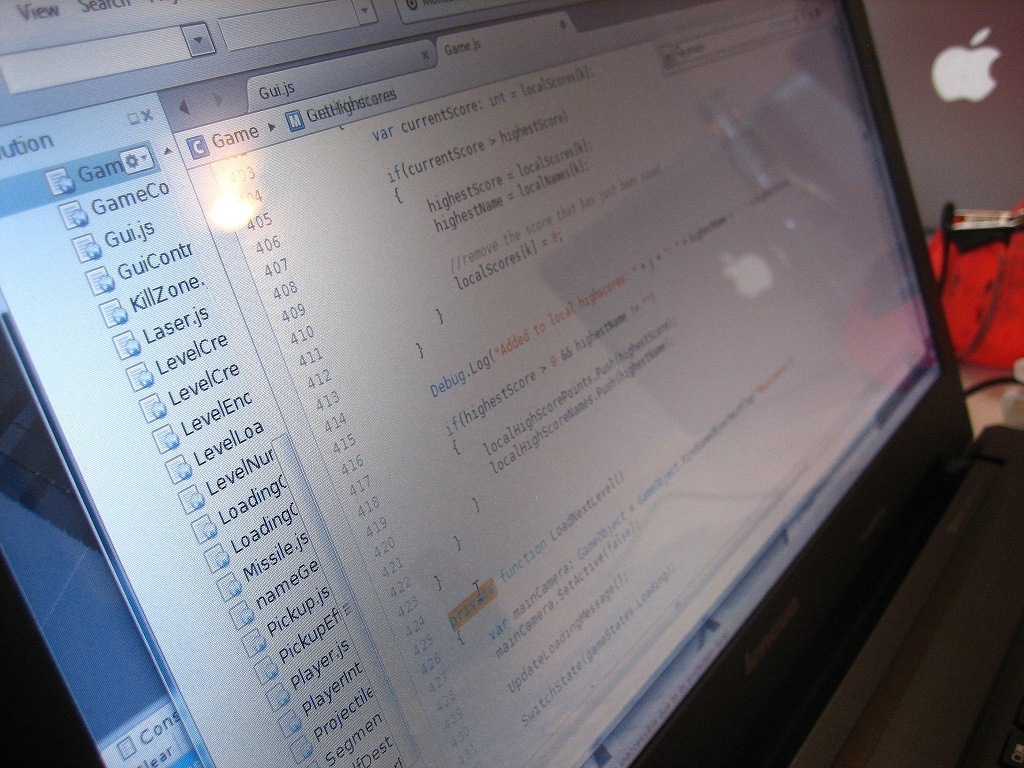
Our seven-strong engineering team boasts different skill sets that complement and bolster each other, as reported by Li Soon, who co-heads the team with Lester Chan. The team employs specific style guides to make sure everyone is on the same page despite the myriad of options available to a coder – there are a hundred ways to skin a cat, as our Josh Thornton said. He added that style guides are especially important now that coding is easier than ever to get into (although obviously no easier to master) and newcomers need some basic structure in what they do.
But what’s with calling them “programming languages?” Well, that’s because they are literally means of communication with the computer. Josh went all the way back to talk about the different generations of languages. Starting with generation one, good old binary, which is the 1s and 0s the computer understands, we move on to the second generation assembly languages, which is a little more understandable to humans.
Then we pass through the third generation, with languages like C and C++. From there, it’s on to generations four and five, which are a bit more vague as categories, but consist of increasingly declarative languages (as in, you state what you want to do in near-plain English and leave the how up to the computer) and artificial intelligence.
Building for mobile
When it comes to coding for a website like Tech in Asia, it’s impossible to avoid the building for web versus building for mobile challenge. Websites are increasingly accessed through mobile devices, and elegant solutions are required if the end result is to look good on every possible platform. Josh spoke a bit about the different ways a mobile app can be programmed, including native (specifically built for a mobile platform, such as Android or iOS), hybrid (built as a traditional web page but working with the platform’s API), and HTML (built as a traditional web page), and the challenges and opportunities they present.
A hybrid app allows the engineering team to take advantage of the platform it’s building on to enable its specific functions. For example, a photography app can have access to your phone’s camera, a messaging app can access your contacts list, and so on. This allows engineers to build an app once on HTML, for example, and then deploy that to different formats such as iOS or Android.
Our iOS dev Hong Wei Zhuo and Li stressed how important it is for developers to try out new and different ideas during their off-hours – small, personal projects that translate into new insights and skills that are invaluable in their day-to-day.
For example, Hong Wei tried to build an alarm clock app for the iPhone, something that might seem pretty straightforward, but actually requires quite a bit of know-how on Apple’s platform to pull off. An alarm clock app, specifically, needs to be in contact with the phone’s clock to get the time, and it needs to be able to run in the background even if the user closes the app – so it needs to be built as what’s called a background application.
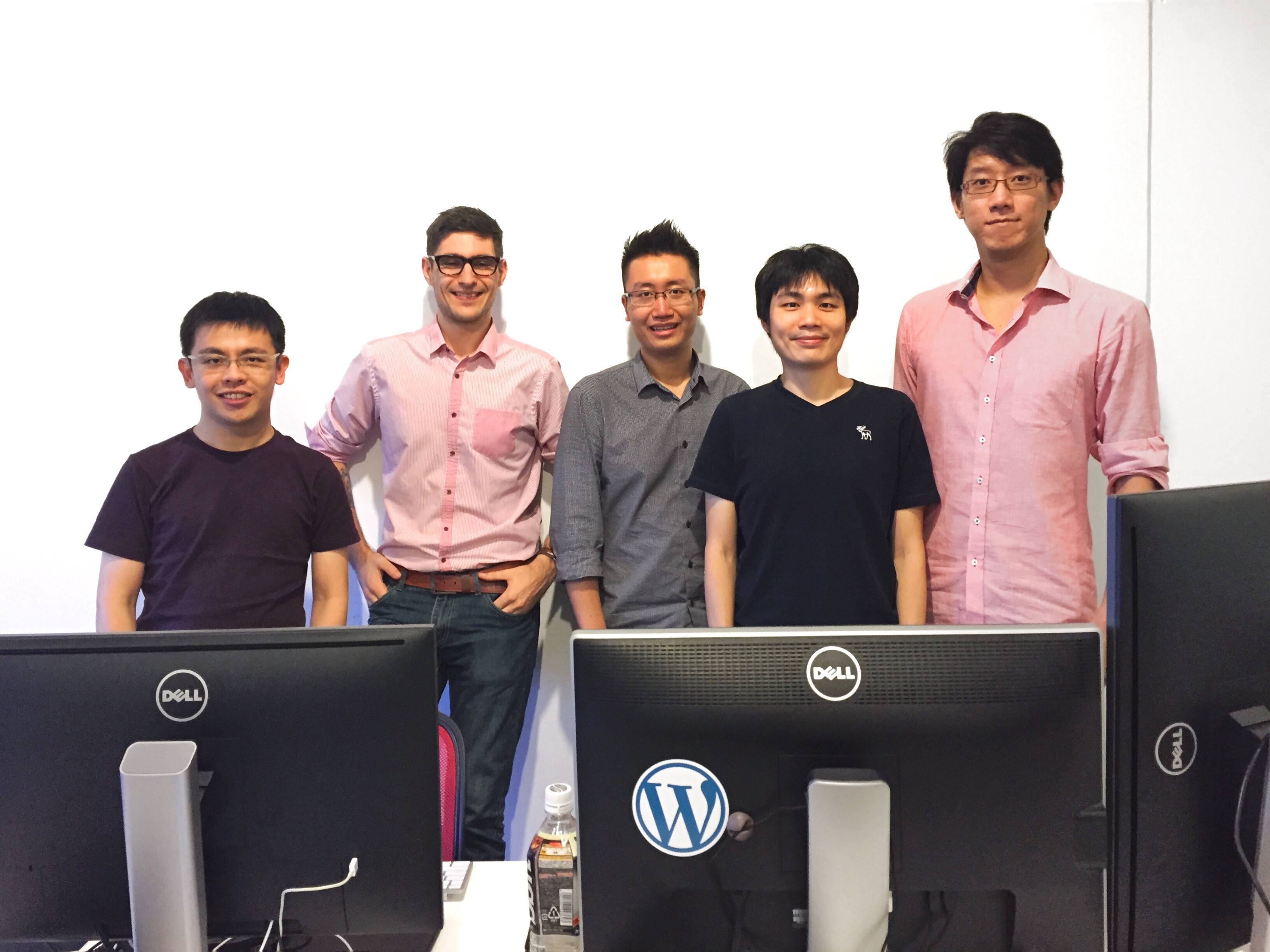
Our fearless engineers!
Lone wolves
Asked about the developer community, our engineers admitted their peers aren’t the people you’d see at networking events and hackathons – these don’t tend to be good places to get more knowledge, although they might be useful for making contacts. Developers can run the gamut between jaded veterans who have lost the passion for learning new things and engaging with their community, and arrogant and opinionated individuals who can get quite territorial. That’s one of the reasons it can be tough to find the right developers to fit into a team.
So did the workshop throw some light into the inscrutable depths of the coders’ world for me? Actually, it sort of did. While I’m not going to be coding anything more complex than a “Goto 10” command anytime soon, this first look into our engineers’ minds helps me to better appreciate their hard work, and leaves me wanting to find out more about what’s going on behind the screens we all use every day.
Stay updated on the go with our mobile app.
Get latest insights with smoother, more personalized experience through TIA mobile app.
Recommended reads
 The web’s new landlord: Google
 OpenAI’s Codex head sees “incredible” adoption across Asia
 AI to cart away ecommerce shoppers?
 Rethinking Singapore’s biotech bet
 Is this new robot hand from China a challenge to Tesla?
 The recipe for viral AI apps
 Amazon CTO: why ‘vibe coding’ is dangerous
 Could the future of tech be found in an art museum?
 Coach Gemini is in session
 Agents, not ads, are the next frontier for online sales





Editing by Terence Lee and J.T. Quigley; images by Claire Thompson, Iwan Gabovitch
(And yes, we’re serious about ethics and transparency. More information here.)






📅 Upcoming Events
22 October 2026
Payoneer x CSPN Summit 2026