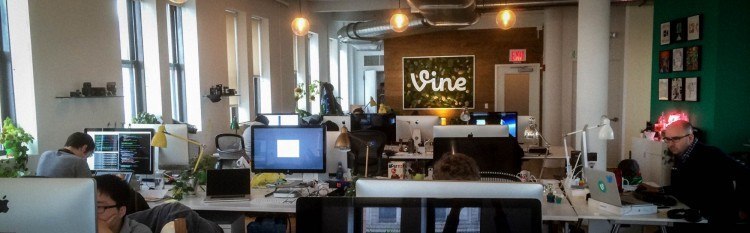
For the past two years I worked at Vine, first as head of product, then as general manager, overseeing the ~50-person NY-based company within Twitter. During the course of my time there, I learned a lot. On the advice of my former colleague, Adam Feldman, I’ve written up some of the lessons I’ve learned to be true.
On leading a team
Having and telling a compelling story is the most important thing you do as a leader. Be it sharing your vision, motivating a team, getting resources, whatever — this is everything. It’s not enough to share a list of good ideas. You need to make people understand and feel what you’re telling them.
Repeating that story again and again is just about as important. If you’re not sick of hearing yourself repeat the story then you probably haven’t said it enough.
Focus is tough. At Vine, two tricks I used to try to ensure focus were 1) writing our top three priorities on the walls and 2) asking every person on the team to write their three priorities each quarter, in under 140 characters, in a shared spreadsheet.
A weekly team-wide meeting is a good way to make sure that your team is on the same page — but it’s critical to make sure it’s something people actually want to attend. At Vine, we watched Vines together, had snacks, etc.
A weekly email to your team is another good practice. At Vine I’d share my top three weekly priorities with the team every Monday so that they knew what I was focused on.
“Make sure you’re doing the maximally impactful thing at all times,” Dick Costolo told me early on. This seems obvious, but it’s very easy to get sucked into a vortex of other people’s requests or your past habits. Better to delegate tasks that you specifically do not have to do, or to just politely say no.
Team culture is critically important in a world where engineers are in such short supply and high demand. I strived to make Vine feel more like a family than a company. We prioritized the obvious things (hire and retain the best people) but also did lots of smaller things that I think made a difference (e.g. plenty of swag + unforgettable off-sites).
On product development
Stories > Priorities. It’s not enough to have a list of product priorities. How do they fit together? How does one build on the last? What’s your product’s story?
People default to building things for themselves. This works out great when your users match the demographic of your employees. But when they’re very different, you need to put in effort to ensure that your employees understand your users’ needs. At Vine, we opened up user studies to the entire team, cycling in employees to shadow our user researcher.
Embed experts on your team to stay close to their needs. At Vine, one group that was critically important to us was top Viners. So on the guidance of Karyn Spencer, we hired Vine star Chris Melberger. It was enormously helpful getting his frequent input — so much better than user studies. If I could go back, I would have done this earlier — and would have hired teenagers (as many Vine users are), as Facebook has done with the ever-inspiring Michael Sayman.
Appoint a directly responsible individual for each product/feature to not only ensure that someone is driving it forward, but that there is someone proud of the outcome. Without this, you risk a series of compromises and no one proud of the end result.
Don’t test on millions when you can test on thousands — or dozens. Try new features out with small groups of users. You can learn a surprising amount from super low-fidelity mocks.
On management
On hiring
Misc.





Stay updated on the go with our mobile app.
Get latest insights with smoother, more personalized experience through TIA mobile app.









📅 Upcoming Events
22 October 2026
Payoneer x CSPN Summit 2026