 I have written much about the expansion methods that both DeNA and GREE have adopted in recent months.
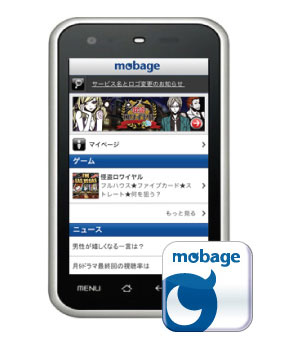
DeNA’s Mobage has chosen to expand into countries like China and the U.S by setting up Mobage China and Mobage U.S, respectively. It places emphasis on the Mobage brand while it expands abroad. I also recently learned that Mobage Southeast Asia is in the pipeline, and is projected to launch somewhere early to mid next year.
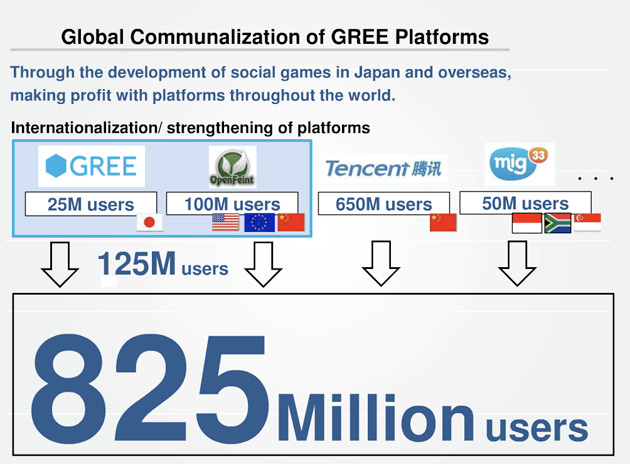
GREE, on the other hand, took the partnership approach. It has partnered with Tencent in China and mig33 in Southeast Asia, and can boast a whopping 825 million combined user reach between these three networks. That is surely impressive and GREE isn’t about to stop partnering with other networks to increase its reach.
GREE’s expansion looks aggressive and has somewhat overshadowed DeNA’s slower expansion approach. I threw the “problem” straight to Tetsuya Mori, managing director of DeNA’s Singapore office, and asked whether DeNA is worried about its competitor.
Mori smiled and acknowledged that both companies are taking very different approaches. While he can’t speak for his competitor, Mori says that DeNA wants to maintain the Mobage brand as it expands abroad. Even in Japan, Mori says that all ads — traditional and digital — emphasize just the name Mobage without mentioning DeNA.
The 825 million figure which GREE boasts is just a number. Does GREE own the entire 825 million users? Unfortunately, no. The partnership lasts as long as both companies are still seeing mutual benefits. It works for now but who knows what will happen in the future? A good example is the relationship between Google and Apple, which has turned sour over the years.
DeNA, on the other hand, focuses more on platform ownership and user experience. While its numbers are smaller (over 30 million users in Mobage Japan as we last learned), introducing new games and upgrading its mobile gaming network is way simpler. That’s because they own Mobage and can ensure the user experience is seamless. GREE, on the other hand, loses partial control on Tencent or mig33’s platform. Nonetheless, GREE’s partnership with other giants has commanded much attention within the mobile gaming world and created a somewhat unified platform for developers to market their games on the GREE, Tencent, and mig33 networks.
Mori graciously acknowledged that what GREE has achieved is impressive. But that doesn’t mean that DeNA has bowed down to GREE. It’s way too early to tell.





Stay updated on the go with our mobile app.
Get latest insights with smoother, more personalized experience through TIA mobile app.