Xinmei Shen · · 3 min read
Lenovo wants to start a smartphone ‘price war,’ but netizens don’t believe them
To get more news and analysis like this from Tech In Asia in your inbox, sign up for our free newsletter here.
Chinese users love cheap phones made by vendors like Xiaomi, Vivo, and Oppo. But one smartphone vendor says they’re not cheap enough.
After launching three phones that cost less than 3,000 yuan (US$435) each, Lenovo told the Chinese media that it will start a “price war” in China to strip away what it said are huge margins from other vendors. It also claimed that in the next six months, they don’t see a competitor for its newly unveiled Z5 Pro, which runs the latest Snapdragon 855 chipset but costs only 2,698 yuan (US$390).
The seriousness (or perhaps desperation?) of Lenovo’s plan might become obvious when you hear its reported code name: “Normandy Plan.” While it doesn’t signal Lenovo’s plans to invade the beaches of France (not yet, anyway), it aims to “completely defeat” Xiaomi and Honor in the 2,000 yuan (US$289) range. But as good as that sounds, Lenovo’s track record has led netizens to take its claims with a grain of salt.

The new Lenovo Z5 Pro is a slider phone similar to the Mi Mix 3. / Photo credit: Lenovo
In May, Lenovo repeatedly teased Z5 on Weibo, with multiple pictures hinting that it will have nothing but a screen on the front. Lenovo claimed that it will be much better than Xiaomi’s Mi 8 and have “an extreme design that even Apple doesn’t have.”
However, the actual phone is not even close. Instead of being “all screen,” it has a big notch and chin – like virtually every other phone out there – leaving people baffled by Lenovo’s claims of an “extreme design.” After the phone was unveiled, users flooded the Weibo account of Chang Cheng, Lenovo’s vice president and head of mobile business, calling out the excessive marketing and saying that the phone “successfully steered clear of all user needs.”
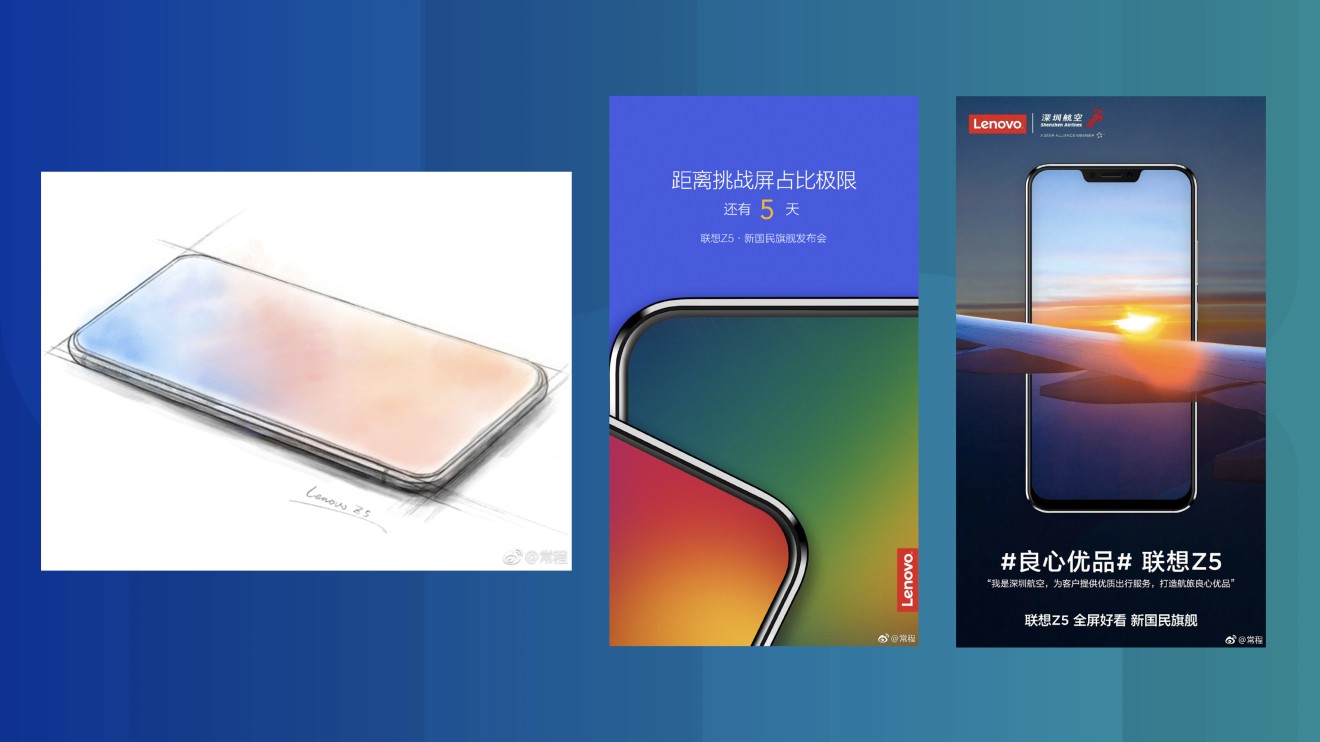
Marketing photos for Lenovo Z5 (left and center) vs the actual phone (right) / Photo credit: Lenovo
Some of Lenovo’s other marketing approaches have also made users question its claims.
In March, the company launched what it said was “the first blockchain phone” without revealing any information about the phone or how it would use blockchain. It left an impression that Lenovo just tried to capitalize on a buzzword.
But netizens say they have another reason to be mad at Lenovo – they don’t want to support an “unpatriotic” company. In May, Lenovo faced public backlash after it was revealed that the company sided with American firm Qualcomm instead of Huawei in a 5G universal standard vote back in 2016.
The criticism was so strong that Lenovo founder Liu Chuanzhi made a strong public statement saying that it is organized slander. He argued that Lenovo is a “national brand” and that Chinese companies must unify so that they won’t be alienated from each other by “outsiders.”





Stay updated on the go with our mobile app.
Get latest insights with smoother, more personalized experience through TIA mobile app.