- Premium Content It takes our newsroom weeks - if not months - to investigate and produce stories for our premium content. You can’t find them anywhere else.
 Putra Muskita · · 5 min read
Travel slumps, ecommerce thrives as Wuhan coronavirus spreads
With the Wuhan coronavirus spreading like wildfire across China and several countries around the world, startups and tech companies in Asia are feeling the impact – especially those operating in the travel industry.
“We are seeing a 20% to 60% drop in bookings for travel not only to China but all of Southeast Asia [from India],” says Balu Ramachandran, the global head of air business at Cleartrip, a leading player in India’s online travel industry. If the outbreak persists, it will impact the leisure travel industry in the peak tourist season between April and June when most Indians visit Southeast Asian countries.
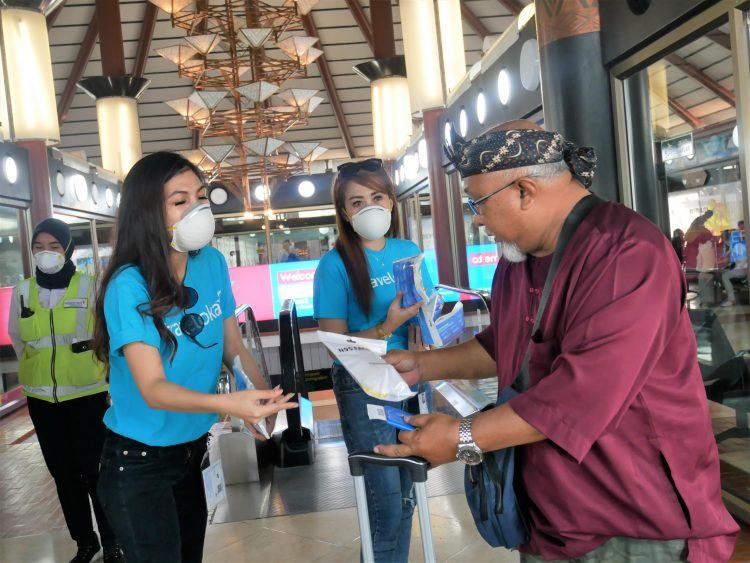
Traveloka employees giving out masks to passengers at Jakarta airport / Photo credit: Traveloka
Other online travel agencies are also seeing the negative effects of the virus outbreak. Jakarta-based Traveloka says current bookings are lower compared to December 2019, without giving specific numbers. The decline, however, isn’t surprising considering that December is a peak travel period and several China-bound flights have been temporarily suspended, Dionisius Nathaniel, chief marketing officer at Traveloka, says.
Though the coronavirus seems less fatal, with the number of deaths at 2% of over 30,000 people infected so far, compared to SARS’ fatality rate of 9.7%, some experts believe that the global economic cost of the Wuhan outbreak could be three or four times that of SARS, which infected just over 8,000 people in 2003.
“At this moment, we follow [local authorities’] instruction to temporarily deactivate flight routes to the destinations affected by this situation in our platform, which is aligned with the official information released by several airlines,” Nathaniel says. “Our main focus is to closely monitor the development of this situation.”
Traveloka has started distributing face masks to outbound international travelers at the Soekarno-Hatta International Airport to help prevent the spread of the virus, while rival Expedia has activated a flexible refunds feature for users traveling to China and Hong Kong. Trip.com has extended its free cancellation policy to China-bound passengers as well as 30,000 hotels outside of China that have bookings from Chinese outbound travelers.
Impact on ecommerce
It’s not all that bad. While the tourism industry braces for the negative impact of the virus outbreak, ecommerce companies are reporting brisk business in recent weeks.
Singapore’s Qoo10 is seeing a rise in page views and sales of healthcare products, especially face masks, hand sanitizers, and health supplements like immune-boosting vitamin C and black elderberry extracts. It declined to disclose specific figures.
“Traffic and sales started increasing as early as January 20 – just before Chinese New Year,” says a Qoo10 spokesperson. “After the holidays, sales exponentially grew as more media coverage fed the increase in public concern, and vice versa.”
As an illustration, the “Hot Trend” table on Qoo10’s homepage at the time of writing is entirely filled with search terms around “surgical mask” and “hand sanitizer.”
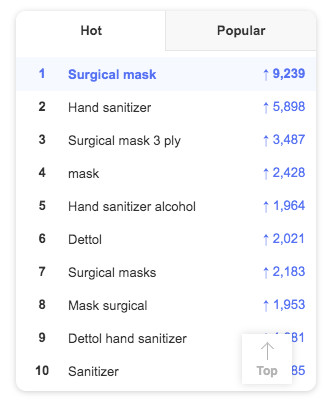
Hot Trends on the Qoo10 homepage
Regional ecommerce platform Lazada says it has seen increasing demand for certain products across Southeast Asia.
Supply chain
Indirect delivery
Stay ahead in Asia’s tech landscape
This is premium content. Subscribe to read the full story.
The travel industry is again at the epicenter of a deadly virus from China’s Wuhan province, reminiscent of the effects of the SARS epidemic in 2003.
We know this is not ideal. ⌛ Sign up in 20 seconds. Cancel anytime.
Our subscriber community includes professionals from these companies:





Stay updated on the go with our mobile app.
Get latest insights with smoother, more personalized experience through TIA mobile app.