Kannan Chandrasegaran · · 9 min read
Why your software projects are spiraling out of control and how you can fix them
You start with the best of intentions and hire a developer to build your startup idea. However, the project needs to be tweaked almost every week, features start creeping in, and the scope slowly expands.
It’s as if the project has a life of its own and is trying to destroy your life.
How did this happen? Did you hire a bad developer? Did you fumble the project management? Or was the idea just terrible all along? These are all possible, but there’s one core misunderstanding that often dooms a project from the start: We assume that our product is defined by a set of features and that we can see the scope of the project at a glance.
Your project is not two-dimensional like a sheet of paper; each feature can be peeled back to reveal different layers. Let me show you what I mean.
Feature complexities
Let’s say you’re pitching me an idea:
People often want books that nearby libraries don’t have. Other people in the area might have these books, so this app lets people send out book requests, and people who have the book will respond. We make money off each transaction.
Genius, right? The feature list is straightforward:
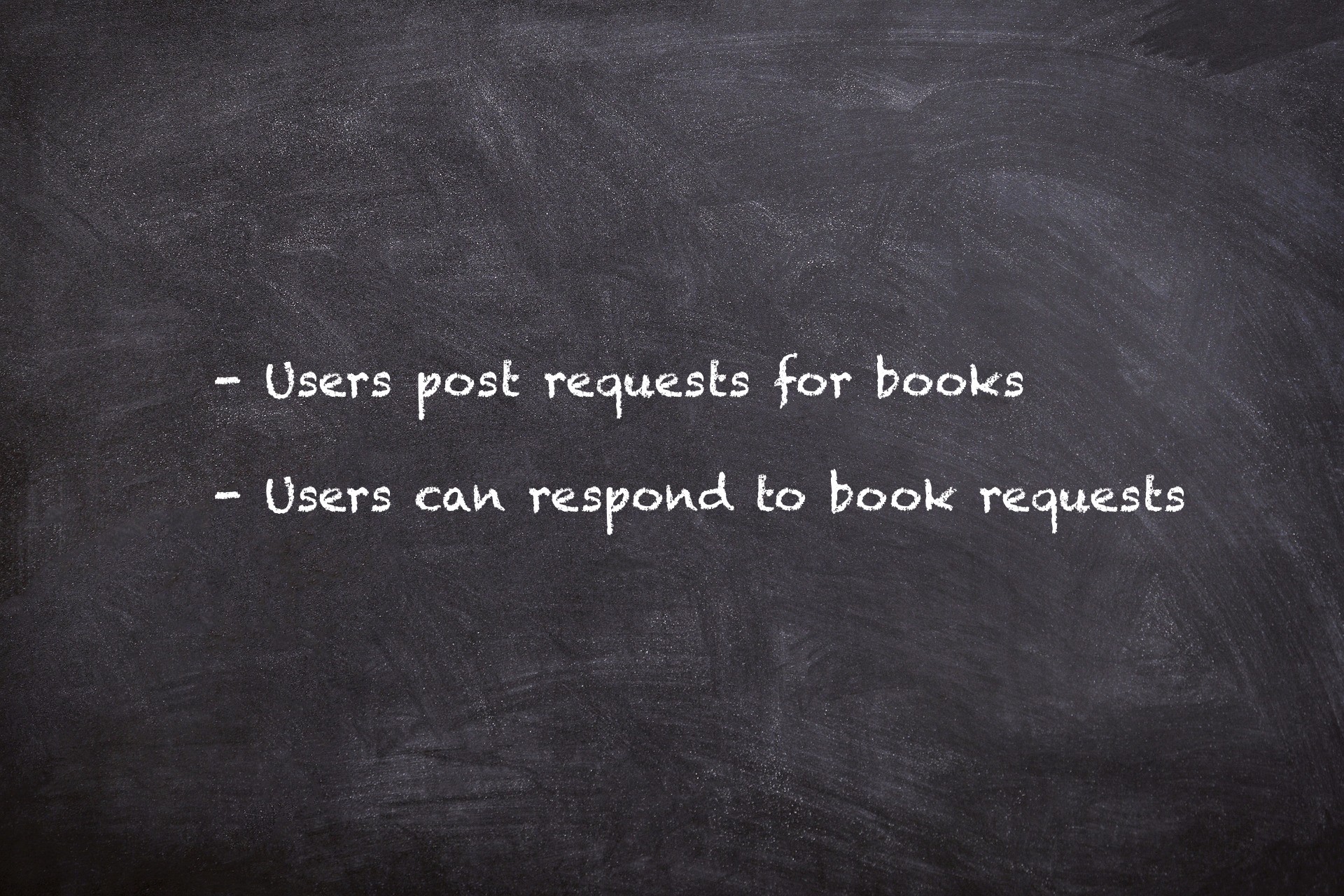
It’s time to send the specifications to the developer and start thinking of killer startup names. KaBooki? Lib.rari.ly?
Alright, hang on. Let’s take a closer look and probe the idea with some questions and see where it takes us:
- How do users pay each other? Oh, they should pay by credit card through the app so we can take a cut.
- How do they actually request for a book? Oh, hmm. They should search for their book and pick the one they want.
- OK, so we need a database of books? I guess.
- What is a book request? Do booksellers see a list of all requested books or do we send out notifications to sellers? We send out requests to other people who have the book.
- So sellers need to populate the app with all the books they are selling? Um, yes.
- How does the book actually get across? We’ll handle the delivery.
- So you’ll need a system that tells you the books that need picking up and where they need to go? OK, no. How about this? Users can mail the books to each other.
- So how do we handle shipping charges? Actually, these users have to be near each other. They can just go pick it up and make a new friend, OK?
- How do they find each other? Does the app have a real-time map so they can arrange a meet-up? Sure. Fine. Whatever.
You get the point. We really could go on forever.
Let’s have a look at what the feature list looks like now:
What happened?
Fractals
Mapping out the features
Question everything
Bringing it all together





Stay updated on the go with our mobile app.
Get latest insights with smoother, more personalized experience through TIA mobile app.