- Insights This article was written by a TIA community member. Insights pieces undergo the same rigorous editorial process that newsroom-produced articles have.
 Clarissa Santoso · · 5 min read
This search expert answers 9 beginner questions on SEO and SEM
Disclosure: Webnatics is a partner of Arcadier.
The power of search engines in helping people find your business should be obvious by now. And it would be imprudent to ignore the right SEO and SEM techniques.
Fortunately, our team had a chance to talk with Frieda Lee, general manager at Webnatics Singapore, a search and digital agency with presence in Thailand, Vietnam, and Sri Lanka.
In this interview, she shares with us what site owners need to know about SEO and SEM today.
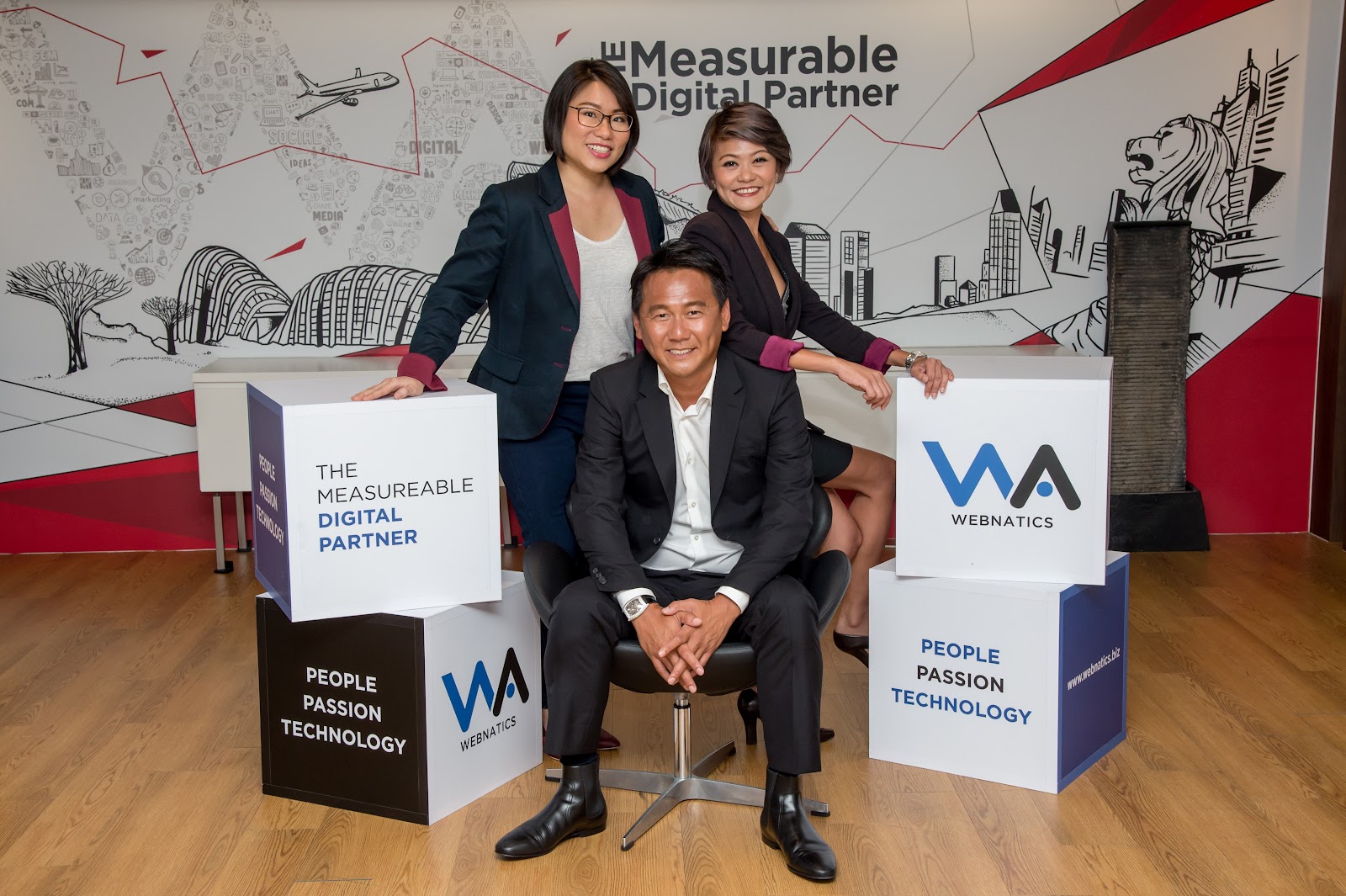
From left to right: Frieda Lee, Wilfred Chua (CEO and founder), Julie Chiam (Group Account Director). Photo credit: Webnatics.
What is the relationship between SEO and SEM?
That’s a very common question. And often, the words SEM and SEO are used without proper understanding. SEO is the practice of optimizing the content and structure of a website so that it is readable to search engine spiders. SEM is online advertising where you only pay per click when a customer goes to your website.
These two disciplines go hand in hand because:
- Great SEO can lead to cheaper SEM costs.
- SEO rankings are free […].
- Customers’ brand names should be number one on Google search results pages (SEO), as that is brand advocacy.
- Expensive and high volume keywords on SEM should be “SEO-ed” so that you can benefit from more paid and organic traffic to your website.
There’s a lot more to consider, but these are the few more evident and important ones to any marketer who considers ROI and performance marketing.
When should a business use SEM?
[…] We ask businesses the hard questions about their intended marketing goals and expected returns on investment. Then, we look at their digital fundamentals:
- Is the website optimized for Google?
- Is the client tracking the right metrics?
- Is there a viable value proposition and commercial market fit between the company’s offerings and their customers?
When these (and more) questions are answered, then a company can start SEM, as it is still the most cost-efficient media channel to date.
What makes a good search ad?
A good search ad would have crystalized the client’s communication message—the combination of consumer, competition, and company. It also has enough call to action to entice the searcher to come to the website.
Additionally, it must display all the needed DNA—site link, call, structured snippet extensions, etc. These best […] practices change all the time, and I highly recommend that you go back to your agency or marketing team to ask these questions.
What should a business do in high CPC environments with a limited budget?
It goes back to the initial question of how SEO aids SEM. This is exactly how we try to reduce CPC (cost per click) over time. With healthy SEO and good relevant ads, even CPCs in highly competitive industries should reduce over time.
There are some budgets that are too small to give 10 clicks a day. I recommend you look at a smarter way of placing your budgets, [improving your] time scheduling (e.g. turning off weekends if that works for your business), [and] being more focused on one or two services/products on your website.
Think of consolidating the small budget into a month instead of spreading it out over many months. Again, ask your agency and marketing team these questions.
What are the key metrics for AdWords?
If you are concerned about ROI, make sure you are tracking the right online actions with Google Analytics, Facebook Pixel, and AdWords conversion codes. You should be looking at a rising volume of conversions (leads/ecommerce transactions) and reducing CPA over time.
If you are new to market and need to get your brand out there, look to get more clicks for your budgets, then move quickly onto conversion-based optimization methods next.
What are the best ways to improve conversion rates in SEM?
There isn’t a magic number that I can give you. Each campaign and industry is different and could vary widely. I would say [that], based on experience, 1 percent conversion from click to a lead is OK, and could be better. But take this with a pinch of salt, as you should always look at your historical data.
To improve conversion rates, [look] at your ad copy, keyword, and landing page relevancy. If everything is good, then redo your landing pages. […] Use this formula:
keyword x ad copy x landing page = improved conversion rate
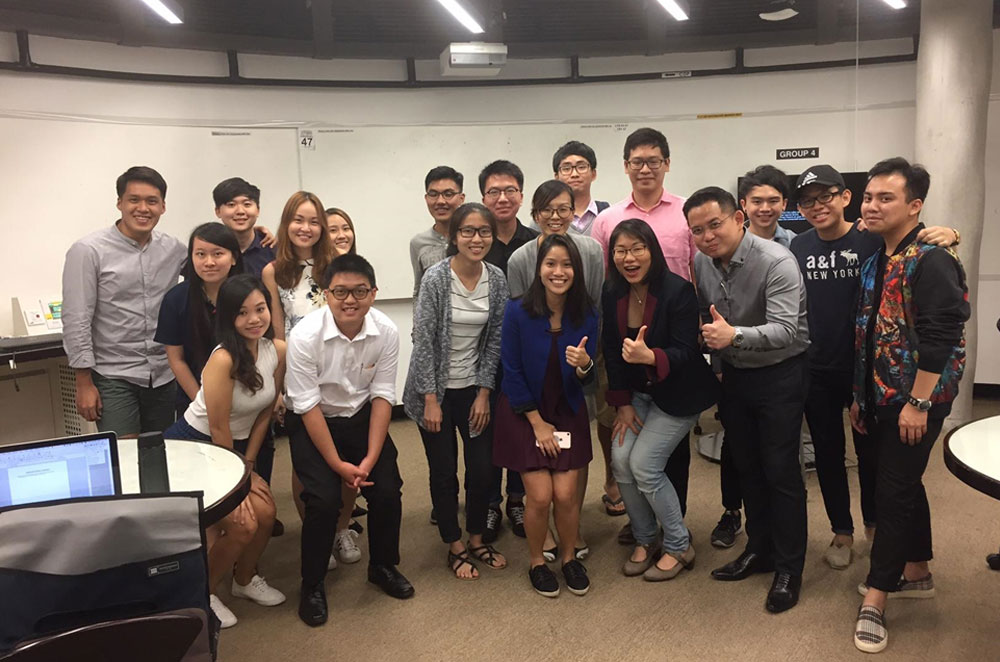
Frieda leading a performance-based marketing workshop for NTU marketing students. Photo credit: Webnatics.
What are good resources to track changes in the search industry?
I personally follow a few sites:
I do plow through Slideshare, as there are sometimes good resources [there]. They would give you a good pulse on the industry.
What are some recent changes in Google’s algorithm and what is your advice?
There are a lot of updates over the past five years and [another one] in June 2017 as well. [There is a lot of] talk online about rankings and visibility being affected, but no one [is] pinpointing exactly what it is.
My biggest comment on this is to continue focusing on white hat means of SEO (i.e. good-quality link building, [producing] content that is original and new to the market, and ensuring all the basic SEO hygiene is met).
After all, Google changes their algorithm to reward those who ensure they practice relevancy to the reader. As long as this rule is followed, whatever updates to Google should not penalize you too badly.
Being in the search industry for 15 years, what keeps your passion alive?
Yes, it may seem like a long time. But time passes like a breeze! Maybe it’s because I love what I do. I really want to see small and medium businesses skill up and scale up […].
The Singapore brand is very strong, and a lot of businesses don’t know and haven’t leveraged on it internationally. That’s what fuels my excitement working with our local businesses, helping them see the opportunities and getting them set up to meet their potential […].
This article was first published on Arcadier.
The views expressed in this article are those of the writer and do not necessarily reflect the views of Tech in Asia.
Editing by Charmaine de Lazo
(And yes, we’re serious about ethics and transparency. More information here.)