- Insights This article was written by a TIA community member. Insights pieces undergo the same rigorous editorial process that newsroom-produced articles have.
 Jack Chan · · 4 min read
How this Malaysian founder went from being Nasdaq-listed to starting an ‘ecosystem builder’
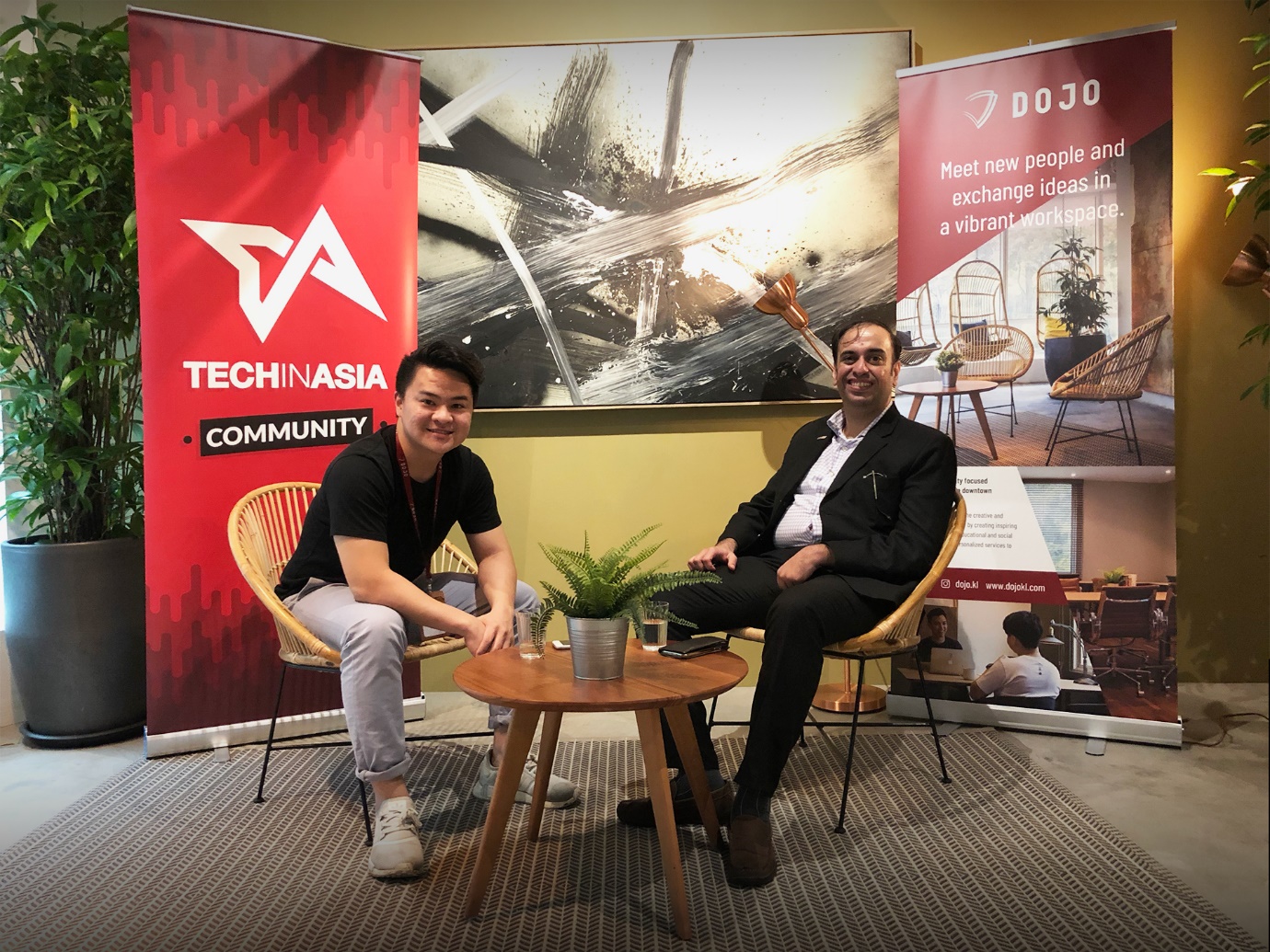
Author with Ganesh Kumar Bangah
This article has been edited from the original transcript.
Ganesh Kumar Bangah is the founder of MOL Global Inc., a global payment service provider that became Southeast Asia’s first internet company to be listed on Nasdaq in 2014. Currently, he is looking into his next venture, Commerce Asia (an omnichannel commerce ecosystem).
In this exclusive interview, I spoke to Bangah on his insights on starting up this new venture.
What motivated you to come out of early retirement?
After my retirement from MOL, I spent most of my free time mentoring companies (particularly ecommerce companies), but that didn’t really satisfy me. In February 2016, while mentoring at the Google Launchpad in Silicon Valley, I met up with some old friends who advised me to “help the next generation of entrepreneurs.” So I said, “OK, but you know what? To do it, I would need a strategy.”
What I wanted to do was to help the group of SMEs who were really confused. We’ve got 700,000 to 800,000 SMEs in Malaysia. Only 180,000 are expected to go online this year. Why aren’t the other 600,000 going online?
Could you tell us a little bit about Commerce Asia?
We’ve come up with an idea we call a “total ecosystem support strategy.” We invest in technology enablers such as Kumoten and SiteGiant, with a joint venture with Shippop, and combine these technologies to provide a one-stop solution to merchants (Malaysian SMEs and micro-SMEs). Then, we have an acceleration program and an academy to generate talent for these merchants. We also have another acceleration program to grow both the technology enablers and the merchants themselves.
Why did you partner with Silicon Valley’s GrowthX marketing accelerator program?
One of the frustrations I had with acceleration programs in Southeast Asia was that they only focused on teaching two things: how to build their product and how to raise money. But these programs don’t really focus on teaching the founders how to market their product and make money.
While I was in The Valley, I found an accelerator called GrowthX which had a unique proposition. The program consists of two components: the MXP (a market acceleration program that takes a company through the steps of finding product-market fit) and marketing the product.
If you want to create your own digital product, then you need to know how to grow it. Sure, you can hire a consulting company to develop the product, but in the end, you need somebody to help you grow.
Why did you go with a total ecosystem support strategy?
I realized that Commerce Asia is an “ecosystem builder” because we only focus within our chosen ecosystem. When I was in MOL, we did a lot of investments, and our investments tended to be very profitable because they were all done within an ecosystem. So I’ve always believed in ecosystem investing. I don’t believe in “spray-and-pray” investing.
How did you pull your team together?
I’ve managed a company that had over 400 people. I’ve learned that you’re never going to make the right decision when it comes to hiring. You’re just going to have to slowly build your team over time. You’ve got to go through that process of challenging the team and building the team culture, which is what we’re still doing today. And it’s not just about building a culture within the company, but also building a culture within the ecosystem.
What was the main challenge in setting up in Malaysia?
I noticed that a lot of foreign accelerators that come into Southeast Asia need lots of money to cover the high overhead costs of bringing in foreign talent to run their accelerator programs.
It goes back to the old days where, when you start a school or a university, you need to hire lecturers. How do you train these lecturers? Shouldn’t you send them to the home university to get trained? So, we had to send these Malaysian trainers to Silicon Valley, which presented the biggest challenge in starting up the accelerator program in this part of the world.
What’s one piece of advice you can share with other entrepreneurs?





Stay updated on the go with our mobile app.
Get latest insights with smoother, more personalized experience through TIA mobile app.








📅 Upcoming Events
22 October 2026
Payoneer x CSPN Summit 2026