- Insights This article was written by a TIA community member. Insights pieces undergo the same rigorous editorial process that newsroom-produced articles have.
 Vijay Anand · · 6 min read
What we should be learning from the Stayzilla brouhaha
Only announce what you raise. Better yet, stop announcing.
When VC funds commit capital, they have this habit of committing a larger amount, and then putting conditions of release (what’s called a tranche). If the funding is tranched, and if you and the VC fund decide to make an announcement, only announce the amount that is being released, not the ceiling amount. Better yet, stop making announcements about funding.
The fact that companies use fundraising announcements to build vendor and employee confidence, and then say that the amount never reached the account, is paramount to fraud. VC funds have a responsibility towards this as well.
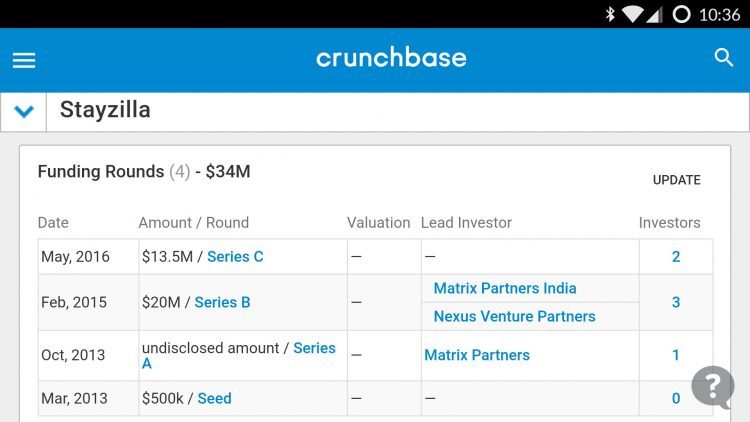
In May 2016, Stayzilla announced that they had raised US$13.5 million from their investors. Insiders say the money that actually hit the bank was a much smaller fraction of it. Either that or between May 2016 and Dec 2016 they managed to burn through US$13.5m, which doesn’t add up either.
Follow a proper process. Be fair.
India is not new to the shutting down of firms. At some point, you have to decide. When things are not going your way and you have only a little money in the bank, you have a responsibility to make a list of liabilities and call all the vendors and employees and make an offer with whatever money is left, proportionately.
See: It gets worse: India’s largest homestay startup Stayzilla shuts down
If 60 percent of your liabilities are salaries and 40 percent are vendors, then you split it accordingly and make a settlement offer. You tell them, “This is the amount you can make right away,” or if they want to negotiate, they can come to the table once everyone is settled. 98 percent of the time, the vendor or employee will take the settlement. Something is better than nothing. Service providers would have paid a minimum 15 percent service tax when they raised the invoice to the government, so even if the amount covers just that, they’d feel happy about it.
Saying nothing just aggravates the situation. Time and time again, be it Stayzilla, TinyOwl, or IndiaMart, this same mistake surfaces. Learn from how manufacturing companies do this – the rules are not any different.
A year ago, when the TinyOwl founder went to their Pune office to shut it down, he was held hostage by employees. Some local politicians had to get involved, and it was only resolved after a two-day standoff. We haven’t learned a thing from that ordeal.
We need a CIBIL-like system for companies
There are companies like Reliance that never pay on time or never pay at all. And there are cases when a company is doing well, but it goes broke because of unavoidable circumstances. As a vendor, you should be able to look up the company’s rating and do business. If the rating is good, and you provide a service and the business for some reason goes belly-up, it is an acceptable risk on all sides.
As a vendor, you should be able to look up the company’s rating and do business.
But if, on the other hand, the company is high-risk and has a history of not paying on time, you go into it with your eyes open and with the risk that the payment might never happen. You pad your pricing for risk. In the case where the rating is good, and if you want to protect yourself against the uncertainty of the market, you can avail an insurance that would cover it.
In a poll conducted among approximately 100 startup entrepreneurs, a mere 10 percent say that they are happy with the payment system when it comes to the collection of dues in India. On the other hand, 12 percent recorded going bankrupt because of collection issues.
Be accountable – till the end.
Are you shutting down or rebooting?
Fail gracefully
Don’t forget the other stakeholder
Help team members transition





Stay updated on the go with our mobile app.
Get latest insights with smoother, more personalized experience through TIA mobile app.








📅 Upcoming Events
22 October 2026
Payoneer x CSPN Summit 2026