- Insights This article was written by a TIA community member. Insights pieces undergo the same rigorous editorial process that newsroom-produced articles have.
 Tim Romero · · 5 min read
This startup is solving Japan’s parking and retail space problem with the sharing economy
This article is part of Tech in Asia’s partnership with Disrupting Japan where we publish the revised transcripts from the show’s podcast interviews with Japanese entrepreneurs. This is heavily revised from the original transcripts. For the full interview, go here.
Napoleon Bonaparte once called England a nation of shopkeepers. And while that statement was actually an insult in context, there was still something to be said in favor of being a nation of shopkeepers, particularly in this age of ecommerce, Rakuten, Amazon, and drop shipping.
In fact, Japan, more so than the US, has a culture of tiny neighborhood shops that have never been pushed out completely by big box stores, shopping malls, and chain stores even in the big cities. I sat down and talked with someone who’s accelerating this trend by making it easier for small shopkeepers to pop up all over Tokyo.
Akiko Nishiura, CEO of Nokisaki, connects commercial landlords to small merchants who are looking for a small space. Her company, which had its first funding in 2011 and raised US$2.2 million last year, is also trying to solve Japan’s horrible parking problems.
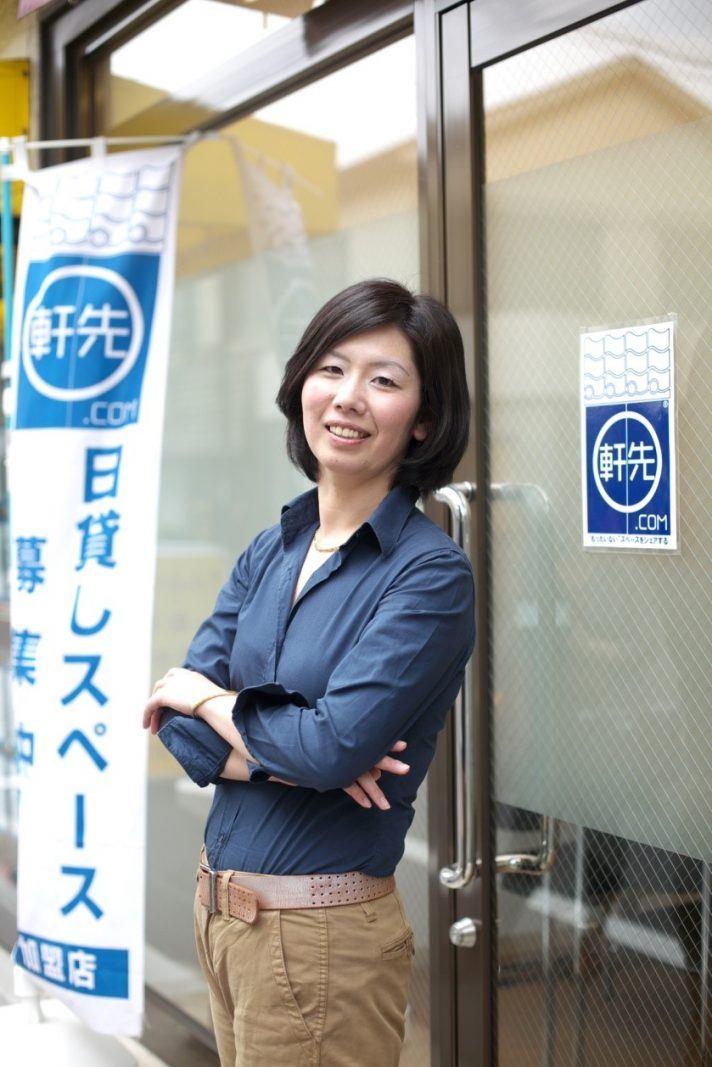
A photo of Akiko Nishiura, CEO of Nokisaki.
Let’s jump right into the interview.
What is Nokisaki?
The word nokisaki means a tiny space under the roof. It’s like a small space you use when you hide from the rain. We do business using that space. We are doing some special in-service but we are dealing with some unused space or spaces that are not being dealt with in a traditional real estate market. We are offering a marketplace for landlords and those who want to use their spaces.
Currently, we have 4,000 parking lots listed in our website and the number of registered users is more than 130,000.
(Note: Before you can buy a car in Japan, you have to prove first that you have a parking space for it. However, it is a challenge to find such a space in cities like Tokyo.)
In Japan, the most popular parking lots are those with coin-operated parking meters. The problem is you don’t know whether you can park your car until you get there. You don’t know whether there’s an available slot. You have to spend 30 minutes or an hour to find a vacant space.
Our service is solving such a problem by allowing people to book a parking lot before they arrive. They can book via our website and they can use it per day.
But our major users are businesses that are selling their products or promoting their services and can benefit from a pop-up store. Most of them are individual merchants or small- to mid-sized companies selling vegetables, clothes, shoes, etc.
What made you decide to leave a successful career and start a sharing economy business?
It was kind of accidental. I retired from the company I used to work at to give birth to my child. I was 37 years old at that time but I wanted to continue working in some way.
Last year, your company had to shut down for two months. What caused that?
Do you think your business model will work outside of Tokyo?
What do you think is going to be the future of sharing economy in Japan?
What would you change to make things better for startups in Japan?





Stay updated on the go with our mobile app.
Get latest insights with smoother, more personalized experience through TIA mobile app.









📅 Upcoming Events
22 October 2026
Payoneer x CSPN Summit 2026