- Insights This article was written by a TIA community member. Insights pieces undergo the same rigorous editorial process that newsroom-produced articles have.
 Jeffrey Towson · · 5 min read
What my interview with a Didi Chuxing driver taught me about on-demand work
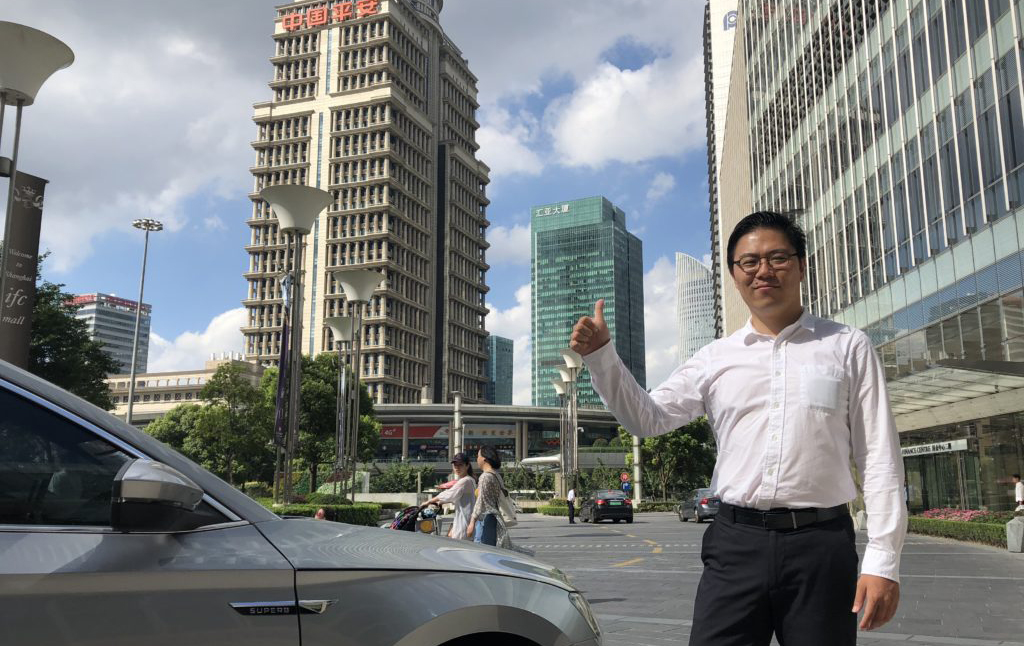
Didi driver Wang Ziming
Jeffrey is a TIA Star Contributor and publishes high-value content that serves the Asian tech community. Read more from TIA Star Contributors here.
I recently sat down with Wang Ziming, a driver for Didi Chuxing, to understand his work. What was life like? How has it been changing? What’s next?
This is the side of the platform that we don’t really see as customers, and I wanted to get a better sense of the human side of this tech giant.
Wang Ziming
Wang didn’t have a specific plan when he started driving for Didi. But in 2016, he was married with a family and was looking for a more stable income. He already owned a car, so it was a flexible way to make additional money.
He signed up with Didi Express, which was the normal process back then. He had to go to a local Didi center and complete tests, forms, and a day of training. The company then inspected his car and checked his drivers’ license.
After driving for a while and getting good reviews, he was asked to be a team leader. He now has a team of 30 drivers—which is the company limit—and his team is one of the highest rated in Shanghai.
A day in his life
6 to 10 am
The day of a Didi driver mostly follows the commute schedule. This means getting up early and being ready for the wave of morning commuters.
Wang wakes up at 6 am, eats breakfast, and gets ready for the day. At 7 am, he turns on his phone, and work officially begins. There are typically already five to six rides waiting in his cue. By the time his wife and child wake up, he is already out on the road.
Didi drivers can operate in two different modes for orders: “Pick and Choose,” where they take the orders they want, or “Assigned,” where the system assigns the rides which they must accept. Wang likes to operate in Assigned mode, which usually means picking up riders close by and driving about 30 minutes per order.
By the time he takes his break at 10 am, he’d have been driving for three hours with no real downtime.
His schedule is a bit different from other drivers. Most of them start at 5 to 6 am so they can fulfill trips to the airport or train station. These drivers will often operate in Pick and Choose, as people going to the airport or train station usually reserve their rides ahead of time.
There is a nine-hour time limit for driving in a day. So, they are doing the bulk of the days’ driving at this time.
China’s emerging on-demand workforce





Stay updated on the go with our mobile app.
Get latest insights with smoother, more personalized experience through TIA mobile app.








📅 Upcoming Events
22 October 2026
Payoneer x CSPN Summit 2026