 Christopher Quek · · 9 min read
How the education system can be improved to groom better engineers
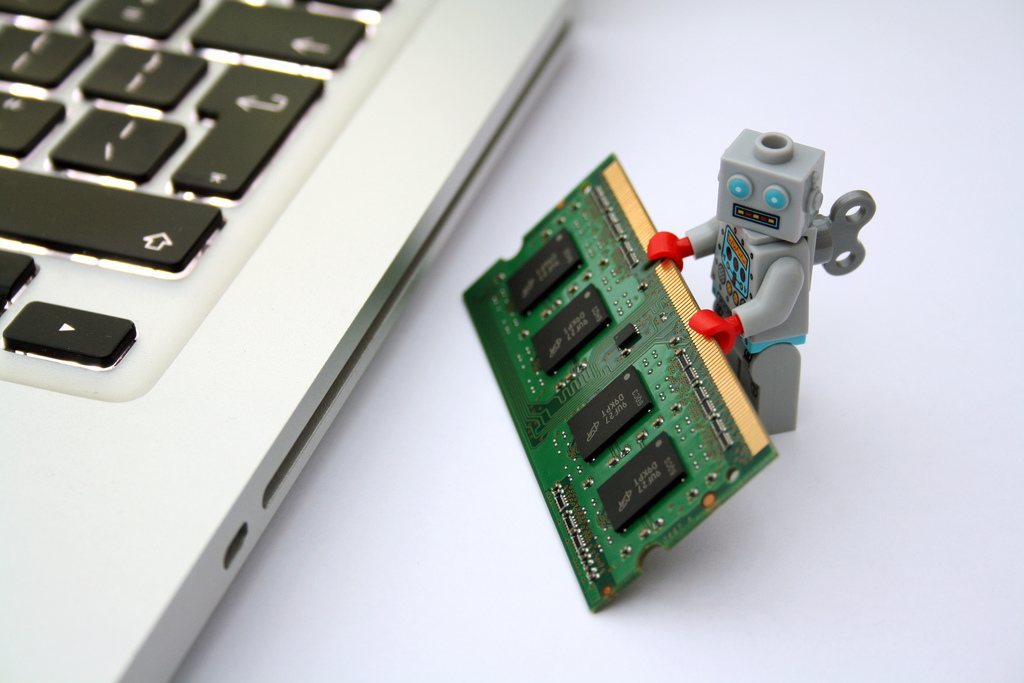
Photo credit: Chris Isherwood.
Over the last few months, the conversation on Singapore’s tech talent has evolved. It started from the current state of Singapore’s tech talent, engineering becoming a choice profession, the government’s hiring of 1,000 engineers and more for large public projects, to students pursuing their professions of choice as engineers.
Taking this further, with the state institutions producing over 11,409 engineering and science graduates in 2013 and obviously handling the bulk supply of tech talent, are the institutions creating an environment that generates good tech programmers? What else can be improved?
I asked five students and graduates from the various programming courses for their insights.
Better balance between theory and application
Are our programming courses relevant to the industry? Kayla (not her real name), a 2013 Computer Engineering graduate in National University of Singapore (NUS), gives her take.
“A lot of the modules we took were more theoretical than applied learning. Most of the computing modules do require some sort of hands-on assignment, but because most of the projects are within the context or boundaries of schoolwork, sometimes it doesn’t reflect the kinds of issues we face in real-world implementations. As a whole, the course does give me a foundation for which I am equipped to pick up more skills on my own if I were to require to.”
She suggested that schoolwork could be geared more toward real-world projects. “For example, if I’m applying a concept or theory for a project, what could the real-world use be like for this particular theory, in which industry or sector is this commonly used?”
Zhen Jie Lee, a 2014 Computer Science graduate in Nanyang Technological University, has a similar view.
“In my course, there were a lot more theoretical lessons than practical ones. However, I would say most of the lessons are about problem solving in theory, before implementing the solution by coding. Most of the practice I did were self-taught, albeit there being some help from peers or lecturers to a certain extent.”
To improve, he suggested there to be a better balance between the amount of theory and practical lessons.
Jun Rong Pang, a final year DBIT student in Singapore Polytechnic (SP), faces the same issue of there being too much theory in the curriculum. “Some of these skills might be a little obsolete in the current IT industry,” he said, and believes that more can be done to focus the curriculum on industry standards to prepare them for the workforce.
A web developer who doesn’t know how to publish a website simply doesn’t make sense to me.
On the other hand, Bryan Tan, a second year DBIS student in Republic Polytechnic (RP), found his lessons extremely relevant and knows it will be definitely useful in future. He feels that practicing the programming helped in understanding unfamiliar concepts.
Lung Hao Liu, a final year DIT student in Nanyang Polytechnic (NYP), feels that “while lessons are still considered relevant, the materials should be updated with the latest solutions. For example, the current trend of preventing DDoS attacks is to subscribe to a CDN service, but the materials are still teaching students to add more servers and network bandwidth to counter DDoS.”
Lecturers to promote learning beyond the classroom
Provide the necessary tools and hardware support
Nurturing a motivated culture of learning
Conclusion





Stay updated on the go with our mobile app.
Get latest insights with smoother, more personalized experience through TIA mobile app.











📅 Upcoming Events
22 October 2026
Payoneer x CSPN Summit 2026