 Sid Talwar · · 4 min read
Dissecting 3 business models in the online used automobile space

Photo credit: Moyan Brenn.
The online used automobile space in India has raised over US$300 million in the past few years – not including all the money classifieds portals Quikr and OLX have spent in the space. That’s a lot of capital and can be quite intimidating for any startup. Especially when the assumption is that all that money is solving the same problem.
In reality, of course, in any one vertical, different problems are always being solved. And that’s the case in the used automobile vertical. And when technology companies are solving different problems, they usually have very different financial models, different technology road maps, and different cost structures. Changing models, therefore, become that much more difficult over time. And that’s what Lightbox discovered while evaluating Droom in early 2015 before investing in it.
Here’s how we see the online used automobile landscape.
Horizontal classifieds
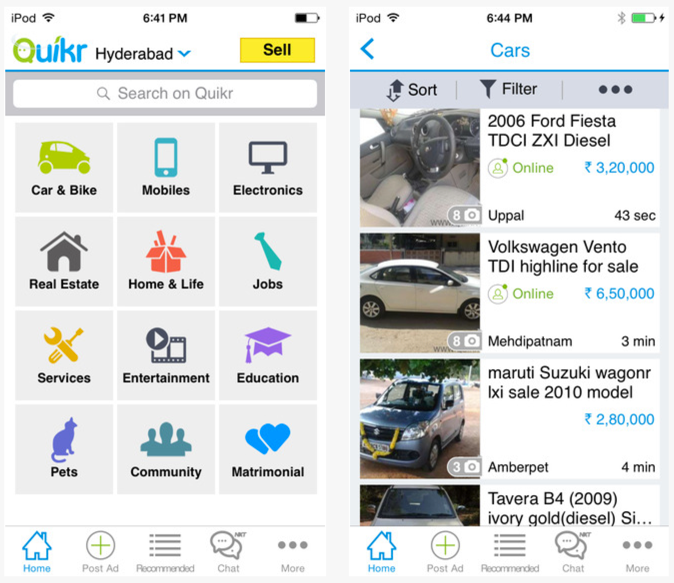
First, there are horizontal classifieds. This is an age-old model of sellers advertising to buyers, popularized by newspapers and brought online most famously by Craigslist. Goldman Sachs estimates that the online classifieds market will be worth US$47 billion by 2020.
The technology products they create need to help a buyer find the right ads. They are more to do with search and advertising methods. As a business model, companies in this space tend to prioritize user traffic over revenue generation early on. They generate revenue mainly through advertising or sometimes through premium listings.
Eventually, most countries see massive consolidation which finally leads to one or two large companies who then command tremendous power over pricing, leading to very high margins. And they’re able to maintain these margins because there’s a very high barrier to entry.
In India, some have made a case saying that it might not be a winner take all market. Perhaps, but I doubt we’ll have more than a couple of large players. The two companies that control this market right now are OLX and Quikr.
Vertical discovery platforms
Then, we have vertical discovery platforms. I like the word ‘discovery’ rather than ‘classifieds’ when it comes to vertical plays. In order to differentiate from horizontal classifieds, vertical players need to give consumers a more granular, exhaustive experience.
In India this is like Cartrade.com. In order to truly differentiate from horizontal classifieds, verticals need to be a lot more innovative with search technology, product innovation, and a constant stream of updated high quality content. Technology products these companies develop need to, first, help consumers make a decision and then connect them to the right ads.
The revenue model is not too different from horizontal classifieds. They generate revenue mainly through advertising as well as lead generation. And the pattern of consolidation in a region is also very similar to horizontals. When Lightbox first started evaluating Droom in 2015, there were 5 or 6 funded companies in the vertical discovery space. Today, there are two.
Ninety percent of venture money invested in the used automobile space in India has gone into these two models. Models that earn money through advertising and create technology products that help in a decision-making process. Neither model emphasizes transactions. And that was a critical aspect for our initial evaluation of Droom.
Marketplaces





Stay updated on the go with our mobile app.
Get latest insights with smoother, more personalized experience through TIA mobile app.








📅 Upcoming Events
22 October 2026
Payoneer x CSPN Summit 2026